GCRD

Blogs

Why DMU Leicester Might Just Be the University Decision You’ve Been Overthinking

Picture this: you’re scrolling through university websites at 2 AM, coffee gone cold, wondering if you’ll ever find a place that actually gets what you want from your university experience. Well, put down that caffeine-stained mug for a moment. DMU Leicester isn’t just another institution with impressive marketing photos – it’s a place where your academic journey could take some genuinely unexpected turns.

I’ve spent years watching students navigate the university maze (and trust me, it’s messier than Leicester’s one-way system), and there’s something refreshingly honest about what DMU Leicester offers. DMU has been named as one of the 150 best young universities in the world by the influential Times Higher Education magazine, and rated as No.1 for graduate employability – but beyond the official accolades, what does this actually mean for you?

The Reality Check on Campus Life

Let me start with what nobody tells you about university campuses. Most promotional material shows pristine lecture halls and perfectly organized students. DMU Leicester has those too, but what caught my attention was something different – the £136 million Campus Transformation Project that’s actually changing how students experience their daily routine.

The Vijay Patel Building is home to art and design courses and serves as the centerpiece of this massive transformation project. Now, I’m usually skeptical of these grand renovation claims, but here’s where it gets interesting: this isn’t just about making things look prettier. It’s about creating spaces that actually work for the way students study now.

The campus sits right in Leicester’s city center, which means your lecture hall is literally minutes from proper restaurants, independent bookshops, and that peculiar mix of historical architecture and modern convenience that makes Leicester surprisingly liveable. DMU is home to over 20,000 students from around the world, with a diverse range of courses across four faculties: the Faculty of Arts, Design, and Humanities; the Faculty of Business and Law; the Faculty of Health and Life Sciences; and the Faculty of Technology.

De Montfort University Leicester (DMU) has been named the 25th best university in the country based on student reviews – and that’s telling. When actual students rate their experience this highly, it suggests something beyond marketing fluff.

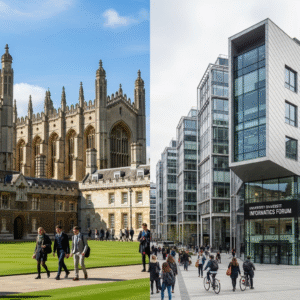
DMU Leicester Vijay Patel Building modern architecture featuring glass facades and contemporary design elements integrated with Leicester city center

Academic Excellence That Actually Translates

Here’s where DMU Leicester gets genuinely exciting. The university offers over 300 courses across arts, business, health, engineering, and technology, but what strikes me about the academic structure is how they’ve organized their four faculties to actually connect with each other. Too many universities create these artificial silos where engineering students never interact with arts students, or business majors remain isolated from those studying health sciences.

Outstanding international research collaborations and vital work on building a sustainable future has seen De Montfort University Leicester (DMU) climb more than 80 places in world university rankings. This isn’t just academic posturing – it means your lecturers are actively working on projects that matter right now, not just recycling textbook knowledge from five years ago.

The flexibility in course structures particularly impressed me. DMU Leicester offers a wide range of postgraduate degree programmes that begin in January – not everyone’s life fits neatly into the traditional September-to-June academic calendar. Plus, their innovative block teaching model enables students to master one subject at a time, delivering deeper learning, and better results.

What really sets DMU Leicester apart is their commitment to practical learning. They’ve also been named the UK’s Best University for Work Experience (RateMyPlacement 2024 & 2025), offering personalised careers support, and industry connections that go beyond superficial networking events.

DMU Leicester students studying in modern library spaces and collaborative learning areas during active study sessions on campus

The Support Network That Actually Works

DMU invests to support its students, ranked in the top 35 UK universities for facilities spend (Complete University Guide). Extensive support services cover mental health, disability, and finance. DMU’s award-winning Careers Team also offers personalised guidance and guaranteed work experience – but here’s what makes this different from standard university promises.

As an internationally focused university, DMU Leicester offers an airport pickup service for international students that transports students directly from the airport to the campus. Small detail? Maybe. But it’s exactly these practical touches that can make the difference between feeling lost and feeling welcomed.

We not only achieved an ‘excellent’ rating overall but also scored the maximum five stars in key criteria including employability. Unlike many universities, DMU offers lifelong career support to all of its graduates through networking events, one-to-one expert advice and recruitment fairs. Lifelong support – not just until graduation, but throughout your career.

The Housing Situation (Let’s Be Honest)

University accommodation is where promotional materials usually go completely off the rails. So here’s the unvarnished truth about DMU Leicester housing options.

View from DMU Leicester campus showing integration with Leicester city center including local businesses and cultural venues

The university provides accommodation across seven halls of residence: Bede Hall, New Wharf Hall, Castle Court, Newarke Street, Newarke Point, The Glassworks and Liberty Park. The campus offers ten halls of residence comprising 3000 university accommodation rooms. (Yes, there’s some confusion in the numbers – that’s universities for you.)

Most first-year international students live in on-campus accommodation as student life at DMU Leicester provides that crucial support network during your transition period. The security services are solid, and the proximity to campus means you can actually roll out of bed fifteen minutes before a lecture and still make it on time.

DMU Leicester student accommodation options comparison showing interior views of on-campus halls and private housing near campus

For those considering off-campus options, some accommodation choices close to campus include Castle CourtThe SummitRenaissance House, and CODE Leicester. Stoneygate’s average rent hovers around £400/month. That’s not London prices, thankfully, but it’s not exactly bargain-basement either.

Accommodation Type Monthly Cost (Approx.) Distance from Campus Best For
On-Campus Halls £300-500 0-5 minutes walk First-year students, international students
City Centre Private £350-450 5-10 minutes walk Students wanting independence
Stoneygate Area £400+ 30 minutes walk Students with bicycles or good stamina
Shared Houses £300-400 Varies Second/third-year students

Rankings That Actually Matter

DMU is ranked 711-720 in QS World University Rankings 2025, an improvement from 801-850 in 2024, as it continues its steady upward trend which indicates that the university is actually moving in the right direction and not just resting on its laurels.

In the Times Higher Education (THE) World University Rankings for 2025, De Montfort University is placed in the 601–800 bracket. But here’s what I find more compelling than global rankings: the practical outcomes.

DMU Leicester has been recognized for what actually matters to students and their futures. The focus on employability isn’t just marketing speak – it’s backed by concrete support systems and industry connections that translate into job opportunities after graduation.

Why This Matters for Your Future

Here’s my honest assessment: DMU Leicester isn’t trying to be Cambridge or Oxford. It’s not positioning itself as the most prestigious name you could put on your CV. Instead, it’s built something more pragmatic – a place where you can get a genuinely good education, develop practical skills, and graduate with clear prospects.

The modern campus combines innovative research with industry connections that actually translate into opportunities. This isn’t about networking events with fancy canapés; it’s about professors who maintain active relationships with the industries they’re teaching about.

If you’re the type of student who thrives on academic prestige and ancient traditions, DMU Leicester might feel too modern, too practical. But if you want to spend your university years actually preparing for a career while having access to research opportunities and a genuinely diverse student body, this could be exactly what you’re looking for.

Getting There: The Application Process

The application process doesn’t have to be a nightmare. Whether you’re applying for undergraduate or postgraduate programs, or even considering those January start dates, having the right support can make all the difference.

Diverse group of international students participating in DMU Leicester welcome orientation activities and multicultural events

This is where GCRD Hub comes in. Their headquarters is in 107-111 Fleet Street, London and they have specialities in Tailored Academic Placement, Scholarship & Financial Aid Support, End-to-End Admissions Support and Pre-Departure Orientation. Instead of trying your luck through the maze of application they can guide you not only in clear perspective regarding what DMU Leicester wants and what items to present in your application.

It is not a mere filling of forms technique in the right manner (that matters as well). It relates to the knowledge of how to present your interests and objectives in a manner that can be appealing to the admissions boards. The approach used at GCRD Hub acknowledges the fact that each student has a unique circumstance and cliched suggestions are not very effective.

So whether you are making a serious consideration of the DMU Leicester, or are in fact still debating a choice of university, proper guidance has the capacity to save you months of sleepless nights and much increase your candidature chances. You may talk to them on +44 7756 428968 and provide your particular scenario.

Application Component Typical Timeline Common Mistakes
Personal Statement 2-3 weeks Generic content, poor structure
Academic transcripts 1-2 weeks Missing documents, incorrect formatting
References 3-4 weeks Not briefing referees properly
Portfolio (if required) 4-6 weeks Poor presentation, irrelevant work

The Bottom Line

DMU Leicester represents something valuable in higher education – a place that’s focused on outcomes rather than just reputation. It has its problems (it is a university, after all), but it is founded on the premise that a school is preparing you to make your life the best life possible, and not the next test.

The research opportunities, the fact that research is a reality here (none of these materials comes to you ready-cooked, everything is done by you), the genuine diversity of the student body, the campus transformation, the practical angle of learning–all this makes this a place where you can in fact grow up as an individual, not just amass information. As the rankings rise and DMU Leicester is regularly being cited as employable, it is obvious that the university is doing something right. Check out our other blogs for more university insights.

In case you are undecided, think about what you would like in reality in your university. Not prestige and centuries-old tradition: look away. If you are after practical ability, research, and a springboard to your career DMU Leicester should be given some serious attention.

The process of applying need not be hectic. It can be passed with proper guidance and you will not regret the beginning of your college life at the university, which could appear surprisingly fitting your ideas.

Frequently Asked Questions

Q: What is so special about DMU Leicester as compared to other universities in the UK?

A: DMU Leicester is oriented on vocational education and industry-linked learning as their course offering extends to more than 300 programs in four faculties. The university is considered the Best University with Guaranteed Work Experience in the UK and has a huge number of opportunities to get work experience in contrast to other, more conservative universities.

Q: Are there January intakes in DMU Leicester to international students?

A: DMU Leicester does have flexible dates of entry and has January admissions on both undergraduate and postgraduate programs which foreign students with alternate academic semester system can attend.

Q: where does DMU Leicester compare to other UK universities?

A: DMU Leicester is ranked as the 25th best University in UK according to student reviews, no.1 in graduate employability by Times Higher Education, and among 150 best young universities worldwide.

Q: What student support does DMU Leicester provide international students?

A: Leicester DMU offers airport pick-up, preferential accommodation on campus during the first year of international students, comprehensive support services, including mental health advice, disability support, and finance services, as well as the award-winning careers team who can be hand-guided.

Q: Is DMU Leicester research friendly?

A: Yes, DMU Leicester post-graduate courses are backed by the world leading research, having exceptional international research partners. Being ranked as one of the top universities in the world by its research excellence and its sustainable future projects, the university has moved up over 80 places in world university ranking.

Not Ready for a Master’s Yet? Discover Pre-Masters in the UK

Well, I will tell the truth to you. The first impact that came to my mind was, when pre-masters in the UK was explained to me: Is it just another means of garnering more money out of the international students?

However, here is the thing, after a deeper investigation and some conversations with dozens of students who travelled down this road, I have an entirely different song to sing. The courses last anywhere between ten weeks and a year, and they have finally provided a way of solving a problem that has been annoyingly sitting over the heads of international students for years (Top UK Universities Offering Pre-Masters Programs: 2025 Guide | UniAcco), and that problem is upon admission, they are not prepared to study at that level.

The reality is you can begin jumping into a UK masters program and it feels like drinking out of a fire hose (and you are on a unicycle). The culture shock with academics is indeed a thing, and many smart students do still not know how to find their path in a completely new educational environment.

This is where specialized agencies such as GCRD Hub play their roles in providing customized academic placement services to students through which they can get the proper pre-masters path in the UK. However, before we wade into the mire of the specifics of how these shows are done, just to give you an idea of what you are really getting into, consider this.

The Reality Check: What Makes UK Master’s Programs So Different?

I remember speaking with Priya, a software engineer from Mumbai, who told me something that stuck: “I had a 3.8 GPA from one of India’s top engineering colleges, but my first essay feedback in the UK literally made me question if I could speak English.”

International student studying in UK university library surrounded by academic books looking overwhelmed but determined during pre-masters transition

That’s not an isolated experience. UK postgraduate education operates on a completely different wavelength than most international systems. It’s not just about memorizing facts or even critical thinking—it’s about developing what academics call “independent scholarly voice.”

The Academic Style Maze

British academic writing follows unwritten rules that can perplex even native speakers. You’re expected to:

  • Challenge established theories (respectfully, of course)
  • Build arguments through nuanced analysis rather than definitive statements
  • Master the art of “critical evaluation” without being, well, too critical
  • Navigate citation styles that seem designed to test your patience

And don’t get me started on seminar discussions. The expectation to contribute meaningfully to debates about topics you’re still wrapping your head around? That’s a skill that takes time to develop.

Understanding Pre-Masters in the UK: The Academic Stepping Stone

So what exactly is a pre-masters in the UK? Think of it as academic boot camp, but in the best possible way.

Diverse group of international students in interactive UK pre-masters classroom with British instructor facilitating collaborative learning session

The Pre-Masters programme at the International College offers a path to a masters for international students at the University of Sheffield. This programme is designed in collaboration with the University and is delivered by Study Group. The Pre-Masters is an intensive 1.5 or 2-semester programme (Pre-Masters in the UK | University of Sheffield IC).

But here’s where it gets interesting—these aren’t just generic English language courses. They’re highly specialized programs that bridge the gap between your educational background and UK postgraduate expectations. A pre-masters in the UK is essentially your academic passport to success.

The Three Pillars of Pre-Masters Success

  1. Academic Skills Development: Learning to write like a British postgraduate student (spoiler: it’s harder than it sounds)
  2. Subject-Specific Preparation: Getting up to speed with UK approaches to your chosen field
  3. Cultural Academic Integration: Understanding the unspoken rules of British higher education

The Cost Reality: Is It Worth the Investment?

Let’s talk numbers because I know that’s what you’re thinking about.

The cost of a Pre-Masters in the UK depends on the university and the programme’s duration. Typically, tuition fees range from £7,000 to £15,000 per year (Pre-Masters Courses in the UK for International Students). But here’s the kicker—UK students can expect to pay between £3,495 and £9,500 for an entire course. Not all universities charge higher fees for international students, but those that do may charge as much as £18,000-23,000 (The benefits of studying a pre-masters course in the UK).

I know what you’re thinking: “That’s a lot of money for what sounds like an extended prep course.” But consider this alternative scenario: failing or struggling through your master’s program, potentially having to repeat modules, or worse, not completing your degree at all.

When you factor in the comprehensive support services—including scholarship and financial aid support that organizations like GCRD Hub provide—the investment in a pre-masters in the UK becomes much more justifiable.

The Hidden Costs of Skipping Pre-Masters

Scenario Direct Entry Pre-Masters Route
Success Rate 65-75% 85-95%
Average Grade Merit (60-69%) Distinction (70%+)
Stress Level High Moderate
Time to Adaptation 6-8 months 2-3 months
Overall Satisfaction Moderate High

Entry Requirements: The Gateway Criteria

Here’s where things get practical. The typical requirements for pre-masters in the UK include: finishing an undergraduate degree with at least a pass and having an IELTS minimum score of 5.5 in all skills.

But don’t let those “minimum” requirements fool you. Different universities have different standards, and the reality is more nuanced than most admission websites suggest.

The Typical Pre-Masters Candidate Profile:

  • Bachelor’s degree (2:2 or equivalent)
  • IELTS 5.5-6.5 (depending on program)
  • Some work experience (preferred but not always required)
  • Clear motivation for postgraduate study

What I find fascinating is that these programs aren’t just for students with lower grades. I’ve met plenty of high-achieving students who chose pre-masters routes simply because they wanted to maximize their chances of getting into their dream university.

Duration and Structure: Time Investment Decoded

One or two semesters depending on your English language level (Pre-Masters Programme | University of Surrey ISC). But here’s what that actually means in practice:

  • Short-Track Programs (10-15 weeks): For students who are academically ready but need cultural and methodological adjustment
  • Standard Programs (1-2 semesters): The most common route for pre-masters in the UK, covering comprehensive academic preparation
  • Extended Programs (up to 1 year): For students who need significant English language development alongside academic skills

The beauty of this flexibility is that you’re not locked into a one-size-fits-all approach. Universities assess your individual needs and recommend the appropriate duration for your pre-masters in the UK journey.

University Partnerships: The Elite Connection

Here’s something that might surprise you: many pre-masters programs are run by prestigious universities themselves, not just private colleges.

Route to success: Between 2022-24, previous IPM students went on to UCL, Imperial, LSE, University of Warwick, University of Manchester and other leading UK universities (International Pre-Master’s | UCL Centre for Languages & International Education (CLIE) – UCL – University College London).

Network diagram showing connections between pre-masters providers and top UK universities including UCL Imperial LSE and University of Manchester

This isn’t just about getting into “any” master’s program—it’s about accessing the top tier of UK higher education with better preparation and support. These partnerships make pre-masters in the UK a genuinely strategic choice.

Notable University Pre-Masters Programs:

The Subject Pathway System

One aspect that doesn’t get enough attention is how specialized these programs can be. You’re not just learning generic academic skills—you’re preparing for your specific field of study through targeted pre-masters in the UK pathways.

Common Pathway Specializations:

Each pathway includes subject-specific modules, terminology, and methodological approaches that will be crucial for your master’s studies.

The Application Process: Navigating the System

This is where services like GCRD Hub’s end-to-end admissions support really shine. The application process for pre-masters programs can be surprisingly complex, especially when you’re trying to coordinate with your eventual master’s program application.

The Strategic Application Timeline:

  1. Research and university selection (6-8 months before)
  2. Application submission (4-6 months before)
  3. Visa application process (2-3 months before)
  4. Pre-departure preparation (1-2 months before)

The key is ensuring your pre-masters program aligns with your intended master’s degree and university preferences. Professional guidance can make this process significantly smoother.

Success Stories: The Real-World Impact

Let me share a story that illustrates the real value of these programs. Ahmed, a mechanical engineer from Egypt, had decent grades but struggled with academic writing. He was accepted into a direct-entry master’s program at a mid-tier university but chose to do a pre-masters instead.

The result? After his pre-masters, he not only got into Imperial College London but also thrived in his master’s program, graduating with distinction and landing a job at a major engineering firm.

Visual timeline showing student journey from pre-masters application to UK master's degree graduation with key academic milestones highlighted

The Transformation Factor

What makes pre-masters programs particularly effective is their focus on:

  • Developing critical thinking in the British academic context
  • Building confidence in English academic communication
  • Creating study strategies specific to postgraduate demands
  • Establishing professional networks early

The Post-Brexit Landscape: New Opportunities

Here’s something interesting that’s emerged post-Brexit: UK universities are increasingly focused on attracting high-quality international students, and pre-masters programs have become a key strategy for ensuring student success.

An Extended Masters begins with a full-time 10-week programme (for July 2025 intake) covering four modules that have been designed to raise your skills to postgraduate standard (Pre-Masters Courses | University of West London).

This trend toward “extended” and “integrated” programs shows how seriously universities are taking the preparation phase for pre-masters in the UK.

Making the Decision: Is Pre-Masters Right for You?

The decision ultimately comes down to your personal circumstances and goals. Here are some questions to consider:

  • Are you confident in your academic English writing abilities?
  • Do you have experience with independent research and critical analysis?
  • Are you familiar with UK academic culture and expectations?
  • How important is maximizing your chances of getting into a top university?
  • Can you afford the additional time and financial investment?

If you answered “no” to the first three questions and “yes” to the last two, exploring pre-masters in the UK might be exactly what you need to bridge that gap successfully.

The Support System: Beyond Academics

What I particularly appreciate about established providers like GCRD Hub is their comprehensive approach. It’s not just about getting you into a program—it’s about ensuring you succeed once you’re there.

From their London office at 107-111 Fleet Street, they provide everything from pre-departure orientation to ongoing support throughout your studies. You can reach them at +44 7756 428968 for personalized guidance on your pre-masters journey.

Support Type Pre-Masters Phase Masters Phase
Academic Support Study skills, writing techniques Research methodology, dissertation help
Language Support Academic English, presentation skills Advanced communication, professional writing
Cultural Integration University systems, peer interaction Professional networking, career guidance
Practical Support Accommodation, banking, healthcare Work placements, visa extensions

The reality is that studying in the UK involves challenges that go far beyond academics, and having comprehensive support can make the difference between struggling through and truly thriving.

Looking Forward: The Future of Pre-Masters Education

Into 2025 and beyond I am looking to see some interesting trends in pre-masters education:

  • Growth of Specializations: Specializations of programs are growing more into certain career choices as well as industry needs.
  • Technology Integration: The use of VR to show tours of the campus, the use of AI to support language learning, and tools great at online collaboration are becoming the norm.
  • Employer Partnerships: The experience that involves mentorship in industry and work is added in more programs.
  • Flexible Delivery: There is an increased number of hybrid and online delivery choices, but the essential experience stays with the campus.

Your Academic Investment Strategy The Bottom Line

In taking up a pre-masters in the UK, you are not buying time but rather a foundation that is going to influence the rest of your postgraduate life in the UK and beyond.

Students who have discussed completion of a pre-masters program with me have always indicated greater satisfaction of master program, higher grades and professional networks. They also say something somewhat intangible yet critical in regard, namely, confidence.

To provide you with an end-to-end service in navigating the pre-masters terrain, such as scholarship offers, facilitating access and negotiating with academic placement facilities in universities, GCRD Hub provides a custom service at their London office. Their team is exposed to the details of the UK education system and they are the best people to assist you in making the best decision concerning your pre-masters journey.

Keep in mind that it is not enough to pass to a master program, but to do well there. And sometimes, the only thing that helps to run a marathon is to start to run it with adequate training. A pre-masters in the UK might just be the training you need.

Confident international student in graduation attire celebrating successful completion of UK pre-masters and master's programs with Big Ben background

Frequently Asked Questions

Q: Can One have a good IELTS score and still apply to a pre masters course?
A: Absolutely. Pre-masters do not end with the English language skills; it comes down to the academic preparation and cultural acclimatization. Such programs are also immensely helpful to many students whose IELTS is 7.0+.

Q: Are pre-masters qualifications recognised by all the UK universities?
A: Pre-masters qualifications are known by most good UK Universities, and particularly those by established pathway providers. Nevertheless, make sure to check acceptance in your target universities before the enrolment.

Q: Can I switch my subject area upon the successful completion of pre-masters program?
A: This is according to program and the university. There are very flexible some pre-masters programs and there are pathway-specific post-masters programs. It is what should be made clear in the process of application.

Q: Can one do pre-masters in order to do a PhD?
A: Yes, there are a lot of universities which provide pre-doctoral programs, which is not so common as pre-masters ones. It is often emphasized on research methodology and writing at doctorate level.

Q: What occurs in case I do not pass progression?
A: The majority of programs have support and even extra time that you may use to fulfill requirements. Nonetheless, one should be aware of particular criteria of progression and the support that will be provided before it is enrolled.

From Calling to Qualification: Your Journey Through a Masters in Social Work UK

Ever wondered why some people seem naturally drawn to helping others navigate life’s messiest moments? That magnetic pull toward social justice, advocacy, and human connection isn’t just personality—it’s often the first sign you’re meant for social work. And if you’re reading this, chances are you’ve already felt that tug.

But here’s the thing nobody tells you upfront: wanting to help isn’t enough anymore. The field has evolved dramatically, and today’s social workers need serious credentials to make a real difference. That’s where a masters in social work UK becomes your gateway—not just to a career, but to actually changing lives (including your own).

Why the UK Has Become Social Work’s Hidden Goldmine

Let me be blunt: the UK doesn’t just offer social work degrees—it offers a complete reimagining of what social work can be. While other countries treat social work education as an afterthought, British universities have transformed it into something resembling a medical degree in its rigor and respect.

UK’s MA Social Work master’s courses enable you to qualify as a social worker and apply to register with Social Work England, but that’s just the beginning. What makes studying here genuinely different is the integration of theory with brutal real-world practice. You’re not just learning about child protection policies—you’re sitting in actual case conferences, making decisions that affect real families.

The rankings have been particularly interesting this year, with some universities making significant moves. But rankings only tell part of the story when it comes to finding the right masters in social work UK program for your specific goals.

Diverse social work students engaged in simulation-based learning exercise, with one student experiencing breakthrough moment during family intervention role-play scenario in UK university classroom

The Landscape Just Shifted (And Nobody Saw It Coming)

Something fascinating happened in 2024 that changed everything: Social Work England overhauled their registration requirements. Suddenly, international students found themselves with better pathways to practice than ever before. Universities scrambled to update their programs, creating what I call the “sweet spot moment”—when supply hasn’t quite caught up with demand.

This means if you’re applying for masters in social work UK programs right now, you’re hitting a golden window. Universities are investing heavily in their social work departments, placements are more diverse than ever, and employers are actively hunting for international graduates.

Here’s what’s particularly clever about UK programs: they’ve figured out how to blend academic rigor with practical application in ways that American MSW programs still haven’t mastered. You’ll spend roughly 50% of your time in placements, but these aren’t the token internships you might expect. These are full-responsibility positions where you’re carrying actual caseloads under supervision.

Split-screen comparison showing social work student in university lecture hall and same student working in real community placement setting, illustrating UK masters in social work theory-practice integration

The Universities That Actually Matter (Beyond the Rankings)

Let’s talk about where you should actually consider studying. The big names get all the attention, but some of the most innovative masters in social work UK programs are happening in unexpected places.

University Unique Strengths International Fees (2025) Something You Won’t Find Elsewhere
University of Manchester Research powerhouse with cutting-edge practice labs £26,500 Virtual reality training for high-risk interventions
Kingston University Strong industry connections in London £18,500 Guaranteed placement in your area of interest
University of Northampton Innovative two-year intensive program £16,200 Embedded entrepreneurship modules for social enterprises
Middlesex University Diverse cohorts with global perspectives £17,800 Partnership with Tavistock for psychodynamic approaches
University of East London Strong community focus £16,500 Collaboration with NHS Foundation Trust

But here’s where it gets interesting: some of the universities doing the most innovative work aren’t the ones dominating headlines. Take Edinburgh Napier, for instance. Their program has quietly become the go-to choice for people wanting to specialize in digital social work—think online therapy, virtual family support, and tech-enabled community building.

The Money Question (Because Someone Has to Ask)

International tuition for a masters in social work UK typically ranges from £15,000 to £28,000 per year. Yes, that’s significant money. But here’s the calculation most people miss: UK social work programs are typically two years, compared to the variable lengths elsewhere. More importantly, the employment rates are stunning.

The MSW programmes offered by these universities in the UK are some of the most sought-after, considering the learning experience they offer and the employability of the graduates upon completion. That “employability” translates to starting salaries that typically range from £28,000 to £40,000, with rapid progression potential.

What’s more intriguing is the hidden funding landscape. Beyond the obvious scholarships, there are placement stipends, research assistant positions, and something called “bursary stacking” where you can combine multiple small grants into substantial support. I’ve seen international students graduate with less debt than their UK counterparts through strategic application to these lesser-known funding streams. Check out the student finance options.

The Application Maze (And How to Navigate It Without Losing Your Mind)

Here’s where most people stumble: UK masters in social work UK applications aren’t just about grades. They’re about demonstrating something called “readiness for practice.” Universities want to see that you understand what you’re getting into—that you’ve thought deeply about the emotional toll, the ethical complexities, and the sheer unpredictability of the work.

Applicants must apply through the Universities and Colleges Admissions System (UCAS) and are encouraged to apply early (ie before the 26th January deadline) however we remain open for applications throughout most of the year. This UCAS requirement is crucial—direct applications to universities won’t be considered.

An MSW in the UK generally needs you to have a successfully completed undergraduate qualification and work experience in the field of social work. But “work experience” is interpreted more broadly than you might expect. Volunteering counts. Caring for family members counts. Even certain customer service roles can demonstrate the interpersonal skills they’re looking for.

The personal statement is where applications live or die. Forget the template approaches—admissions tutors can spot those from miles away. Instead, tell the story of a specific moment when you realized social work was your calling. Make it personal, make it real, and make it impossible to ignore.

What Nobody Tells You About Placements

Here’s the reality: your placement experience will make or break your entire program. UK universities have partnerships with everything from children’s services to mental health trusts to innovative social enterprises. The quality varies wildly, and the best placements go to students who understand the system.

The trick is to research your placement preferences before you even apply. Each university has different strengths in different areas. If you’re passionate about working with refugees, certain universities have established relationships with organizations like the British Red Cross. If you’re drawn to children’s services, others have direct pipelines into local authorities.

But here’s what’s particularly clever: some students are now creating their own placements. Universities are increasingly open to this, especially if you can demonstrate how your proposed placement meets their learning objectives. I’ve seen students create placements with tech startups working on social issues, with parliamentary offices focusing on social policy, and even with international NGOs.

The Skills Nobody Mentions (But Everyone Needs)

Technical competency is assumed now. Every masters in social work UK graduate needs to be comfortable with database management, report writing software, and basic data analysis. But the skills that actually differentiate successful social workers are more nuanced.

Crisis de-escalation isn’t just about knowing the theory—it’s about reading micro-expressions, managing your own anxiety, and making split-second decisions under pressure. Cultural competency isn’t just about understanding different backgrounds—it’s about recognizing your own biases and adapting your approach in real-time.

The programs doing this best are incorporating simulation-based learning. You’ll find yourself in carefully constructed scenarios where actors play family members, colleagues, or service users. It sounds artificial, but the feedback is incredibly valuable for building confidence before you’re working with real people facing real crises.

The Career Paths That Don’t Exist Yet

This is where it gets exciting. Social work is fragmenting into specializations that didn’t exist five years ago. Digital therapy coordination. Community resilience planning. Social policy analysis with AI integration. Corporate social responsibility consulting.

Your masters in social work UK isn’t just preparing you for traditional social work roles—it’s giving you the analytical, interpersonal, and ethical framework to innovate in areas that are still being defined.

Some of the most successful recent graduates are working in roles that combine social work principles with other fields. There’s a growing demand for people who understand both social work and technology, social work and business, social work and policy development.

The Support Network You Didn’t Know You Needed

UK universities have figured out something that many other systems haven’t: social work students need more support than most graduate students. The emotional toll of the work starts during your studies, not after you graduate.

International social work students from diverse backgrounds collaborating on project with laptops and notes, demonstrating supportive learning environment in UK masters in social work program

Most programs now include mandatory supervision sessions, peer support groups, and access to counseling services. But the informal support networks are often more valuable. Your cohort becomes your professional family—these are people who understand the unique challenges of the work and who you’ll likely collaborate with throughout your career.


If you’re an international student, this support becomes even more crucial. The cultural adaptation combined with the emotional intensity of social work training can be overwhelming. Universities like GCRD Hub, based at 107-111 Fleet Street in London, specialize in providing tailored academic placement support specifically for international students navigating this complexity. Their end-to-end admissions support and pre-departure orientation can be the difference between struggling through your first year and thriving from day one.


The Skills Gap Nobody’s Talking About

Here’s something that might surprise you: the biggest skills gap in UK social work isn’t in traditional areas like case management or assessment. It’s in evaluation and evidence-based practice. The field is moving rapidly toward demonstrating outcomes and measuring impact, but many programs haven’t caught up.

Skill Area Current Demand University Coverage Your Opportunity
Data Analysis High Inconsistent Self-study analytics tools
Digital Therapy Platforms Rapidly Growing Minimal Seek specialized placements
Community Organizing Stable Good Build on existing strengths
Policy Analysis Increasing Variable Connect with think tanks
Financial Literacy Training Emerging Poor Develop niche expertise

The smart move is to identify these gaps early and build complementary skills alongside your formal education. Take online courses in data visualization. Volunteer with organizations using innovative approaches. Attend policy forums. Your masters in social work UK gives you the foundation, but the specialized skills you develop independently will set you apart.

Social work student analyzing data on computer screen while consulting with service user, showing modern evidence-based practice approach in UK social work education

The Hidden Costs (And How to Manage Them)

Beyond tuition, studying for a masters in social work UK comes with costs that catch people off guard. Professional registration fees. Enhanced DBS checks. Travel to placement sites. Professional clothing for court appearances and formal meetings.

But here’s what’s frustrating: these costs aren’t usually included in university cost-of-living estimates. Budget an extra £2,000-£3,000 per year for these professional expenses. Some universities offer hardship funds specifically for these costs, but you need to apply early and often.

The smarter approach is to build these costs into your funding applications from the beginning. Many scholarship applications ask about additional costs associated with your program—this is your opportunity to demonstrate that you understand the full financial commitment.

The International Perspective Advantage

Not that being an international student in any of the UK social work programs is all about a degree; it is rather having a special flavour to enhance the experience of the UK employers who are going through a bad time in this respect. With an increasing number of diverse communities, social work agencies are more than willing to find individuals that are knowledgeable of various cultural backgrounds and are able to work within a diverse immigrant population.

Being international will also count as a professional attribute, which is not merely a personal trait. Their particular point of view also opens career doors to specialized work in the field of refugee services, international adoption, or cross-cultural family work to many of the students.

Making the Decision: Your Next Steps

By this time, you might be already serious about getting a masters in social work in the UK. The crucial dates are application deadline which most of the programs use UCAS whilst the deadline is usually in late January even though some universities use ongoing application intake.

Start with research. Not just university websites, but current student blogs, social media groups, and professional networks. Reach out to current students and recent graduates. Ask hard questions about placement quality, support systems, and career outcomes.

It may be important that you contact organizations such as GCRD Hub (+44 7756 428968)) at an early stage of your planning. Using their custom academic placement service, they may be able to explain to you the programs that would best suit to your particular career plans and situations. They can also assist you in getting a better round-up of the funding scope that is possible through their scholarship and financial support. So, contact us.

The Future of Social Work Starts Here

There is a turning point in social work. New technologies, transforming demographics, and new knowledge about trauma and resilience are refuting traditional approaches. The programs in social work UK that are succeeding are the ones that are not against this change but one that accepts it.

Choosing to do this qualification is not only about adding yourself to a profession, but it is also about putting yourself at the centre of social change. The training you get, the contacts you make, and the experience you will have will be of use irrespective of the destination your career takes you.

UK has designed something special by organizing the way it educates on social work. It is not stiff but it is tough, it is not only practical; it does not lose track of the larger view; and it is cosmopolitan, and yet so firmly embedded in the needs of the community.

Whether you should study masters in social work UK is not the question, it is whether you are capable of handling the rushes, accepting the hurdles, and entering the line of profession that would always request you to advance.

The deadlines of applications are near. There is competition in the programs. The task is laborious.

A masters in social work UK is not merely a degree, it is a change, but only to the right individual, prepared correctly and assisted when required.

Before and after transformation showing prospective student reviewing university materials evolving into confident professional social worker entering courthouse, representing masters in social work UK journey

Frequently Asked Questions

Q: What is the duration of the Masters in Social Work in UK?
A: The majority of programmes in the UK are two years long full-time (it is possible to find 18 months programmes available to students who have relevant experience or a degree).

Q: Do international students have an option to work during studies?
A: International students are able to do this in principle (at least 20 hours a week during term time), although the work load involved in social work placements might restrict real opportunities.

Q: What does MA Social Working vs. MSW mean?
A: They both allow you to be registered to Social Work England. In the UK, MA Social Work is predominant whereas MSW is used in the US; many colleges and universities in the UK are interchangeably using both terms.

Q: Do I require a work experience to applicate?
A: Applicable experience is not a must do but it consumes strength to your application. This could mean paid employment, volunteering or care.

Q: Do you have any scholarships to international students?
A: Yes international scholarships are provided by lots of universities, there are outside sources of funding. The GCRD Hub is a group organization that can guide through the opportunities of scholarships.

Q: Is it necessary to do UCAS?
A: Right, the majority of UK social work programs will involve UCAS applications. Strict applications to universities will rarely be taken into account.

When Public Health Calls Your Name: The MPH in UK Journey That Changes Everything

Three years ago, during one of those particularly grim news cycles, I found myself wondering: what if someone dedicated their entire career to preventing the next pandemic instead of just responding to it? That question—naive as it might sound—captures exactly why thousands of students are now racing to submit their MPH in UK applications.

The truth is, public health isn’t just about disease outbreaks anymore. It’s about mental health epidemics, climate change health impacts, and health inequalities that make your blood boil. If you’ve ever looked at a health statistic and thought “this is absolutely ridiculous,” you might be perfect for an MPH in UK program.

The Unexpected Reality of UK Public Health Education

Here’s what nobody tells you about pursuing your MPH in UK: it’s not just another degree. The UK approach to public health education is refreshingly practical, with universities like Imperial College London, UCL, and Manchester leading the charge in innovative program delivery.

The UK approach to public health education is refreshingly practical. Unlike some countries where you might spend months theorizing about health policy, UK programs thrust you into real-world scenarios almost immediately. Most programs offer flexibility with both full-time and part-time options, allowing you to maintain your current job while building expertise that will completely transform your career trajectory.

What makes this particularly interesting is how diverse the entry requirements are. We require a minimum of an Upper Second honours degree or the overseas equivalent. If you have obtained a Lower Second class honours degree we may still consider your application if you have significant relevant research or professional experience (e.g. 3-years or more in a public health team) MSc Public Health | LSHTM at Manchester, while We welcome applicants from a diverse range of backgrounds. You will have, or be predicted, at least a 2:2 Honours degree in a relevant subject such as Life, Health or Medical Science degrees, or intercalating medical students, with relevant public health work experience Masters of Public Health (MPH) in UK Universities at Exeter.

Diverse international students engaged in MPH UK classroom discussion with public health data visualizations on screens

Following the Money Trail (Because Let’s Be Honest)

Let’s talk about the elephant in the room: cost. Tuition fees vary significantly across universities, and understanding this landscape is crucial for making an informed decision about your MPH in UK journey.

The financial commitment is substantial, but the variation between institutions is remarkable. Here’s what you’re looking at realistically:

MPH in UK University Fees Comparison 2025

University UK Students (Annual) International Students Duration
University of Manchester £13,000 £28,500 1 year full-time
University College London £14,000-16,000 £32,000-35,000 1-2 years
University of Sheffield £12,000 £27,500 1 year full-time
University of Exeter £11,500 £26,000 1 year full-time

This is where companies like GCRD Hub become invaluable. Their scholarship and financial aid support isn’t just about finding money—it’s about understanding which programs offer the best value for your specific career goals. Located at 107-111 Fleet Street in London, they’ve helped countless students navigate the complex landscape of MPH in UK funding options.

The Hidden Costs Nobody Talks About

Beyond tuition fees, there are numerous expenses that can catch MPH in UK students off guard. Living costs in London can easily exceed £1,500 per month, while cities like Manchester or Sheffield might run closer to £800-1,000 monthly. But here’s what really adds up: textbooks, software licenses for statistical analysis, conference attendance, and research materials.

I know students who spent £2,000 just on course materials and software in their first semester. The good news? Many universities provide access to essential software like SPSS, R, and specialized epidemiological tools. Still, budgeting an extra £3,000-5,000 beyond tuition and basic living expenses isn’t unreasonable for your MPH in UK journey.

The Application Game: Strategy Over Perfection

The application process for an MPH in UK program is where things get genuinely interesting. You must have completed your Bachelors in a relevant subject with a minimum score of 60% from a recognised university/college · You must have cleared an English proficiency test such as IELTS exam Top 10 Universities For Studying A Public Health Course In The UK | India represents the baseline, but the reality is more nuanced.

But here’s the thing—and this might sound controversial—your application doesn’t need to be perfect. It needs to be authentic. Universities are looking for candidates who demonstrate genuine commitment to public health, not just academic excellence.

I’ve seen brilliant applications that mentioned volunteering at a local food bank, analyzing health data at a small nonprofit, or even just being the person in their family who everyone calls when they have health questions. The key is demonstrating why you care about population health, not just that you do.

Application Timeline Reality Check:

For example, if you’re applying for the September 2025 intake, some deadlines may be set around December 2024—it’s best to check the course listing on your preferred university’s website as you explore your course options Public Health in United Kingdom: 2025 Master’s Guide

  • Most scholarship deadlines are earlier than general admission deadlines
  • English proficiency test results must be valid at the time of application

Mastering the Personal Statement for Your MPH in UK Application

Your personal statement can make or break your MPH in UK application. Universities want to see three things: passion, relevant experience, and clear career goals. But here’s the secret—they also want to see how you think about complex health problems.

Start with a specific example. Maybe you noticed that diabetes rates in your neighborhood were disproportionately high, or you witnessed the mental health impact of job losses in your community. Then connect that observation to broader public health principles. Show them you understand that individual health problems often have population-level solutions.

The most compelling personal statements I’ve reviewed for MPH in UK programs tell a story. They don’t just list accomplishments—they show how the applicant’s thinking has evolved and how an MPH degree fits into their long-term vision for improving population health.


Where Your MPH in UK Actually Takes You

The career outcomes are frankly staggering. You’re not just learning about health statistics—you’re learning how to design interventions that can affect thousands of lives. You’re understanding why some communities have higher rates of diabetes and others don’t. You’re becoming the person who can walk into a room and say, “Here’s what the data actually shows, and here’s how we fix it.”

MPH UK graduates working in WHO meeting, community health center, and policy briefing room showing career diversity


The specializations available reflect how broad this field has become. Most MPH in UK programs offer tracks in:

  • Epidemiology and Biostatistics: You become the detective of disease patterns. This is where you learn to spot the early warning signs of outbreaks, understand why certain populations are more vulnerable, and develop the analytical skills that health departments desperately need. 

Student hands analyzing epidemiological data on laptop for MPH in UK coursework with coffee and notes nearby

  • Health Services and Systems: This is the business side of saving lives. You learn how healthcare systems work (or don’t work), how to make them more efficient, and how to ensure resources reach the people who need them most.
  • Global Health: Think bigger picture. Climate change, international disease surveillance, health policy that affects entire regions. This specialization prepares you to work with organizations like the WHO or major NGOs.
  • Environmental Health: Focus on how environmental factors impact population health, from air quality to water safety to occupational hazards.

The Real-World Applications That Matter

What sets MPH in UK programs apart is their emphasis on practical application. You’re not just studying theoretical frameworks—you’re working on live projects with real health departments, NGOs, and healthcare systems.

Take the University of Edinburgh’s program, where students have worked directly with NHS Scotland on reducing hospital readmissions. Or Imperial College’s partnership with local London boroughs to address health inequalities. These aren’t simulations—they’re real projects that impact real communities.

One graduate I know spent her dissertation project developing a mobile health intervention for diabetes management in rural Wales. The project was so successful that the Welsh government adopted it as a pilot program. That’s the kind of immediate impact that MPH in UK programs are designed to produce.

The Support System That Actually Matters

Here’s where the rubber meets the road. Pursuing an MPH in UK isn’t just about getting accepted—it’s about thriving once you’re there. The academic workload is intense, the concepts are complex, and you’re often dealing with emotionally heavy material about health inequities and disease burden.

This is precisely why GCRD Hub’s end-to-end admissions support and pre-departure orientation become so valuable. They understand that getting into the program is just the beginning. Their tailored academic placement service recognizes that not every MPH in UK program is right for every student, even if you meet all the requirements.

International students at MPH UK university orientation session with academic advisors and program materials

The Technology Revolution in Public Health Education

The current provision of MPH programs in the UK has adopted the concept of technology to the extent that it could only be considered to be fantastic five years ago. You are being taught how to utilize machine learning at predicting disease outbreaks, interpret data on social media to track mental health patterns, and utilize GIS mapping to learn how to better understand health disparities.

The program at the University of Manchester will have modules learning digital health interventions, and UCL will have specifically trained health data science. These are not some fancy extras which you can add on; these are the mainstays of being a professional in the field of public health in 2025.

The reality of networking that no one talks about

The last network-building opportunity that comes as a surprise is the one offered in the possibility of attending multiple classes in the United Kingdom to earn your MPH there. Students in your courses are not only students, they are employees (working professionals) and they are located all over the globe with several years of experience in health departments, NGOs and their health delivery systems.

I personally have a friend who was lucky enough to get a job at the UK Health Security Agency partially because the manager of his classmate needed somebody with the same skill set as him or her. Such relationship is natural when you are collaborating on a group project on real-life health issues.

Making Your Decision: The Practical Steps

If you’re seriously considering applying for an MPH in UK program, here’s what you need to do right now:

  1. Research thoroughly beyond rankings. Look at faculty research interests, available internships, and career services support.
  2. Calculate the real cost. Don’t just look at tuition—factor in living expenses, potential lost income, and the opportunity cost of being a student again.
  3. Consider your timeline. Application deadlines vary, but most programs start in September with applications due between December and May.
  4. Get professional guidance. Companies like GCRD Hub offer tailored academic placement services that can help you identify programs that align with your career goals rather than just your academic qualifications.

Prospective student reviewing MPH in UK university brochures and applications on laptop making program decision

Key Decision Factors for Your MPH in UK Application

Decision Factor Questions to Ask Why It Matters
Specialization What specific health challenges excite you most? Determines career trajectory
Location Do you want urban exposure or smaller communities? Affects networking and internship opportunities
Funding How will you finance this without crippling debt? Determines your freedom to take ideal jobs post-graduation
Work Experience Can you gain relevant experience while studying? Most employers want both education and experience

The Bottom Line: Why This Matters Now

Public health scene has transformed radically within the last couple of years. With COVID-19, we also exposed our existing deficiencies in our public health infrastructure, but it was also an event to realize how crucial highly trained public health professionals can be.

By looking at a program of MPH in UK, you are not only investing in your degree, you are setting yourself on a path to be the solution to some of the very pressing health issues of our day. The programs are hard and the career outlooks are high and the possibilities of having actual impact are mind-blowing.

The line of interrogation is never; can you afford to study MPH in UK; but rather; can you afford of not to do so? It is time to act due to application deadlines and aid opportunities in forms of scholarships.

To secure one-on-one advice on your MPH in UK application experience, you may contact GCRD Hub at +44 7756 428968. They provide complete services including academic placement, pre-departure orientation; the difference between an effective application and an application that can easily be misplaced in the pile may be their presentation.

A single decision is the beginning of your future in the field of public health. Make it count.

FAQs About MPH in UK Programs

How much does it take to get an MPH in UK?
An Upper Second honours degree or equivalent overseas requirements are required. You are required to attach it along with your application to study MSc Public Health at most universities in case you have a Lower Second class honours degree but could be still considered provided that you have considerable relevant research or professional experience (e.g. 3-years or more in a public health team)

What is the duration of MPH in UK?
The majority of programs take 1 year as a full-time study or 2 years as part-time studies. Other universities have available modular options where students have high flexibility.

Is MPH in UK program available on scholarships?
Scholarships do exist in universities, YES. The particular scholarship is available in individual university websites and may have different deadlines.

How does an MPH differ to an MSc Public Health?
An MPH is generally more practical based and teaches applied skills whereas an MSc might lean towards the side of research. Both are good but it is up to what you want in your career.

Am I allowed to work during my studies of an MPH in UK?
They offer part time programs and under some conditions international students may work part-time. See the regulation of UK students visas.

Simplify Your Greenwich University Application: Partner with GCRD Hub for Success

This is one thing that most university guides would not inform you: decision making regarding where to study is more than merely ranking or course brochures. It is the matter of discovering that right point of ambition and opportunity and bundled in a place that does not make you feel like you are trying to be somebody you are not. Greenwich is a campus university, which is located on the River Thames, South London GreBritishuni and, to be candid, lays quite pretty and was founded in 1890 having more than one hundred and thirty years of academic history. It’s been quietly building something remarkable while everyone else was watching the flashier names.

But let’s be real. Getting into any decent UK university feels like navigating a bureaucratic maze designed by someone who clearly never had to do it themselves. That’s where GCRD Hub comes in, turning what should be a straightforward process back into… well, something straightforward.

The Greenwich University London Difference: More Than Just Another London University

Greenwich has won international recognition for the quality of its world-leading research, which makes a real and practical difference to people’s lives University Of Greenwich 2025 Courses, Entry and Application Info | British University Application Advisor. That’s not marketing speak – that’s what happens when a university actually cares about impact over ego.

Walking through the Greenwich University London campus feels different. Maybe it’s because you’re literally studying where naval officers once learned to navigate the world’s oceans, or perhaps it’s the way the historic architecture somehow makes cutting-edge research feel more… grounded? The main campus at the Old Royal Naval College isn’t just Instagram-worthy (though it absolutely is) – it’s a daily reminder that education has always been about exploration.

International students walking through Greenwich University London's historic Old Royal Naval College campus with modern laptops and books, showcasing the blend of 17th-century Christopher Wren architecture with contemporary university life

The university is home to more than 19,000 students from over 140 countries University of Greenwich – Ranking, Courses, Admission 2025 & Fees, creating that sweet spot of diversity without the overwhelming anonymity of massive institutions. You’ll find your tribe here, whether that’s in the engineering labs, business seminars, or late-night library sessions that somehow turn into career-defining friendships.

Greenwich University London Courses: Where Theory Meets Real-World Relevance

Nearly 215 courses at undergraduate and graduate level are available for international students University of Greenwich Courses & Fees 2025: Popular Programs, Eligibility, covering everything from traditional disciplines to emerging fields that didn’t exist when your parents were choosing their careers.

The course offerings break down into some genuinely exciting territories:

  • Engineering and Technology: Their engineering programs aren’t just about formulas and theoretical models. Students work on real projects with actual industry partners. I’ve heard from graduates who landed jobs before finishing their final semester – not because they knew someone, but because employers had already seen their work.
  • Business and Management: Business Administration programs are designed to meet global industry demands and offer excellent career prospects University of Greenwich: Acceptance Rate, Courses, Fees & Scholarships. The MBA programs particularly focus on practical application rather than just case study analysis.
  • Health and Social Care: With an aging population and evolving healthcare needs, Public Health programs are becoming increasingly relevant. Greenwich University London’s approach combines policy understanding with hands-on community engagement.
  • Architecture and Built Environment: Architecture programs benefit from London’s incredible architectural diversity. Where else can you study Georgian terraces, Victorian engineering, and cutting-edge sustainable design all within walking distance?
  • Data Science and Computing: Data Science programs respond to the reality that every industry now needs people who can make sense of information overload.

Course Structure That Actually Makes Sense

All programmes have a September start available, with additional starts for some programmes in both January and April Postgraduate courses | University of Greenwich, London. This flexibility isn’t just convenient – it’s practical recognition that life doesn’t always align with traditional academic calendars.

The teaching approach here focuses on what they call “applied learning.” Instead of spending four years preparing for “the real world,” you’re engaging with real-world challenges from day one. Group projects involve actual client briefs. Research dissertations address current industry problems. It’s education that acknowledges the world won’t wait for you to finish learning.

The Numbers Game: Fees, Scholarships, and Financial Realities

Let’s address the elephant in every international student’s room: money. International students’ tuition fees range from £8,630 to £16,000 per year for undergraduate courses and from £8,100 to £12,250 per year for postgraduate courses University of Greenwich Courses & Fees 2025: Popular Programs, Eligibility, which positions Greenwich University London as remarkably competitive compared to other London institutions.

Here’s where it gets interesting: Greenwich University scholarships include the International Scholarship Award worth up to £3,500 Education costs at University of Greenwich, London – UniPage, and the International Students Early Confirmation Scholarship offers £8,000 for Undergraduate students Fees | Fees and funding | University of Greenwich – these aren’t just token gestures.

Program Level Annual Fee Range (International Students) Major Scholarships Available
Undergraduate £8,630 – £16,000 Early Confirmation: £8,000 total, International Award: £3,500
Postgraduate Taught £8,100 – £12,250 International Scholarship Award: £3,500
Research Degrees £12,000 – £16,000 Research-specific funding available

The cost of living in London deserves its own conversation. Yes, it’s expensive. But Greenwich University London’s location in South London offers better value than central areas while maintaining excellent transport links. Many students find shared accommodation for £600-900 monthly, and the university provides guidance on budgeting that actually reflects reality rather than wishful thinking.

Greenwich University London campus location showing DLR transport connections to central London, emphasizing affordable South London location with excellent city access for students

Campus Life: Where History Meets Modern Ambition

Greenwich University London has campuses located in London and Medway, with the Greenwich campus at the Old Royal Naval College, the Avery Hill campus in Greenwich, and the Medway campus in Kent. Each campus has its own personality, but they’re all connected by something harder to quantify – a sense of purpose.

The main Greenwich campus, housed in buildings designed by Christopher Wren, creates an interesting psychological effect. You’re surrounded by 300 years of history, but the WiFi is excellent and the labs are state-of-the-art. It’s like studying in a place that understands both tradition and innovation aren’t mutually exclusive.

Students I’ve spoken with mention the “Greenwich effect” – that sense of being part of something historically significant while working toward a very modern future. “Life at University of Greenwich was hectic but exciting. Apart from academic life, there was an enjoyable social life full of adventure,” Postgraduate courses | University of Greenwich, London notes one graduate from Ghana, and that captures something important about the balance here.

iverse group of Greenwich University London students studying outdoors on campus grounds with River Thames in background, demonstrating the scenic study environment and international student community

The Application Maze: Why Most Students Get Lost (And How GCRD Hub Fixes That)

International students can apply directly to the university Postgraduate courses | University of Greenwich, London, which sounds simple until you’re knee-deep in visa requirements, academic transcript conversions, and English language proficiency documentation. The University of Greenwich application fee is £28.50 University of Greenwich: Rankings, Fees, Courses, Admission 2023, Scholarships – reasonable enough, but only if your application actually gets processed correctly.

This is where things get unnecessarily complicated. Universities assume you understand their specific requirements, deadlines, and procedures. They assume your previous education system aligns neatly with UK standards. They assume you speak “administrative English” fluently.

Those assumptions create gaps where promising students fall through.

At GCRD Hub, based at 107-111 Fleet Street in London, we’ve built our services around filling those gaps. Our Tailored Academic Placement service isn’t about pushing you toward any particular university – it’s about understanding your academic goals, career ambitions, and personal circumstances, then identifying programs that genuinely fit.

Our End-to-End Admissions Support handles everything from initial application review to final enrollment confirmation. We’ve seen too many students miss deadlines because they didn’t understand that “personal statement” doesn’t mean the same thing to UK admissions as it does elsewhere, or lose out on scholarships because they didn’t know about application timing strategies.

What Makes Greenwich University London Worth Considering

The research output here impresses consistently. Its researchers have won a series of national awards, including Queen’s Anniversary Prizes for Higher & Further Education University Of Greenwich 2025 Courses, Entry and Application Info | British University Application Advisor. But beyond accolades, there’s something more practical happening: the university maintains strong industry connections that translate into internship opportunities, guest lectures from current practitioners, and job placement rates that speak well for career prospects.

“The lecturers are fantastic, they offer so much support and guidance both personally and professionally and really get to know each student,” Undergraduate courses | University of Greenwich reflects the kind of personal attention that’s becoming rarer in higher education. Class sizes remain manageable, and the faculty-to-student ratio supports actual mentorship rather than just information delivery.

The location advantages can’t be overstated. You’re in London – one of the world’s major financial, cultural, and technological centers – but you’re not paying central London prices for everything. The transport connections mean internships and part-time work opportunities across the city remain accessible.

Greenwich University London graduates at graduation ceremony representing diverse international student body and successful career outcomes from practical education programs

Making It Happen: The GCRD Hub Approach

We’ve guided hundreds of students through Greenwich University London applications, and the patterns are clear. Success comes from understanding both the official requirements and the unwritten expectations. It comes from timing applications strategically and presenting your background in ways that resonate with UK academic culture.

Our Scholarship & Financial Aid Support has helped students secure funding they didn’t even know existed. The International Scholarship Award alone can reduce your first-year costs by £3,500 Education costs at University of Greenwich, London – UniPage, but you need to know how to position your application to stand out among thousands of others.

Pre-Departure Orientation might sound like an add-on service, but it’s where we see the biggest impact on student success. Understanding UK academic culture, London living practicalities, and university-specific resources before you arrive makes the difference between thriving and just surviving your first semester.

Application Timeline What You Should Be Doing How GCRD Hub Helps
12+ months before Research programs, prepare for English tests Academic placement consultation, test prep guidance
8-10 months before Complete applications, apply for scholarships Application review, scholarship application support
6 months before Receive offers, make decisions Offer evaluation, decision-making support
3-4 months before Visa applications, accommodation Visa guidance, accommodation advice
1-2 months before Final preparations, travel planning Pre-departure orientation, final checklist

The Reality Check: Is Greenwich University London Right for You?

Not every university suits every student, and Greenwich University London has its own personality. If you’re looking for an institution that prioritizes practical application over theoretical prestige, if you want to study in London without the astronomical costs of central locations, if you value personal attention from faculty and staff – then Greenwich University London deserves serious consideration.

The student body here tends to be more internationally diverse and slightly older than traditional UK universities. Many students are career-changers or have significant work experience. This packs the classroom with better dynamics that work to the advantage of all the parties involved; the discussion becomes relevant to the real life situation and networking can take even to feasible opportunities in the professional life.

Greenwich University London may not suit you ideally, especially in case you are a student, who wants to be studied primarily on the basis of a name, or you are focused on multi-million organizations that specialize in having research and do undergraduate as a secondary position. However in case you are after an education that will provide you with a career and a future and not just the grades then Greenwich University London will be a worthwhile consideration.

Greenwich University London students conducting hands-on research in modern engineering laboratory with state-of-the-art equipment, highlighting practical learning approach and industry-standard facilities

Getting Started: Next Steps That Actually Work

Contact GCRD Hub at +44 7756 428968 to discuss your specific situation. We provide an initial consultation and this consultation will ensure that you can determine if Greenwich University London is suited to your objectives and responds to them or whether it does not. And, in case it does, it will be clear where the road will lead you should you start where you are presently in your progress.

Applying to a school does not necessarily have to be too heavy. With proper guidance, timelines that are realistic and support that is not restricted to merely filling forms, Greenwich University London can and is strategically smart to study in.

Your education should open doors, not drain your resources or overwhelm your life. Greenwich University London, with its combination of academic quality, practical focus, and London location, offers exactly that opportunity – if you know how to navigate the process effectively.

Frequently Asked Question

What are the entry criteria of Greenwich University London?
Admission is dictated by different programs, but a common secondary education for undergraduate and appropriate baccalaureate degree for the postgraduate programs. International students are required to be proficient in English language with an IELTS score of 6.0-7.0 according to the program.

When do I begin studies in Greenwich University London?
The bulk of programs begin in September and some also in January and April, depending on the course in question. The flexibility enables the students to settle on time that is convenient to them.

Do international students receive scholarship?
Yes, Greenwich is giving a number of scholarships such as International Scholarship Award (up to 3,500), International Students Early Confirmation Scholarship ( 8,000 undergraduates) and many more. When you apply early, you have better chances of funding.

What are the fees involved in study in the Greenwich University London?
The higher education rate is about 8,630-16,000 per annum at the undergraduate level and 8,100-12, 250 at the postgraduate level. Living costs in London tend to augment an additional 12.000-15.000 every year but South London locality promises more on the value of Greenwich compared to the central destinations.

What is offered to the international students?
Greenwich offers a full Third Party Service such as Visa, Accommodation Assistance, Academic Support Services and Cultural Integration Services. International student community is especially large and students comprise more than 140 nations.

Your Fast-Track Guide to Studying a Law Degree in the UK – Apply Now

The British legal system has this peculiar magnetism. Maybe it’s the wigs, the centuries-old traditions, or the fact that London remains one of the world’s legal capitals despite Brexit’s best efforts to shake things up. Whatever draws you to pursue a law degree UK program, you’re about to embark on something that’s equal parts intellectually rigorous and surprisingly practical.

I’ve watched countless students navigate this path, and here’s what strikes me most: the ones who succeed aren’t necessarily the ones with perfect grades or family connections in the legal world. They’re the ones who understand that studying a law degree UK means less about memorizing statutes and more about learning to think like a lawyer – which, frankly, is a skill that’ll serve you whether you end up in a courtroom or a boardroom.

The UK Law Landscape: More Complex Than You’d Think

The United Kingdom doesn’t actually have one legal system – it has three. England and Wales share one system, Scotland has its own (thanks to the Act of Union preserving Scottish law), and Northern Ireland operates under yet another framework. This complexity isn’t just academic trivia; it fundamentally shapes how law degree UK programs are structured across different regions.

A candid shot of law students studying in a university library, surrounded by stacks of open textbooks, case law printouts, highlighters, and coffee cups. One student looks slightly overwhelmed, running a hand through their hair, capturing the intensity of legal studies

Most international students focus on England and Wales, where the legal education follows a fairly straightforward path. You complete your undergraduate law degree (called an LLB), then move on to either the Legal Practice Course (LPC) for solicitors or the Bar Professional Training Course (BPTC) for barristers. But here’s where it gets interesting – recent reforms have shaken up this traditional route for law degree UK students.

The Solicitors Qualifying Examination (SQE) replaced the LPC in 2021, creating what some call a more flexible pathway to qualification. Critics argue it’s made things more complicated. Both perspectives have merit, honestly.

Why UK Law Schools Stand Out for Your Law Degree UK

British law schools don’t just teach you what the law is – they obsess over why it developed that way. This historical approach might seem tedious when you’re buried in medieval property law at 2 AM, but it creates lawyers who understand legal reasoning at a fundamental level. This distinctive approach is what makes a law degree UK particularly valuable in the global legal marketplace.

The tutorial system, borrowed from Oxford and Cambridge but now widespread, means small group discussions where you can’t hide. Your tutor will notice if you haven’t done the reading. They’ll also notice if you have brilliant insights that need nurturing – a crucial aspect of the law degree UK experience.

Entry Requirements: The Reality Check for Law Degree UK Applications

Getting into a law degree UK program isn’t quite as straightforward as some websites make it sound. Yes, you need strong grades – typically AAA to ABB at A-level or equivalent international qualifications. But admission tutors are increasingly looking beyond pure academic achievement when evaluating law degree UK candidates.

They want to see evidence of critical thinking, written communication skills, and genuine interest in legal issues. This might come through:

  • Mooting or debating experience
  • Work experience in legal settings (even if it’s just a week shadowing a local solicitor)
  • Engaging with current legal affairs through reading or volunteering
  • Leadership roles that demonstrate analytical thinking

For international students pursuing a law degree UK, the requirements get more specific:

Qualification Typical Requirements Additional Notes
US High School High GPA (3.5+) plus strong SAT/ACT scores Some universities require foundation year
International Baccalaureate 32-38 points typically Higher Level subjects matter
A-Levels (International) AAA to ABB depending on university Subject combination flexibility varies
Indian Standard XII 85%+ in top universities Foundation year sometimes required

English language requirements are non-negotiable for any law degree UK program. IELTS 7.0 overall (with no band below 6.5) is standard for most universities, though some demand higher scores for law specifically. Some universities are now accepting Duolingo English tests with scores of 125 overall, with speaking, reading and writing not less than 105.

A cluttered desk filled with university application materials – completed UCAS forms, university prospectuses, printed drafts of a personal statement, and visa documentation. A laptop and a pen rest nearby, symbolizing the preparation and paperwork involved in applying to UK universities

The Law Degree UK Application Timeline: Don’t Leave It to Chance

Here’s where many students trip up. Law degree UK applications through UCAS open in May for the following year’s entry, but the process actually starts much earlier if you want to be competitive in securing your law degree UK place.

  • 18 months before intended start date: Begin researching universities and programs. This isn’t casual browsing – dig into module structures, faculty research interests, and career outcomes for law degree UK graduates.
  • 12 months before: Start preparing for admissions tests if required. Cambridge and LSE require many applicants to sit the Law National Admissions Test (LNAT) for their law degree UK programs.
  • 10 months before: Draft your personal statement. This document carries enormous weight in law degree UK admissions. It’s not enough to say you’re passionate about justice – admission tutors can spot generic statements from miles away.
  • By October 15th: Submit UCAS application. This deadline is firm for Oxford and Cambridge, with most other universities following by January 15th.

The personal statement deserves special attention for law degree UK applications. I’ve read hundreds of these, and the memorable ones share certain characteristics. They demonstrate intellectual curiosity through specific examples, show awareness of legal issues beyond what’s covered in school, and reveal something authentic about the applicant’s thinking process.

Financing Your Law Degree UK: The Numbers Game

Let’s talk money, because pretending it doesn’t matter would be dishonest when considering a law degree UK. UK law degrees cost £9,250 annually for UK and Irish students, while international students face average fees of about £22,000 per year for a law degree UK, though this can range from £11,400 to £38,000. Add living expenses (£12,000-15,000 annually), and you’re looking at a significant investment in your law degree UK. For more details on funding, see our student finance page.

The scholarship landscape is competitive but not impossible for law degree UK students. Many universities offer merit-based scholarships for international students, typically worth £2,000-5,000 annually. A few prestigious awards cover full tuition – the Gates Cambridge Scholarship, for instance, though competition is fierce.

Alternative funding sources for your law degree UK include:

  • Professional law firms offering sponsored study programs
  • Government scholarships from your home country
  • Subject-specific bursaries from legal organizations
  • Part-time work (international students can work 20 hours weekly during term time)

This is where organizations like GCRD Hub prove invaluable for law degree UK applicants. Their scholarship and financial aid support service helps students navigate the maze of funding opportunities, including ones you might never discover through casual research.

University Selection for Your Law Degree UK: Beyond the Rankings

Everybody is crazy about the league tables yet the selection of the right law degree UK program is a more subtle matter. Oxford and Cambridge are definitely prestigious and provide an outstanding teaching, however they are not necessarily the right choice of all law degree UK students.

When choosing your law degree UK program take into consideration the following aspects:

  • Instructional Method: The level of instruction in black-belt law or socio-legal studies varies widely in various universities. The law school at Durham is highly theoretical whereas Nottingham is focused towards skills.
  • Specialization chances: In case you are a student of international law, SOAS can be literally an ideal place with your law degree UK. In the case of commercial law, you may check out the London School of Economics or, instead, King’s College London.
  • Location effect: There are benefits of doing your law degree in the UK like networking and the availability of major law firms when you study in London. If you choose to study in a provincial university, you may get a better deal and a smaller class size.
  • Forms of assessment: Individual programs may be strongly dependent on final examinations, sometimes using continuous assessment. Match this to your strengths when choosing your law degree UK program.

The Law Degree UK Study Experience: What to Actually Expect

Studying a law degree UK isn’t like the dramatic courtroom scenes you see on television. It’s more like being a detective, historian, and philosopher rolled into one – with significantly more reading than any of those professions typically require.

A law degree UK typically runs for three years if studied full-time, though some institutions offer accelerated two-year programs for dedicated students.

A typical week during your law degree UK might include:

  • 12-15 hours of lectures covering different areas of law
  • 2-3 tutorial sessions for in-depth discussion
  • 1-2 seminars for skills development
  • Countless hours in the library (or increasingly, online databases)

The reading load for a law degree UK is genuinely intense. You’ll encounter judgments that are hundreds of pages long, written in archaic language that takes time to decode. But there’s something oddly satisfying about understanding a complex legal principle after wrestling with it for hours.

Mooting (mock court proceedings) forms a crucial part of most law degree UK programs. Initially terrifying, these exercises teach you to think on your feet and argue persuasively – skills that transfer far beyond law.

Module Structure Across Different Years of Your Law Degree UK

Year Core Modules (typical) Optional Modules
First Year Constitutional Law, Contract Law, Criminal Law, Tort Law Limited – focus on foundations
Second Year Property Law, EU Law, Equity & Trusts Legal Skills, Jurisprudence, Human Rights
Third Year Usually none – focus on specialization Commercial Law, Family Law, International Law, Intellectual Property

Career Prospects: Beyond the Traditional Path with Your Law Degree UK

The stereotype of law degree UK graduates becoming barristers or solicitors increasingly doesn’t reflect reality. A law degree UK qualification opens doors across multiple sectors, making it one of the most versatile undergraduate degrees available.

Traditional legal careers still dominate, but the profession is evolving. Magic Circle firms (the top five commercial law firms in London) recruit globally and offer starting salaries around £100,000+ for top law degree UK graduates. Regional firms offer more modest compensation but often better work-life balance.

Alternative careers for law degree UK graduates include:

  • Management consulting (law firms love the analytical skills)
  • Investment banking (particularly for regulatory compliance roles)
  • Civil service (fast-track programs specifically target law degree UK graduates)
  • Journalism and media (legal knowledge provides competitive advantage)
  • Technology sector (data protection and regulatory compliance are huge growth areas)

The versatility of legal training means you’re not locked into one career path with your law degree UK. I know law degree UK graduates who’ve become successful entrepreneurs, politicians, and even writers.

The Application Support Ecosystem for Law Degree UK

Navigating law degree UK applications can feel overwhelming, especially for international students unfamiliar with the British system. This is where specialized support becomes crucial for prospective law degree UK students.

GCRD Hub, based at 107-111 Fleet Street in London (appropriately, the heart of legal London), offers comprehensive support throughout the law degree UK application process. Their tailored academic placement service helps match students with programs that align with their career goals and academic strengths – something that’s harder to achieve through generic online research.

Their end-to-end admissions support includes application review, interview preparation, and even pre-departure orientation for law degree UK students. For international students, this last element is particularly valuable. Understanding British academic culture, assessment expectations, and even social norms can make the difference between thriving and merely surviving in your first year of your law degree UK. To get started, register your interest with us today.

Practical Preparation: The Unglamorous Essentials for Law Degree UK Success

Once you’ve secured your place in a law degree UK program, preparation extends beyond buying textbooks (though you’ll need plenty of those).

Visa requirements for international law degree UK students involve demonstrating financial capability, English language proficiency, and genuine intention to study. The Student visa process typically takes 3-4 weeks, but allow longer during peak periods.

Accommodation booking should happen immediately after receiving your law degree UK offer. University halls of residence fill quickly, and private accommodation in cities like London or Edinburgh is expensive and competitive.

Academic preparation for your law degree UK might include:

  • Familiarizing yourself with UK legal citation methods
  • Reading introductory legal texts (Smith & Keenan’s English Law is a classic starting point)
  • Following legal news through publications like The Lawyer or Legal Week
  • Understanding the UK court system structure

Making the Most of Your Law Degree UK

After you have settled in your degree course of law in UK, it will not only be marked by offers of attending lectures and accomplishment of tasks. An active participation and critical thinking are encouraged in the UK system of legal education.

Relationship with faculty members introduces the students of law degrees in the UK to research opportunities, internships, and can even be helpful in gaining career help. Instead of being the student who shows up in the office hours to get some handouts when they need to bring up the grade, participate in the course and pursue intellectual dialogues.

It is possible to actively participle in some co-curriculum activities such as the Law Society, mooting or legal clinics, which offer practice and networking. Such activities can be of more interest to employers than grades itself to the graduates of law degree UK.

Work experience over holidays becomes important to the law degree students in the UK. Seat are very competitive, with many of them being offered to students who have a connection in the form of an internship or vacation scheme.

A diverse group of international university students engaged in a seminar or tutorial discussion in a UK classroom. They are seated around a table, actively listening and sharing ideas, with notebooks, laptops, and a whiteboard visible in the background

Frequently Asked Questions About Law Degree UK

What is the duration of law degree UK?

The normal length of a law degree UK (LLB -Bachelor of Laws) course is three years full-time. Universities may have four year accelerated courses with foundation year or study abroad as a part of the course or but also have four year courses you can complete in only two years.

Do I have a chance to become a lawyer in other countries with a Law degree UK?

A degree of law in the UK is well recognised the world over although here you normally must acquire local qualifications to practice as a lawyer in the country.

 However, the analytical and research skills from a law degree UK transfer across borders.

What’s the difference between LLB and BA Law for a law degree UK?
Both are undergraduate law degrees in the UK. LLB (Bachelor of Laws) is the traditional title, while some universities offer BA Law. The content and career prospects are essentially identical for either law degree UK option.

Is work experience essential for law degree UK applications?
While not mandatory, relevant work experience significantly strengthens law degree UK applications. This doesn’t need to be in a law firm – any role demonstrating responsibility, communication skills, or analytical thinking helps.

How competitive are law degree UK programs?
Competition varies by university. Oxford and Cambridge law degree UK programs are extremely competitive (typically 10+ applications per place), while other excellent programs may have acceptance rates around 30-40%.

What are the current tuition fees for international students pursuing a law degree UK?
The average fee for international undergraduates pursuing a law degree UK is about £22,000 per year, but it can range from £11,400 to £38,000 depending on the university and program prestige.

Final Thoughts: Making Your Law Degree UK Decision

To study law degree in UK is not just a step toward getting an academic degree, but it is an investment into a system of thinking, which will help you to approach the problem in your career. With the focus on the critical analysis and the retrospective knowledge, the legal education structure in the UK creates graduates who are ready to succeed in various spheres.

Law degree UK course application process is tough, the course rigorous and the investment big. However, the law degree UK is one of the more fulfilling educational experiences unless you enjoy the intellectual challenge, and the subtleties of the art of legal thinking, then you can do no better than a law degree UK.

You may find yourself working in a law firm in London, set up your own firm, or use law skills you have acquired in a completely new field, but the ground you lay on during your law degree UK is going to stand you in good stead. The trick is in not taking the process too seriously and having the reasonable expectations and help.

When you are finally willing to take the next step on your path to a potential law degree UK, one of the ways of getting to your destination is surely trying to contact GCRD Hub at +44 7756 428968. Their experience in manevouring the intricacies of law degree UK applications may mean the difference between bad and good application and between the success of this application.

Management Courses UK Application Process: Step-by-Step Guide to Enrollment Success

Here’s the thing nobody tells you about management courses in the UK: they’re not just about learning to boss people around. I’ve spent years watching talented professionals get stuck because they couldn’t crack the code of what makes British business education so distinctly… British. And frankly, it’s frustrating watching brilliant minds waste time on programs that sound impressive but deliver nothing more than expensive certificates.

The reality? Management courses UK institutions offer represent some of the most rigorous, globally respected programs on the planet. But finding the right one requires more strategy than most people realize.

The Unspoken Truth About UK Management Education

Let me start with something that might surprise you: Oxford and Cambridge consistently dominate the UK business education landscape, but they’re not necessarily your best bet. (I know, shocking.) The magic happens when you understand that management courses UK universities deliver operate on three distinct tiers, each serving completely different career trajectories.

Traditional Oxford Cambridge university building contrasted with modern glass business school architecture representing UK management education evolution

  • The Elite Tier includes your Oxfords, Cambridges, and London Business Schools. These programs don’t just teach management—they manufacture global leaders. But here’s the catch: they’re looking for candidates who already demonstrate leadership potential, not those hoping to discover it.
  • The Professional Tier encompasses schools like Manchester Business SchoolEdinburgh Business School, and Warwick. These institutions excel at taking working professionals and transforming them into strategic thinkers. Perfect if you’re climbing the corporate ladder but need that intellectual framework to reach the next level.
  • The Specialized Tier focuses on niche areas—think Imperial College’s technology management programs or Bath’s sustainability-focused courses. These fly under the radar but often provide the most practical, immediately applicable skills.

When Traditional Rankings Lie (And What to Look For Instead)

Traditional university rankings for management courses UK programs can be misleading. League tables compare universities using standardized metrics, but they miss crucial factors that actually determine your success post-graduation.

I’ve seen Oxford MBA graduates struggle to find relevant positions while graduates from lesser-known programs secure dream roles. Why? Because they chose programs aligned with their specific career goals rather than chasing prestigious names.

Here’s what actually matters when evaluating management courses UK institutions provide:

  • Connections with Industry More than Reputation: Certain management programs also have close relations with particular industries. When you specific fintech, there are London-based programs where there is no better access to startups and venture capital firms. Targeting healthcare management? Look for programs with NHS partnerships.
  • Faculty Background Reveals Program Philosophy: Programs led by former CEOs emphasize practical leadership skills. Those dominated by academic researchers focus on theoretical frameworks. Neither approach is superior—they serve different learning styles and career goals.
  • Alumni Network Geography Shapes Opportunities: A program might have impressive global rankings but weak alumni presence in your target market. This matters more than you think.
Program Type Best For Typical Duration Investment Range Key Advantage
Full-time MBA Career switchers 12-24 months £30,000-£120,000 Complete transformation
Executive MBA Senior professionals 18-30 months £60,000-£150,000 Immediate application
Masters in Management Recent graduates 12 months £20,000-£45,000 Fast track to leadership
Part-time MBA Working professionals 24-36 months £25,000-£70,000 Career continuity
Online MBA Geographic flexibility needed 18-36 months £15,000-£50,000 Cost effectiveness

The Application Game: What They Don’t Tell You

Applying to management courses UK programs isn’t just about meeting minimum requirements—it’s about understanding each institution’s unwritten preferences. And honestly, this is where most applicants mess up spectacularly.

The GMAT Obsession Is Overrated (Sort Of)

Most UK MBA programs require a GMAT score between 550-650, with prestigious schools like London Business School expecting scores closer to 700 or higher MBA in UK – Universities, Fees, Courses, Eligibility 2025 | IDP India. London Business School’s average GMAT score is around 700, with a typical class range of 600 to 800 Masters In Management (MIM) In UK In 2025 – UniAcco. However, many applicants spend months perfecting GMAT scores, missing the bigger picture. Some programs like Imperial College’s Management courses don’t require GMAT/GRE as mandatory, though it can enhance application strength MIS in UK 2025: Top Universities, Fees & Scope. I’ve seen candidates with mediocre test scores secure spots at top programs because they told compelling stories about real-world impact.

Personal Statements That Actually Work

Forget the generic “I want to be a leader” essays. Successful applicants write about specific problems they’ve solved and specific skills they need to develop. They connect their past experiences with future goals using concrete examples rather than abstract aspirations.

Interview Preparation Goes Beyond Standard Questions

Top programs use case study interviews, group exercises, and situational judgment tests. Preparing for standard MBA interview questions won’t cut it.

Financial Reality Check (Because Nobody Talks Numbers Honestly)

Let’s address the elephant in the room: money. The financial landscape for management courses UK has shifted significantly in 2025.

Annual tuition fees for MBA courses in the UK now range from £31,000 to £87,000 per year Top 10 universities for Business & Management Studies …, with elite programs commanding premium prices. London Business School’s 2025 MBA tuition is £119,950, while Manchester Business School charges £49,000 for both UK and international students MBBS Courses at University of Manchester: Fees, Eligibility & Requirements 2025.

Living expenses add £12,000 to £18,000 per year to your total costs Best 10 Business Schools and MBA Degrees in the UK for 2025 | Mastersportal. That’s significantly more than most people initially calculate, and these figures reflect current UK cost-of-living realities.

But here’s what’s interesting: post-MBA salaries in the UK range from £44,000 to £110,000 Top 116 Master in Management Programs in United Kingdom (UK) & Ireland 2025 | MiM Guide, creating significant variation in return on investment depending on your chosen specialization and target industry.

Infographic showing UK management course costs breakdown including tuition fees living expenses and post-graduation salary potential ROI analysis

The Scholarship Opportunities That Most People Miss

Most UK business schools provide industry-specific scholarships which do not get many applications as they are not marketed much. Consulting firms, government agencies and technology companies tend to sponsor students in form of short term commitments.

The Part-Time Work Factor

International students have an opportunity to work 20 hours a week during the studies, and it may cover part of the living expenses. Nevertheless, it should be noted that this would need a lot of time management and it may affect academic performance.

Specialized Programs That Deserve More Attention

While everyone fixates on general management courses UK business schools promote, some of the most valuable opportunities exist in specialized areas that most applicants overlook.

  • Digital Transformation Management: Programs focusing on digital business transformation are experiencing explosive demand. Companies desperately need leaders who understand both technology and business strategy.
  • Sustainable Business Management: Environmental, social, and governance (ESG) concerns are reshaping corporate priorities. Management programs with sustainability focuses prepare leaders for this new reality.
  • Healthcare Management: The NHS and private healthcare sectors need managers who understand both healthcare delivery and business operations. These programs often guarantee job placement.

The Application Timeline That Actually Works

Most guides provide generic timelines that don’t account for UK-specific requirements or optimal application strategies. Here’s the reality-tested approach for management courses UK applications:

  • 18 Months Before Intended Start: Begin researching programs and building relationships with alumni. This seems early, but competitive programs value demonstrated long-term interest.
  • 12 Months Before: Complete standardized tests and begin application essays. UK programs often have earlier deadlines than US counterparts.
  • 9 Months Before: Submit applications for competitive programs. Many use rolling admissions, making early submission advantageous.
  • 6 Months Before: Apply to secondary choice programs and finalize funding arrangements.

This is precisely where services like GCRD Hub become invaluable. They are based in 107-111 Fleet Street in London and deal with tailored academic placement as well as the complete support in admissions. As a person who has consulted with several applicants, I have noted that there is a high success rate when professional guidance is involved especially with international students whose admission requirements are complicated even in the UK.

The Hidden Curriculum: What You Actually Learn

Here’s what surprised me most about UK management education: the real learning happens outside formal coursework. British business schools excel at creating environments where students learn from each other as much as from faculty.

Diverse business students collaborating around conference table with laptops and financial reports in modern UK business school classroom

  • The Pub Test: Many important discussions happen in informal settings. UK business culture values relationship-building through casual interaction, and programs deliberately foster these opportunities.
  • Case Study Methodologies: British programs emphasize European business cases alongside American ones, providing broader global perspectives. This matters more than you might expect for post-graduation opportunities.
  • Consulting Project Requirements: Most programs require real consulting projects with actual companies. These experiences often lead directly to job offers and provide practical experience that sets UK graduates apart.

Management students in business attire presenting strategic analysis to corporate executives in professional boardroom setting with charts

Program Component Typical Weight Actual Career Impact
Core Coursework 40% Foundation knowledge
Elective Specialization 25% Industry positioning
Capstone/Dissertation 15% Research skills demonstration
Consulting Projects 10% Highest job placement correlation
International Exchange 10% Global network expansion

Post-Graduation Reality: What Employers Actually Want

Having interviewed management program graduates and spoken with recruiters, there’s a significant gap between what management courses UK programs emphasize and what employers prioritize.

  • Employers Value Implementation Over Theory: Graduates who can demonstrate how they’ve applied management concepts in real situations consistently outperform those who can only discuss theoretical frameworks.
  • Cultural Adaptability Matters More Than Technical Skills: UK business culture values consensus-building and diplomatic communication. Programs that develop these soft skills produce more successful graduates.
  • Industry-Specific Knowledge Trumps General Management: Specialized knowledge in healthcare, financial services, or technology often matters more than broad management competence.

International alumni networking event with diverse professionals discussing career opportunities at UK business school gathering

The Admission Support Landscape

Applying to management programs in the UK may be an intimidating experience, especially when an international student does not have access to British academic culture. To deal with these difficulties, support services have developed professionally and provide all services such as application strategy, interview preparation.

There are those organizations such as GCRD Hub (+44 7756 428968) which also gives a complete support scholarship identification, financial aid assistance and pre-departure orientation. Their end-to-end mentality appreciates that well-thought program choice and the right program set-up are the keys to a successful program completion.

When Professional Help Makes Sense

  • You’re applying from outside the UK and unfamiliar with application conventions
  • You’re targeting highly competitive programs with acceptance rates below 20%
  • You need scholarship funding to make programs financially viable
  • You’re career-switching and need help positioning your background effectively

Making Your Decision: The Final Framework

The decision however to select the best of the available management courses UK comes down to selecting program features according to your own personal career objectives and requirements.

Pose to yourself the following questions that are non-negotiable:

  • What position will you like to have after school? There are those programs with big networks in certain geographical areas or industries.
  • What’s your learning style? Case study-heavy programs suit different personalities than lecture-based approaches.
  • How much career risk can you tolerate? Some programs excel at incremental career advancement while others facilitate dramatic career pivots.
  • What’s your actual budget including opportunity costs? Be brutally honest about total investment versus expected returns.

The most popular management courses offered at the UK institutions are certainly not the best management courses, but the most suitable ones, which will offer you the necessary resources to accomplish them.

Questions Often Asked (FAQ)

What is the duration of management courses in UK?
The duration of most full time programs in UK is 12-24 months with MiM programs averagely lasting 12 months and the MBA program averagely lasting 12-24 months depending upon the institution.

Which are the entry requirements into top management programs?
They vary and normally require a bachelor degree, 2-5 years working experience (depending on the program category), a good score in GMAT/GRE (550-700+ in top programs), good score in English (IELTS/TOEFL) and a good personal statement with references.

Are international students allowed to work during their period of study in the UK to learn management courses?
Yes, generally international students are allowed to work part-time up to 20 hours in a week during term time and full-time on holidays which will partly pay the living expenses.

How much is the mean salary when one finishes a management course in the UK?
Entry-level salaries are widely different according to the industry and program with the highest entry-level starting salaries at around 110,000, and university with the largest specialization having entry-level salaries starting at around 44,000.

Do you have scholarships to international students?
Yes, a number of the UK business schools have merit- scholarship, industry scholarships and the UK government provides scholarship to international students studying management subjects.

Find Your Perfect UK Psychology Degree: Your Step-by-Step Guide to Applying

Let’s be honest—choosing where to study psychology feels a bit like being inside a psychological experiment yourself. One minute you’re confident about your decision, the next you’re spiraling through rankings, wondering if that university with the fancy building actually has decent lab facilities. (Spoiler alert: sometimes it doesn’t.)

But this is what I have found out after getting absorbed in the field of psychology courses in the UK; it has changed drastically in the last few years. Colleges no longer peddle in the explanation of human behavior but are transforming the thought about human mind itself.

And frankly? Some institutions are doing it better than others.

The question isn’t really “which university should I choose?” It’s more like “which university will help me think differently about thinking itself?” That is what the education in good psychology does, after all. It does not just put theories in your head, it reshapes your way of perceiving any interaction with a human, all the choices, all the ways of consciousness.

Rankings and the Whole Story

Our University of Cambridge remains the best university in the UK to study psychology as per the most recent 2025 ranking within psychology. But hold on—before you start planning your Cambridge application essay, let me throw a curveball at you.

Rankings are useful. They’re also incomplete. I know students who have prospered in colleges that are cracking the top 20, or crazy places of more than 20,000 being lost in the presence of high profile colleges. The truth? The most thumb up psychology courses in UK are sometimes not those with the lead numbers in the rating scale but they are those that are compatible with your brand of questioning.

Take King’s College London, for instance. King’s College London achieves top scores for its industry connections—which means if you’re interested in applied psychology rather than pure research, KCL might be your goldmine. Their Institute of Psychiatry, Psychology & Neuroscience isn’t just impressive on paper; it’s where real-world psychological research happens daily.

The psychology programmes at the University of Oxford and the University of Cambridge consistently rank at the top of most reputable rankings, and yes, they deliver world-class education. But here’s what the rankings don’t capture: the specific flavor of psychology education each institution offers.

The Unexpected Powerhouses You Haven’t Considered

While everyone’s obsessing over Oxbridge, some universities are quietly building psychology courses in the UK that could make your career. Institutions highly ranked under the top-rated research have Birkbeck College (University of London), Imperial College, and Royal Holloway and Bedford New College especially when it comes to making a difference.

Birkbeck is especially interesting– they offer part-time and evening programs, which makes it a possibility that you and working professionals share the same seminars, and that they can tell about the world that they have had experience in, with every question they have. Imagine debating cognitive behavioral therapy with someone who’s actually implementing it with clients. That’s not something you get in a traditional undergraduate setting.

In this regard, the School of Psychology and Neuroscience at the University of St Andrews which is one of the best universities of psychology in the UK focuses on research-based undergraduate and postgraduate teaching. St Andrews has developed rather without brouhaha one of the most innovative courses in psychology within the UK with the traditional methods that are combined with current achievements in the neuroscience field.

Then there is the University of Bath, which is slowly committing itself to do something about the practice of integrating technology with psychological research. Their labs appear more like the sci-fi movie setup, as compared to a typical university. Virtual reality therapy simulations? Check. Eye-tracking studies that would make market researchers weep with envy? Double check.

The Entry Requirements Nobody Talks About (But Should)

Let’s talk numbers for a moment, because this is where things get interesting—and slightly infuriating.

The entry requirements for top-tier psychology courses in the UK can be brutal. Cambridge and Oxford typically demand A*AA grades, but here’s the thing—it’s not just about academic ability. It’s about proving you can handle the intellectual rigor of questioning everything you think you know about human nature.

But here’s where it gets complicated: some universities offering psychology courses in the UK have foundation year options with much lower entry requirements. The gap between these requirements isn’t just numerical—it represents completely different educational philosophies.

Some universities are betting on potential over performance. Others are playing it safe with established academic achievers. Neither approach is wrong, but understanding which camp a university falls into will help you choose wisely.

Top UK Universities for Psychology – Entry Requirements & Features

University Entry Requirements Special Requirements Unique Feature
University of Cambridge A*AA Interview + written assessment Small group supervisions
University of Oxford A*AA TSA test + interview Experimental psychology focus
King’s College London AAB-ABB Strong personal statement Industry connections
University of Bath AAA Science subjects preferred Technology integration
University of Manchester AAB 5 GCSEs at grade B/6 min Large research community

Most reputable psychology courses in the UK require strong mathematical skills—not because you’ll be solving complex equations daily, but because psychological research relies heavily on statistics. You can’t fake your way through a data analysis or stumble through presenting research findings.

This is where services that can be provided by GCRD Hub are priceless. Based on 107-111 Fleet Street in London, they offer specialized academic placement assistance that can assist you to make a match of your qualification with the most suitable psychology courses UK has which will not only match you with what you deserve but also avoid aspirations that are too high.

The Hidden Costs (And Unexpected Benefits) of Psychology Education

Here’s something universities don’t advertise prominently: foundation years for psychology courses in the UK significantly increase both time and financial investment. One more year will be one more year of paying to get that education you could be working, learning to gain experience or doing what interests you.

Yet, it is also an opportunity to gain some confidence, study skills and really learn whether your answer to the question, whether you should pursue psychology, as a career, before swimming straight into the deep end. Some students find that foundation year invaluable. Others feel it’s a detour from their goals.

The key is honest self-assessment: do you need that extra preparation time, or are you ready to jump straight into undergraduate-level psychology? This decision can significantly impact both your finances and your career timeline.

What Makes Psychology Programs Actually Good?

This is where I get passionate, because there’s so much misinformation floating around about what constitutes quality psychology education.

BPS (British Psychological Society) accreditation isn’t just a nice-to-have for psychology courses in the UK—it’s essential if you want to pursue professional psychology careers. Without it, you’ll need additional qualifications later, which means more time and money.

But accreditation is just the baseline. What really matters is how a program challenges you to think differently. Does it push you beyond memorizing theories to actually applying them? Are you conducting real research, or just reading about other people’s studies?

The best psychology courses in the UK share certain characteristics:

  • Integrate multiple research methods (not just surveys and interviews)
  • They provide hands-on experience with modern technology and statistical software
  • Psychology courses connect psychological theory to real-world applications
  • They encourage critical thinking about the field itself
  • They offer genuine research opportunities for undergraduates

The Application Process: What They’re Really Looking For

Let’s demystify what admissions tutors actually want to see in your application. (Hint: it’s not just perfect grades.)

Universities offering competitive psychology courses in the UK are looking for evidence that you can think psychologically. It may be a circular argument but it is not. They need to be able to say that you already started seeing patterns in human behavior, looking deeper into the assumptions and thinking systematically about some complex issues.

You should express a very real interest in human nature in your personal statement and not merely the wish to “change people” (which is very nice too). What parts of psychology are of interest to you? Did you find any research that convinced you to change your idea of the world? Have you ever observed some interesting trends in your behaviour or in the behaviour of others?

There are always higher language requirements, which the international students may want to apply in the UK when presenting to psychology courses than in other disciplines. Psychology is one of the disciplines that require sophisticated reading, careful writing and sensitive knowledge of language. You would be reading research, report writing and you may possibly do interviews. Good mastering in English is not only useful but vital.

This is on the other front where the GCRD Hub’s end-to-end admissions support can play a very big role. They will know precisely what admissions tutors are seeking because they have worked in the field of international applications to psychology courses in the UK and can give you just the support you need to express your advantages as best and as clearly as possible.

The Specialization Dilemma: When to Choose Your Path

Here’s something that might surprise you: not all degrees are named Psychology, and psychology programs have enormous variety even within the same department.

Some universities offering psychology courses in the UK provide:

  • Experimental Psychology (heavy on research methods and statistics)
  • Applied Psychology (focused on real-world applications)
  • Cognitive Psychology (exploring how the mind processes information)
  • Social Psychology (examining how people interact and influence each other)
  • Clinical Psychology (preparation for therapeutic careers)

The timing of specialization varies dramatically between institutions. There are departments that expect you to make a focus even prior to your arrival; there are those that require you to dabble with it in two years and then pick a specialty. Both methods are not necessarily good in their variety, yet they fit an individual personality and career-related ambitions.

When International Students See Special Challenges (And Opportunities)

Learning psychology in a foreign country is associated with exciting paradoxes. On the one hand, you have cross-cultural views that contribute to rich human behavior debate. Alternatively, psychological research has been a lot reviewed in the west which may not be in line with your cultural background.

The best psychology programs actively address this limitation. They encourage international students to explore how psychological theories apply (or don’t apply) across cultures. Your dissertation might examine whether established psychological principles hold true in your home country—research that could genuinely contribute to the field.

Support Services that Psychology Students Need

Support Service What It Includes Why It Matters for Psychology Students
Academic Writing Support Essay structure, referencing, argument development Psychology requires precise, evidence-based writing
Statistics Help SPSS training, data interpretation Essential for research projects and dissertations
Career Guidance Professional development, internship placement Psychology careers need specific qualifications
Mental Health Support Counseling, wellbeing programs Studying psychology can be emotionally challenging

It is these challenges that GCRD Hub focuses on during pre-departure orientation to ensure that international students have an idea of what to expect of the UK psychology programs and how to maximize cross-cultural learning experiences. Get in touch on the number +44 7756 428968 to talk about how their services could assist you in the process of studying psychology in the UK.

The Reality Check: What Psychology Careers Actually Look Like

Let’s have an honest conversation about career prospects, because there’s a lot of wishful thinking in this area.

Yes, psychology graduates can pursue diverse careers. But—and this is important—most psychology careers require additional training beyond your undergraduate degree. Clinical psychology requires a doctorate. Educational psychology needs specialized certification. Even human resource or marketing positions would rather have a potential applicant demonstrate a background in the related field besides the psychology degree.

This does not mean it is time to get discouraged; this is time to plan realistically. The psychology graduates who succeed most begin planning their career early so as to build relevant experience by taking up internships, volunteer jobs or working part time.

Some universities excel at providing these opportunities. Others leave you to figure it out yourself. When researching programs, ask about:

  • Placement opportunities
  • Industry connections
  • Alumni networks
  • Career support services

This is where GCRD Hub’s scholarship and financial aid support becomes particularly valuable. They can help identify funding opportunities that might support not just your degree, but also the additional training you’ll likely need for your chosen psychology career path.

Making Your Final Decision

After all this information, how do you actually choose among the many excellent psychology courses in the UK?

Start by being honest about your goals. Are you interested in psychology as a pathway to clinical practice? As preparation for business or marketing? As intellectual exploration? Different universities excel in different areas.

You should also consider learning style. do you prefer working in small discussion groups or big lectures? Would you like to be more theoretical or practical? Are you someone who needs a lot of structure or do you perform well by yourself?

Try to visit campuses, but make sure not to be completely pleased by the great buildings or scenic places. Speak with other students studying psychology. There are certain questions they should ask them regarding their experiences, what they like, what gets them mad, and what they would have liked to know prior to jumping in.

Do not forget about the idea of the best university that will challenge you and make you grow intellectually and personally. In some cases that is the utmost establishment. There may be the one that immediately seems like home once you set foot on the campus.

FAQs About Psychology Courses in the UK

Q: Are the psychology courses competitive in the UK?
A: Very competitive even in the best universities. Programs on average have 10-15 applications to a single place. Applicants are required to submit strong academic credentials, a strong personal statement, and accompanying experience in competitive applications.

Q: Is it possible to change the major in psychology in the course of study?
A: This is all up to the university. There are those that have flexible track programs where the specialization comes later in years whereas others need commitments at early years to a particular path. This should always be checked during program research.

Q What is the difference between BSc and BA in Psychology?
A: BSc curriculums generally lay more stress on scientific methods of research and statistics whereas BA programs may incorporate more humanities oriented methodology. The two are both capable of resulting in BPS accreditation when structured.

Q: How do I study psychology in university A: Do I require psychology Alevels in order to pursue psychology in the university?
A: No, it does not always have to – but it can help. Most universities do not even specify a subject background, e.g. science, mathematics, or even humanities provided you fulfill the general entry requirements and do show the application to the field.

Q:Is work experience critical to psychology applications?
A: If not mandatory, there are situations (particularly, in competitive programs), when the experience (even in a volunteer, an internship, or part-time employment) may enhance the application significantly. It also enables you to figure out whether psychology is the appropriate career or not.

Q: Is it worth doing foundation years to psychology courses?
A: Foundation years are good either when you do not pass direct entry criteria or you need additional preparation years. They however, take a year out of your education and a big chunk of money. Be honest with yourself concerning your academic preparedness.

Q: What are the possibilities of career choices following a degree in psychology?
A: There is a lot that one can do, though a major part of them needs further training. Professions that require clinical psychology, educational, and even business professions like to have previous experience related to the profession as well as your degree.

Q: What kind of value would BPS accreditation have?
A: Necessary in case you intend to work in the careers of professional psychology in UK. You are going to require other credentials in future without BPS accreditation, increasing the time and cost to your career.

Q: Will international students have the opportunity to work during their studies in the UK in the case of pursuing psychology as a course?
A: Yes, but under limitations. Holders of student visas are allowed to work not more than 20 hours in a week during semester period and full-time during vacations. Nevertheless, the courses in psychology are rigorous hence work-life balance should be balanced.

Q: Which English language requirements exist to the courses in psychology?
A: Most of the time more than the rest of subjects as it is difficult to understand psychological concepts and the writing that must tend to be done about it. The average requirement of majority of the universities (including 7.0-7.5, with no less than 6.5 in either of the components).