GCRD

Blogs

Top UK Universities for Computer Science Degrees: Complete Application Guide 2025

Here’s something they don’t tell you in university brochures: choosing where to study computer science isn’t about finding the “best” university. It’s about finding your university—the place where the teaching style clicks with how you learn, where the research interests align with what gets you excited at 2am, and honestly? Where you can actually see yourself living for three or four years without losing your mind.

I have been watching students torture themselves over university decisions and the ones who succeed are the students who do not necessarily go into the highest-ranked university. It is they that knew what they were really deciding upon. Then, we shall deconstruct the highest rated computer science universities in the UK with the background you actually require to know not only the ranking of the university in the league table category, but also the one that changes year in year out. Oxford is on top of the list of 2025 rankings, but the discussion is much more complex than the single number indicates.

Computer science students collaborating in university lab late at night with multiple monitors displaying code, coffee cups on desks, showing authentic study environment for UK CS degrees

Why UK Computer Science Programs Stand Out (And Why That Matters to You)

The UK has this weird advantage in computer science education that people don’t talk about enough. While American programs often force you through two years of general education before you touch advanced programming, British universities let you dive straight into the deep end. From day one, you’re wrestling with algorithms, not fulfilling humanities requirements.

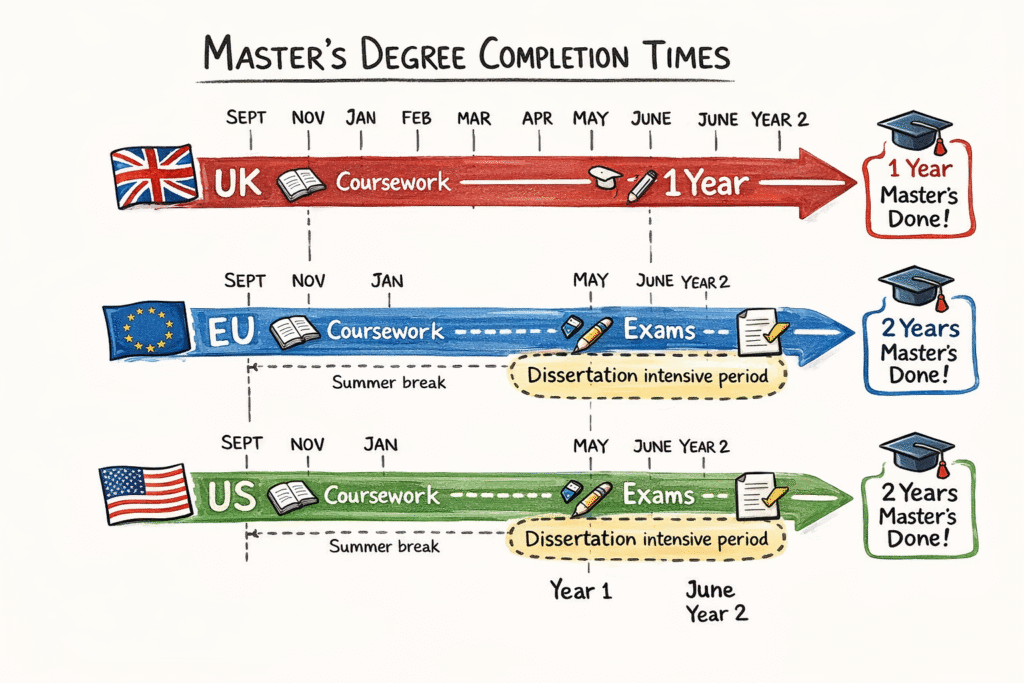
Three years (four in Scotland) of concentrated computer science. That’s it. No fluff.

But here’s where it gets interesting—UK universities have incredibly tight relationships with tech companies. We’re not just talking about career fairs where Amazon and Google show up. I’m talking about research partnerships where your third-year project might involve actual problems these companies are trying to solve. Imperial College students have worked on machine learning projects with DeepMind. Cambridge researchers collaborate regularly with ARM. These aren’t internships—they’re genuine research contributions that occasionally show up in academic papers.

The Heavyweight Champions: Where Everyone Wants to Go

Comparison collage of top UK computer science university campuses showing Cambridge historic architecture, Imperial College London modern buildings, and Edinburgh Informatics Forum contemporary design

Cambridge – The Ancient Institution That Somehow Stays Cutting-Edge

Cambridge’s Computer Science department is ridiculously good, but not for the reasons you’d expect. Yes, they’ve produced Nobel laureates and Turing Award winners. Yes, their research output is phenomenal. But what actually makes Cambridge special for computer science is something more subtle: they teach you to think about computing, not just to code.

Their first-year students spend significant time on mathematical foundations—logic, proofs, discrete mathematics. Sounds boring? Maybe. But this is why Cambridge graduates can walk into any tech company and adapt to whatever framework or language that company uses. They understand the “why” beneath the “how.”

Entry requirements? Brutal. A*A*A typically, with the A* in Maths, Further Maths, or Computer Science. Their interview process is legendary—expect to solve problems on a whiteboard while professors poke holes in your reasoning. It’s not about getting the right answer; it’s about how you think when you’re wrong.

Oxford – Where Theory Meets Philosophy (Yes, Really)

Oxford does something fascinating with their computer science program—they offer it jointly with Mathematics or Philosophy. The Mathematics route is obvious enough, but Computer Science and Philosophy? That’s where things get weird and wonderful.

You find yourself learning computational theory and issues of consciousness and ethics of artificial intelligence. By 2025, as AI spreads out into all spheres of technology, the question of the philosophical implications of what we are creating is no longer an interesting one, but it is a necessary one to answer.

In Oxford you can not escape because of the tutorial system. You will be sitting in a group of one or two students and a professor, justifying your answers to problem sets. It’s intellectually intense. There are those students who do well in this environment. Others find it overwhelming. There’s no middle ground.

Requirements: A A A levels including Maths, A level Maths, further Maths or Computer science. Even when not a necessity, further Maths is highly recommended.

Reality Check: Oxford and Cambridge turn away phenomenal students annually. Unless you get in, you are not necessarily not brilliant, it is likely that they had six people who were equally qualified to fill one position. Never permit failure to mark your whole educational course.

Imperial College London – The STEM Powerhouse

Imperial doesn’t mess around. Everyone there is doing science, technology, engineering, or medicine. No humanities students to balance things out, no theatre productions to distract you (okay, they have some, but you know what I mean).

What this creates is an incredibly focused environment. Your friends are all in STEM fields. Late-night conversations drift toward technical topics. Study groups are naturally organised as people are studying the same mathematical issues.

Imperial computer science program is one which focuses on practical skills in addition to theory. The second and third year group projects are simulated versions of software development settings version control, agile processes, code reviews. It is not only that you are learning to program but that you are learning to be a software engineer.

The downside? Imperial is intense. The workload is heavy. The grading can be harsh. South Kensington is also not very cheap. Yet, employers are fond of Imperial graduates as they are sure that these students are able to cope with stress and produce the results.

The Excellence That Is Overly Ignored: Universities That Should Be More Noticed.

University of Edinburgh – Scotland Technology Hub.

Edinburgh does not have the due credit. Their AI and machine learning studies are the best in the world- they have been doing AI since it was cool (we are talking 1960s). The Informatics School takes up this purpose-built structure that resembles a sci-fi film.

This is what is unique about Edinburgh: the four-year degree system of Scotland provides greater freedom to experiment. Want to combine computer science with cognitive science? Linguistics? Data science? Edinburgh makes it easier than most universities.

Plus, Edinburgh as a city is genuinely wonderful. It’s a fraction of London’s cost, spectacularly beautiful, and has a growing tech scene. If you’re considering top computer science universities UK offers, don’t sleep on Edinburgh just because it’s not in England.

University College London (UCL)- The Power House of Research.

UCL is one of such universities that is literally on the peak of the world and somehow exists outside popular mind. Their computer science department is enormous- their research groups are diverse and include research on the fields of quantum computing to virtual reality to cybersecurity.

What I like about UCL: they allow you to tailor your degree to a considerable extent. Within a typical first year, you may major in, e.g. machine learning, software engineering, or computer graphics. It is not as strictly organized as Cambridge or Imperial which fits those students who are not certain what they want to specialize in.

Bloomsbury is located centrally, without being too expensive (at least, on the London scale). You can walk to the British Library and this is important than you may assume when you are in need of research materials.

What the Rankings Won’t Tell You: Comparing Experiences

University Teaching Style Best For Watch Out For
Cambridge Intensive supervision, theory-heavy Students who love mathematical rigor Can feel isolated; collegiate system is divisive
Oxford Tutorial system, conceptual focus Those wanting breadth with depth Less practical coding than some prefer
Imperial Lecture-based, project-focused Future software engineers Intense workload, expensive location
Edinburgh Flexible, research-oriented AI/ML enthusiasts, interdisciplinary thinkers Four years vs. three years (time & cost)
UCL Modular, customizable Students who know their specialization Large cohorts mean less individual attention
Warwick Balanced theory/practice Strong industry links, collaborative environment Campus can feel isolated from major cities

Beyond the Golden Triangle: Manchester, Bristol, and Warwick.

Now, can we discuss universities that are always able to generate good computer scientists but do not have the Oxbridge aura?

Warwick has also developed in silence one of the most powerful computer science departments in the UK. Their optional industry placement year is outstanding, the students serve as an intern in large tech firms, and, in many cases, they come back with a job offer in their final year. It is a contemporary, specially designed campus, and the computer science facilities are truly good.

Manchester has history (they created one of the first stored-program computers in the world) and a successful tech scene. The Northern Powerhouse initiative implies that the management of the cost of living in Manchester is affordable and at the same time it provides a decent city living. They are even strong in their cybersecurity and data science programs.

Bristol is located in one of the most liveable cities in UK with thriving technological industry. Their course in computer science focuses on innovation – end-year projects frequently become start up businesses. The department has been promoting entrepreneurship with running programs where they are able to match the students with investors and mentors.

The Money Question: Understanding What You’re Actually Paying For

Let’s be brutally honest about costs because university brochures certainly won’t be.

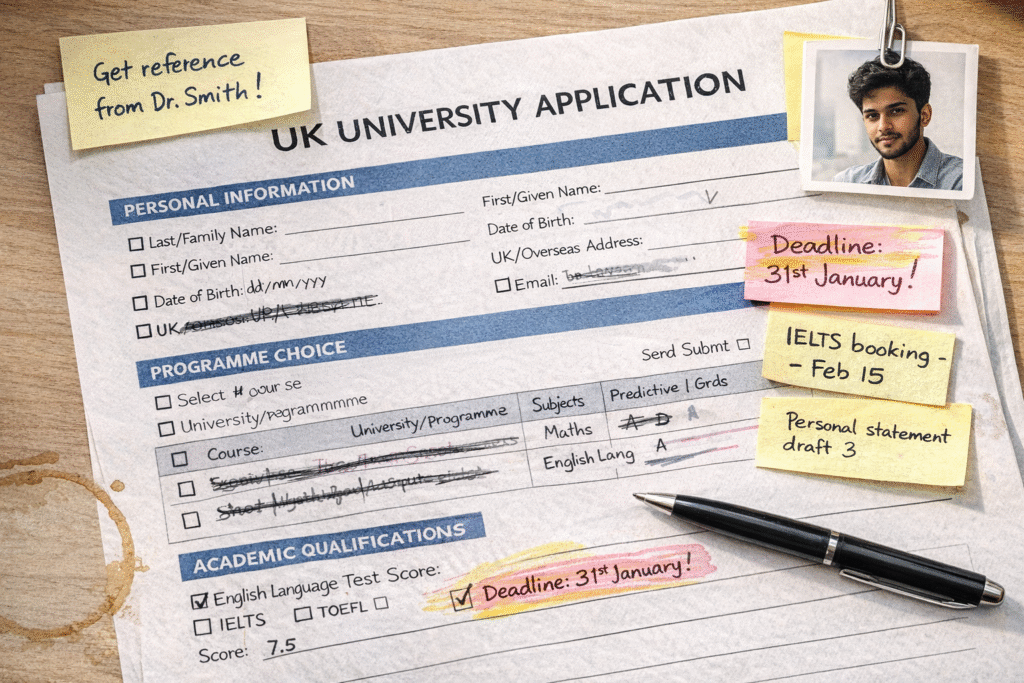
Overhead view of scholarship application materials for UK university computer science programs including laptop with forms, highlighted documents, calculator, and handwritten deadline notes

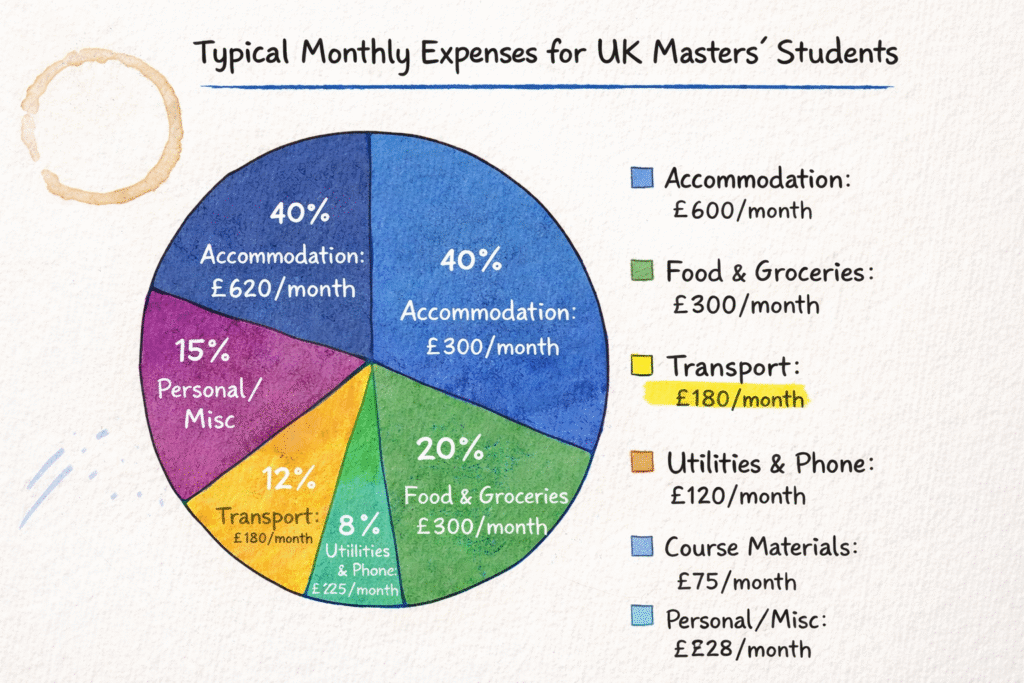
Tuition for UK/EU students is capped at £9,250 annually. For international students? Between £25,000-£40,000 per year depending on the university. That’s just tuition—you still need accommodation, food, transport, and the occasional moment of fun that keeps you sane.

Cost Category London (Annual) Other Cities (Annual)
Accommodation £8,000-£12,000 £5,000-£8,000
Food & Groceries £3,000-£4,000 £2,400-£3,200
Transport £1,400 £600-£900
Books & Equipment £500-£800 £500-£800
Social/Personal £2,000+ £1,500+
TOTAL (excluding tuition) £15,000-£20,000 £10,000-£14,000

Look at those numbers. Now understand why location matters almost as much as the course itself.

Scholarship Insider Tip: Most top computer science universities UK institutions offer merit-based scholarships specifically for computer science students. They don’t advertise these aggressively—you have to dig through department websites or contact admissions directly. Some cover £5,000-£10,000 annually. Others offer full tuition waivers. Apply for everything. It’s free money for filling out forms.

What Your Application Actually Needs (Beyond Perfect Grades)

The dirty secret about university admissions: grades get you through the door, but they don’t differentiate you once you’re in the pile of qualified applicants.

For top computer science universities UK programs, you need:

  1. Evidence You Actually Enjoy This Stuff
    Not “I took computer science class and got good grades.” I mean: Have you built anything? Contributed to open source? Participated in coding competitions? Created a ridiculous project just because you thought it would be interesting? Admissions tutors can spot genuine passion versus résumé-building instantly.
  2. Mathematical Competence That Goes Beyond Classwork
    You need A-level Maths at minimum—most top computer science universities UK programs require it at grade A or above. Many also want Further Maths or Computer Science A-level. Can you think algorithmically? Problem-solving matters more than memorized formulas.
  3. The Ability to Articulate Why Computer Science
    “Good job prospects” isn’t an answer. What problems fascinate you? What area of computer science makes you curious? Your personal statement should reveal how you think, not just list achievements.
  4. Strong References That Say Something Meaningful
    Generic references are useless. Your teachers should provide specific examples of how you approach problems, collaborate with others, or demonstrate intellectual curiosity. Talk to them early—a rushed reference helps nobody.

The Application Process: Navigating UCAS Without Losing Your Mind

UCAS lets you apply to five universities. Choose wisely.

Here is one of the strategies that really work; Select two reach schools (the competitive dream universities you have in mind and would love to be at), two target schools (strong programs where you are a strong candidate), and one safety school (excellent program where you have a high chance of getting an offer).

Do not bother to apply to five top ten ranked universities simply because you can. When you get five refusals, you have wasted all your application cycle. Be actualistic in your profile and at the same time be ambitious.

Most applicants will fall short in the personal statement. Four thousand characters (not words) long. You are attempting to sell five universities at the same time on how you are ideal in computer science. Don’t write it in one sitting. Write it, and keep it a week and revise it. Demonstrate it to instructors, to those who are familiar with you, to those in the profession.

Seeking Professional Assistance in a Way That Works.

Browsing university admissions in the United Kingdom, particularly on competitive fields such as computer science, may be stressful. I have heard a bright student lose a chance because he was not aware of the working of the system and what the university wanted to see.

This is the point where GCRD Hub enters. It is their business to get students to solve this very maze. Headquartered 107-111 Fleet Street, London, they provide custom academic placement services, not generic advice as to which universities will suit your actual learning style, career aspirations, but which universities will make you sound impressive.

Their financial aid and scholarship is of much value especially. In earnest, the amount of money that goes to waste daily and is not collected is immense because the students are not aware that the money exists and miss their application deadlines. GCRD Hub monitors these opportunities and makes sure you are applying to all the opportunities you are eligible in.

They also offer end- to- end admissions service (personal statements reviews, interview preparation, creating time tables) and pre-departure orientation to overseas students. You should call them at +44 7756 428968, in case you are serious in studying at one of the best University in computer science in UK. Sometimes paying for expertise saves you years of trial and error.

Life Beyond Lectures: What University Culture Actually Means

The technical education matters, obviously. But you’re also choosing where you’ll spend three or four formative years of your life. Culture matters more than you think.


  • Cambridge and Oxford have collegiate systems—you’re part of a college within the university, creating tight-knit communities but also potential insularity. Some people love this; others find it claustrophobic.
  • Imperial is relentlessly STEM-focused. If you want to exclusively surround yourself with future engineers and scientists, perfect. If you value interdisciplinary perspectives, it might feel narrow.
  • Edinburgh and Manchester offer big city experiences without London prices. Vibrant cultural scenes, music, art—life beyond computer science exists here.
  • Warwick and Bristol balance campus community with city access. You get the “university bubble” experience while still being able to escape into urban environments regularly.

Visit campuses if you possibly can. Talk to current students (not just official ambassadors). Ask uncomfortable questions about workload, mental health support, diversity, social life. These things matter.

Career Outcomes: What Happens After Graduation?

Let’s cut through the marketing nonsense and look at reality.

Graduates from top computer science universities UK programs have excellent employment prospects—typically 95%+ employment or further study within six months of graduation. Starting salaries for computer science graduates average £28,000-£35,000, but this varies wildly by location and company.

Tech companies recruit heavily from all the universities we’ve discussed. Google, Amazon, Microsoft, Meta—they all run campus recruitment programs at these institutions. The difference isn’t whether these companies recruit there (they do) but rather the density of opportunities and the networking advantages.

Cambridge and Imperial graduates might have slightly easier access to elite tech positions and quant finance roles. But Edinburgh, Manchester, or Warwick graduates who’ve built strong portfolios and gained practical experience through internships? They’re equally competitive.

Your degree gets you the interview. Your skills, projects, and ability to solve problems get you the job.

Split image showing algorithm diagrams on whiteboard next to computer screen displaying implemented code, illustrating connection between theoretical computer science education and practical programming

Frequently Asked Questions

Q: Should I make a decision between the London and other city universities?
A: Not literally, but think seriously of the consequences of the financial situation. The cost of living in London increases your expenditure by about 5000-8000 pounds every year. This is an increment of £15,000-24,000 in three years of degree. Is Imperial or UCL worth twenty thousand pounds higher than Edinburgh or Manchester? Maybe. That is an individual estimation touching on career planning, money and opportunity costs.

A: What is the rankings of the universities to the computer science?
A: They are important in terms of prestige and first time recruitment of graduates. Beyond that? Not as much as you’d think. A student with the top 20 university who develops projects, works on open source and has the experience of an internship will work better than a mediocre student on the top 5 university. Rankings determine the output and reputation of research- not the amount you are going to learn and how you will be in a position to get through your career.

Q: Are international students allowed to work during their study?
A: Yes, but with restrictions. According to the official UK government guidance, students can work no more than 20 hours in a week during term time and full-time during breaks. This is used to counter the cost of living. Most students of computer science get jobs in programming or technological support that pay between £12-18 an hour- very high compared to the usual student jobs.

Q: What will I do should I not join the university of my first choice?
A: Breathe. Your life isn’t over. Go to the best college that admits you, study diligently, make a great portfolio and your career path will be defined by what you do, not which college is located on your diploma certificate. Others of the most successful tech professionals I know of have attended universities that you have never heard of.

Q: Should I do a placement year?
A: If the option exists, yes. One year of experience in the industry can increase dramatically your workability on graduation. You make money (compensating the costs of the additional year), create professional contacts, and will understand what you really want to do with your degree. The majority of students who have done placement years report it to have been the richest experience in their educational life.

Concluding Remarks: Doing What is Right in Your Decision.

The UK has to offer the world the best computer science universities and they are all truly good. Any of them will provide you with a world-class education. It is not a question of what is best. but not what is best, but what is best to me?

Think about the style of learning. Your financial situation. Your career aspirations. The atmosphere in which you will be successful. Geography and culture and cost of living–they are not minor things.

Apply strategically. Get your application hard. Tell the truth of what you desire out of university other than a degree. And keep in mind–no matter where you go, whether you succeed or fail, it is the things you do with the opportunities you are provided with that mainly count, and not the opportunities themselves.

Choose wisely. Work hard. Build cool stuff. The rest will follow.

Final Thoughts: Making the Decision That’s Right for You

The top computer science degrees UK has to offer are all genuinely excellent. You can receive a world-class education at any of them. The question isn’t “which is best?” but rather “which is best for me?”

Consider your learning style. Your financial situation. Your career aspirations. The environment where you’ll thrive. Geography and culture and cost of living—these aren’t trivial concerns.

Apply strategically. Work hard on your application. Be honest about what you want from university beyond just a degree. And remember—wherever you end up, your success depends primarily on what you do with the opportunities you’re given, not which opportunities you’re given.

Choose wisely. Work hard. Build cool stuff. The rest will follow.

University Grading UK 2025: How Your Degree Classification Really Gets Calculated

Here’s something that’ll mess with your head if you’re fresh from A-Levels: getting 70% at university isn’t just “good enough”—it’s extraordinary.

I remember my first essay back. 62%. I’d worked on that thing for weeks. Read everything. Cited all the right people. And… 62%? My A-Level self would’ve been devastated. But my tutor smiled and said, “Well done—that’s a solid 2:1.” Welcome to university grading UK, where the rules you thought you knew get tossed out the window.

The British system doesn’t mess around. While American students chase that 4.0 GPA and a 90% feels standard, UK universities operate in a parallel universe where 40% lets you pass and anything above 70% marks you as genuinely exceptional. It’s not that the work’s easier (ha!). The goalposts just… moved. Dramatically.

Split-screen comparison: in a US classroom, a disappointed student holds a paper marked “72%,” while in a UK lecture hall, another student cheers while holding a paper with the same mark—illustrating cultural grading differences

The Magic Numbers That Actually Matter

Let’s cut through it. University grading UK comes down to five classifications that’ll determine everything from your job prospects to whether you can do that Master’s you’ve been eyeing:

First-Class Honours (70%+)

This is your golden ticket. Roughly 32% of students grabbed one in 2021/22, which sounds like a lot until you’re actually trying to get there. A First means you’ve shown original thinking, critical analysis that goes beyond regurgitating lectures, and work that’d make your professors nod approvingly. Think of it as the academic equivalent of “chef’s kiss.”

Upper Second-Class (2:1) – 60-69%

The sweet spot. About 46% of graduates land here, and honestly? It’s what most employers want to see as a minimum. A 2:1 proves you’ve got strong analytical skills, decent research chops, and can synthesize complex ideas without falling apart. Many graduate schemes won’t even look at applications without it.

Lower Second-Class (2:2) – 50-59%

Often called a “Desmond” after broadcaster Desmond Lynam (Brits love their rhyming slang), a 2:2 shows satisfactory performance. It’s not going to wow anyone, but paired with good work experience or a killer portfolio? You’re still in the game. Just expect some doors to need extra pushing.

Third-Class Honours (40-49%)

Rare as hen’s teeth these days—only 3-5% of students get Thirds. It’s the minimum for an honours degree, but realistically, if you’re heading this direction, something’s gone wrong. Health issues, personal crises, or just a terrible mismatch between you and your course.

Fail (Below 40%)

This isn’t “you’re stupid.” It might mean you didn’t submit enough work, missed deadlines without extensions, or genuinely didn’t grasp the material. Most universities let you resit, though your mark gets capped at 40%.

But here’s where it gets interesting (and by interesting, I mean complicated): not every university calculates your final grade the same way.

How Your Degree Actually Gets Calculated

This is where university grading UK stops being straightforward and starts being… well, British. Bureaucratic. Occasionally baffling.

Most universities use what’s called a weighted average system. Your first year? Often doesn’t count toward your final classification—it’s basically academic training wheels. You need to pass it (get 40% or above in 120 credits worth of modules), but whether you scrape by with 41% or smash it with 75%, it won’t affect your final degree.

Over-the-shoulder view of a laptop screen showing a student’s grade spreadsheet with modules, percentages, and weighted averages—one cell contains a formula error, making the scene relatable

Years two and three, though? Those count. And universities weight them differently:

University Calculation Method Year 2 Weight Year 3 Weight Notes
Most Common (Exit Velocity) 33% 66% Final year counts for twice as much
Final Year Only 0% 100% Only your best 90 credits from year 3
Alternative Weighting 40% 60% Less common, more evenly split
Best of Both Varies Varies University calculates using multiple methods, awards you the highest result

Some universities—bless them—calculate your degree using multiple methods and give you whichever produces the best result. University of Bedfordshire does this, for instance. They’ll work out your grade using just your final year, then again using a 33:66 split between years two and three, and award you the higher classification. It’s almost… generous?

Borderline Cases (Or: When 69% Becomes 70%)

Right. So you’ve worked out your weighted average and—gutting—you’ve got 68.7%. That’s a 2:1. But you really wanted that First.

Enter: borderline consideration.

Most universities have mercy rules for students who land within 1-2% of the next classification boundary. If you’re sitting on 68-69% and you’ve got at least 60 credits worth of First-class grades in your final year, many exam boards will bump you up. It’s discretionary, not automatic, but it happens more than you’d think.

The same applies for the 58-59% crowd hoping for a 2:1, or the 48-49% students praying for a 2:2.

Cynics might call this grade inflation. Between 2018 and 2022, the percentage of Firsts awarded shot up significantly—some call it “student-demanded grade inflation,” others point to COVID disruptions and improved teaching methods. Either way, if you’re borderline, you’ve got a shot.

Group of diverse students checking exam results on their phones, with mixed reactions—some relieved, others disappointed—capturing real emotional tension around borderline grades

Scottish Universities: Because Why Make It Simple?

Scotland, as always, does things differently. Scottish honours degrees take four years instead of three, largely because students there often start university at 17 after sitting their Highers.

The grading classifications remain the same (First, 2:1, 2:2, Third), but the structure shifts:

  • Year 1 and 2: Broader foundational study
  • Year 3 and 4: Honours-level work that counts toward your classification

Also, Scottish universities offer ordinary degrees (three years, no honours) as legitimate qualifications in their own right, not just as consolation prizes for students who didn’t make the honours cut. It’s an entirely different philosophy. For more on this, see the note on frameworks.

Postgraduate Grading: A Simpler Beast

Master’s degrees operate on a cleaner three-tier system:

  • Distinction (70%+): Outstanding work. Opens doors to PhD programs and competitive careers.
  • Merit (60-69%): Strong performance. Solid credential for most career paths.
  • Pass (50-59%): You met the requirements. Not glamorous, but it counts.

Anything below 50%? That’s a fail, and you typically can’t continue. Postgraduate study doesn’t mess about—the assumption is you’ve already proven yourself at undergraduate level, so the bar stays high.

Your dissertation usually carries massive weight here—often 60 credits out of 180 total. Nail that, and you’re golden. Botch it, and your taught module grades won’t save you.

What Employers Actually Care About

Let’s be real: outside certain sectors (law, medicine, consulting, investment banking), most employers don’t obsess over whether you got a 68% or a 72%. They care that you got the degree, ideally a 2:1 or better.

  • For competitive graduate schemes: A 2:1 minimum is basically universal. Some want a First. Very few will consider a 2:2.
  • For creative industries or startups: Your portfolio, work experience, and what you actually did at university often matter more than your classification.
  • For academia or research: A First (or at minimum a very strong 2:1) is essential if you want PhD funding or research positions.

Here’s something that’ll cheer you up if you’re not heading for a First: by five years into your career, most employers stop asking about your degree classification entirely. Your work experience takes over. That 2:2 you were mortified about? Ancient history once you’ve proven yourself professionally.

International Students: Converting the Unconvertible

If you’re used to the American GPA system or another international framework, university grading UK can feel like learning a new language. The conversions aren’t perfect, but here’s the rough guide:

UK Classification Percentage Range Approximate US GPA Letter Grade Equivalent
First-Class 70-100% 3.7-4.0 A/A+
Upper Second (2:1) 60-69% 3.3-3.6 B+
Lower Second (2:2) 50-59% 2.7-3.2 B/C+
Third-Class 40-49% 2.0-2.6 C

Important: these conversions are approximate. Universities and employers know that UK marking is harsher. A 68 percent by a university in Britain is a display of critical thinking and analysis that may receive a higher score in other places. Being under the percentage that you are accustomed to is not a cause to panic.

Students studying in Europe must remember that the ECTS grades (A through F) do have a direct relation to the UK system with Grade A being equivalent to First-class work and Grade E being in the 2:2/Third range.

Illustrated infographic showing multiple grading systems—UK percentages, US GPA, European ECTS, and Asian scales—all pointing toward a confused student in the middle, symbolizing challenges faced by international students

Credits, Mods and Why 40 Is Not a Pass Mark.

All the UK university courses are split into modules (also referred to as units), each with a specific number of credits. A single credit is approximately 10 hours of total educational hours (lectures, seminars, personal study, tests- all of it).

Standard setup:

  • Full academic year: 120 credits
  • Full honours degree: 360 credits in three years (480 in Scotland in four years)
  • Individual modules: Typically 10, 15, 20 or 30 credits.

You have to have enough credits to be able to move on to the next year. The majority of universities accept at least 100 out of 120, that is, you are allowed to fail up to 20 credits worth, and continue (but will probably have to repeat those modules).

The 40 percent magic number is everywhere as it is the minimum mark to pass a module at the undergraduate level. Get 39%? You failed. Get 40%? Congratulations, you passed. It’s binary. Brutal. Very British.

At postgraduate level, that pass mark jumps to 50%, reflecting higher expectations.

When Things Go Wrong: Resits, Extensions, and Extenuating Circumstances

Life happens. You get ill. Someone dies. Your mental health craters. A pandemic shuts down the world (cheers, 2020).

UK universities have systems for this—rigid systems, but systems nonetheless:

  • Extenuating Circumstances (ECs): If something genuinely awful affected your performance, you can submit an EC claim. Universities typically want evidence (doctor’s notes, death certificates, police reports). In case of approval, you may be given a deadline extension, an opportunity to resit without penalty, or even have the weights of some modules modified.
  • Resits/Referrals: Universities will permit one resit per course failed. Catch: they are capped at 40 percent (or 50 percent in the case of a postgrad), even when your resubmission warrants 70 percent. It is supposed to be just to those students that got it right initially but it feels like punishment when you are the one resubmitting.
  • Deferrals: Different from resits. A deferral means you postpone an assessment to the next available opportunity without penalty—your mark isn’t capped. You usually need a solid EC claim to get one approved.
  • Academic Misconduct: Plagiarism, collusion, buying essays—universities take this seriously. Penalties range from mark deductions to complete expulsion. The paranoia around Turnitin scores is real, and honestly? Justified. Don’t risk it.

How to Actually Get a Good Degree (Beyond “Study Harder”)

Everyone tells you to work hard. Wow. Groundbreaking. Here’s what actually helps:

  1. Understand the assessment criteria: Every assignment comes with a marking rubric. Read it. Then read it again. It tells you exactly what separates a 50% answer from a 70% one. Usually it’s: depth of analysis, quality of sources, originality of argument, and technical proficiency (referencing, structure, clarity).
  2. Read beyond the reading list: Want a First? You need to show you’ve engaged with the wider academic conversation. That means finding sources beyond what your lecturer spoon-feeds you. Google Scholar is your friend. So is asking your librarian for help (seriously—they’re basically academic wizards).
  3. Attend office hours: Lecturers hold office hours specifically so students can ask questions. Almost nobody goes. Be the nobody who goes. Ask about your assignment. Clarify concepts you don’t get. Build a relationship so when you’re borderline later, they remember you as the engaged student, not the one who ghosted all year.
  4. Manage your time like an adult: Sounds patronizing, but second-year students pulling all-nighters before deadlines is basically a meme for a reason. Start assignments early enough that you can draft, step away, redraft, and then submit. Your first draft is always rubbish. Everyone’s is. The difference between a 2:2 essay and a 2:1 essay often comes down to whether you gave yourself time to edit properly.
  5. Use feedback effectively: That essay you got back with comments all over it? Gold dust. Your markers are telling you exactly what you’re doing wrong. Read the feedback carefully—don’t just glance at the grade and move on. Identify patterns: are you always weak on structure? Critical analysis? Referencing? Fix those things for next time, and watch your marks climb.

A professor waits alone during office hours, sitting by an open door and glancing at their watch, emphasizing how rarely students use this academic resource

Getting Support Before Things Go Wrong

Here’s what nobody tells you: checking your results isn’t paranoid—it’s essential. Universities make administrative errors more often than you’d think. Students have discovered missing essay marks, incorrect classifications, even results that were never sent. One graduate found half her final-year essays marked as “NR” (not recorded), tanking her grade to a 2:2 when she’d actually earned a 2:1.

Always check the full breakdown, not just your final classification. If something looks off, query it immediately through your department or student services. There is only a certain amount of time during which you can appeal against results (as a rule, within two weeks), so do not procrastinate through embarrassment or fear.

It may seem like a minefield navigating university grading UK, particularly when you are foreign or your family has not attended university. That is where groups such as GCRD Hub can be useful because they provide End-to-End Admissions Support and Pre-Departure Orientation services, which guide students on what they are actually getting into before they become stressed and confused in third year.

When you are applying to UK universities and are confused about what you should expect in terms of grades prior to even trying to arrive in the country, a ten-minute talk with experts who have been inside the system will save you months of headache. Headquartered in 107-111 Fleet Street, London, GCRD Hub assists students with all aspects of Tailored Academic Placement to everything to Scholarship and Financial Aid Support, including overcoming the cultural and academic differences that tend to surprise most visitors.

You can reach them at +44 7756 428968 if you need that kind of support, particularly useful if you’re converting from a GPA system or completely different educational framework and want to know realistically what you’re working toward.

Scottish Qualifications vs. The Rest: A Note on Frameworks

Quick tangent because this confuses people: UK qualifications sit within something called the Regulated Qualifications Framework (RQF) in England, Wales, and Northern Ireland, or the Scottish Credit and Qualifications Framework (SCQF) in Scotland.

An honours degree is Level 6 on the RQF, or Level 10 on the SCQF. Both are equivalent—just numbered differently because… well, Scotland.

This matters for two reasons:

  1. When comparing international qualifications, employers and universities use these frameworks.
  2. If you’re doing something weird like a foundation degree (Level 5) before topping up to honours, understanding the levels helps you know where you stand.

Foundation degrees, HNDs, and HNCs are all Level 5 qualifications—they take two years and can be topped up with one additional year to become full honours degrees. Handy if you’re not sure about committing to three years upfront, or if you need to work while studying.

The Stuff Nobody Tells You

A few things that’ll surprise you about university grading UK:

  • Getting above 80% is practically mythical. Seriously. Marks in the 80s are so rare that when they happen, tutors sometimes double-check them. The system assumes perfection doesn’t exist, so 95%+ marks are essentially impossible unless you’ve literally written something publishable.
  • Your dissertation is weighted heavily. Final-year research projects often count for 30-40 credits—that’s a quarter to a third of your entire year. Some dissertations carry even more weight (up to 60 credits for certain Master’s programs). Mess up your dissertation, and your degree classification tanks, even if everything else was solid. The dissertation often separates students heading for Firsts from those settling for 2:1s.
  • First year still matters psychologically. Even though it doesn’t count toward most degrees, first year establishes your work habits, your understanding of academic expectations, and your stress management skills. Students who coast through first year often crash in second year when the marks suddenly count. Also, at some institutions, first-year performance can affect module choices or placement opportunities in later years, so treating it as “practice” has limits.
  • Universities sometimes change their calculation methods. COVID-19 led to multiple universities altering how they weight years or calculate borderline cases. Always check your institution’s current regulations—don’t rely on what someone two years ahead told you.
  • You can see your transcript anytime. Most universities have student portals where you can check your module marks, credit counts, and even get a projected degree classification. Use it. Regularly. Don’t wait until final year to discover you’re not on track for what you wanted.

Frequently Asked Questions

Is a 2:1 from a “lesser” university worth less than a 2:1 from Oxford?

Honestly? Sometimes, yes. Prestige matters in certain sectors—law, finance, some consultancies definitely favor Russell Group graduates. But for most employers, a 2:1 is a 2:1. Your work experience, skills, and interview performance matter more than your university’s league table position.

Can I improve my degree classification after graduating?

No. Once it’s awarded, it’s final. Some students do a second undergraduate degree or a Master’s to “make up” for a disappointing classification, but you can’t retroactively improve your first degree.

What if I get a grade that seems wrong?

Check your results breakdown immediately—don’t just look at the final classification. Universities make administrative errors (missing marks, miscalculations, incorrect module codes) more often than they admit. You typically have 10-20 working days to query results formally through your department. If you genuinely think there’s been a marking error, you can request a formal review, though this may cost a fee if your grade doesn’t change. Document everything and follow proper procedures.

Do employers check degree classifications?

For graduate schemes? Absolutely. They’ll want proof—usually your final transcript. For other roles, especially after your first job, they’re less likely to verify rigorously. But lying on your CV is grounds for dismissal if caught, so… don’t.

What is the difference between a degree with honors and a normal degree?

Honours degrees have a higher number of credits at Level 6 (final year), they have a dissertation or major project and are classified (First, 2:1, etc.). Ordinary degrees are not classified in any way–you pass or fail. Majority of students in UK do honours degrees, by default.

Are there as many opportunities to help international students as it is with UK students?

Yes- UK universities are bound by law to provide equal opportunities to all students who have been enrolled irrespective of their nationality. All available–student services, academic support, disability services, mental health resources. Language assistance (to non-native English speakers) differs according to the specific institution but typically exists.

So what would happen if I did not pass final year?

One resit chance usually is during summer. Once you pass enough post resit modules you graduate (with a lower classification). In case you just fall short of the required credits, you may be awarded a lesser diploma (such as Diploma of Higher Education, rather than a complete degree), according to what you successfully completed.

The Lesson (Unless You Read Another.)

It is strange university grading UK. It’s harsh. A 70 marks brilliant, 2:1 is really good and to get a first one has to perform all through very well, not hard work.

The system is biased towards critical thinking and original analysis and proving that you can work with complicated concepts yourself. It is not about fact memorization- it is what you do with those facts.

The last category counts when taking your first job and when applying to postgraduate. After that? The real skills and experience come in. Therefore, you should strive to achieve top grades possible but do not make a 2:2 into the end of the world. It’s not. It may have to be more inventive in what you do.

And should you still be confused as to how any of this works, bear in mind every college has academic advisors, student support, and (more and more) peer mentors who have gone through it. Use them. No one is asking you to work out this on your own.

The knowledge of university grading UK is not memorising percentages, but knowing what is expected, how it is measured and how to position oneself to whatever is forward. Be it a PhD, graduate scheme or even launching your own business, your degree is not a wall, it is a platform.

Now go actually read that marking rubric for your next assignment. Seriously. Do it.

Get Accepted to Top UK Campus Universities 2025 – Complete Application Guide Inside

Imagine the following: You are crossing green lawns leading to old edifices of stone, your laptop bag swinging on your hip, you are rushing to a lecture hall where once stood Nobel laureates. The coffee shop discussion is mixed with the far away thrum of a rugby game, and students can be found huddling along the edges of fountains, and discussing everything about quantum physics to the playlist at the party that night.

This isn’t some Hollywood movie set—it’s the daily reality at Britain’s best campus universities UK, where education meets community in ways that city universities simply can’t replicate. And with 2025 intakes now accepting applications, there’s never been a better time to discover why campus life might just change your entire trajectory.

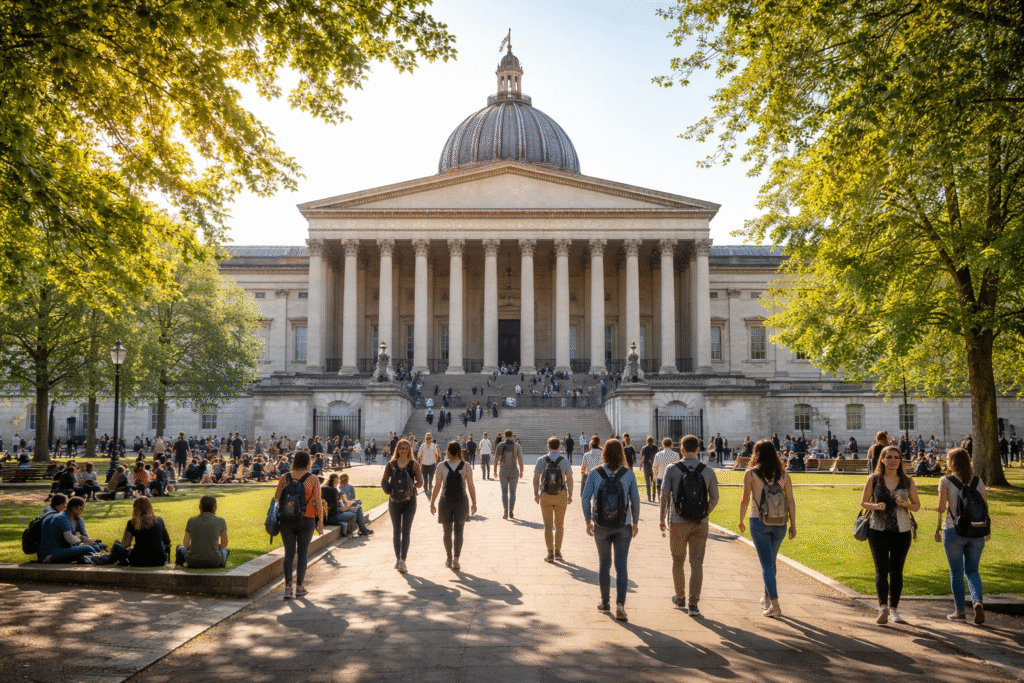
Students studying outdoors at best campus universities UK during golden hour with historic buildings

What Makes a Campus University Actually Worth It?

Let me be brutally honest: campus universities aren’t for everyone. There are students who love the bustle of the London streets and make use of sandwiches that are overcharged by the shops in between lectures in different boroughs. However, when you are a person that likes to have everything in walking distance, be it state-of-the-art laboratories or nighttime kebab deliveries, then university campuses have a treat.

The magic lies in the ecosystem. Unlike city universities where students scatter to the four winds after lectures, campus universities create what I like to call “academic villages.” Your dormmate might study astrophysics while you’re knee-deep in medieval history, yet you’ll find yourselves bonding over terrible cafeteria food and shared Wi-Fi passwords.

Research consistently shows that students at best campus universities UK report higher satisfaction rates—not because the teaching is necessarily better (though often it is), but because of something harder to quantify: belonging.

The Power Players: Rankings That Actually Matter

Here’s where it gets interesting. Oxford retains its position as the best university in the UK, holding the top spot for the ninth consecutive year, but when we talk about campus experiences specifically, the landscape shifts dramatically.

Taking the number one spot this year is Queen’s University Belfast (QUB) in our Best UK Universities 2025 league table according to verified student reviews. That’s right—the university with the happiest students isn’t necessarily the most prestigious one.

But where students report the absolute highest satisfaction? At Birmingham Newman University, apparently. There, 83 percent of students are satisfied overall with their experiences, while traditional powerhouses like LSE rank much lower in student satisfaction surveys.

The Campus Satisfaction Champions

The most revealing insight? Student satisfaction ratings tell us whether or not students are actually having a good time at their unis, and spoiler alert, the ‘better’ universities tend not to do so well by this measure.

Here are the institutions where students are genuinely thriving:

Top Satisfaction Scorers:

The Campus Titans: Where Dreams Get Degrees

Let’s dive into the universities that consistently dominate both academic rankings and campus life satisfaction.

Loughborough University: The Sports Paradise

Consistently in our top ten unis, Loughborough is also known for its sporting prowess. This uni has come top of the British Universities and Colleges Sport league more than 40 times in a row!

What sets Loughborough apart isn’t just its academic reputation—it’s the fact that living on-site helps students to quickly feel at home. The uni’s sports facilities are also recommended as some of the best in the country. We’re talking about facilities that host Olympic training camps, not your typical university gym with three broken treadmills.

The campus sprawls across suburban Loughborough, creating a self-contained universe where everything from cutting-edge research labs to actual spas (yes, spas!) exists within walking distance. Students here don’t just study—they live, breathe, and occasionally sweat their way through one of the UK’s most comprehensive campus experiences.

Loughborough University Olympic-standard sports facilities best campus universities UK 2025

University of Bath: Academic Excellence Meets Roman Splendor

Bath is another regular in our top ten universities. Its main site is just outside the historic city, surrounded by green space.

Bath’s campus achievement is remarkable: The University of Bath earned a 92% rating for world-leading or internationally excellent submissions in the recent Research Excellence Framework (REF 2021). But here’s what makes it special—you’re not just getting world-class education, you’re getting it in a setting that feels like a UNESCO World Heritage Site decided to offer degrees.

The £35 million Sports Training Village isn’t just impressive marketing speak—it’s where Olympic athletes actually train. Imagine doing your morning jog on the same tracks where future gold medalists perfect their technique.

Lancaster University: The Collegiate Magic

Lancaster takes a unique approach that’s worth understanding. Lancaster isn’t just a campus uni; it’s a collegiate uni. Put simply, when you join Lancaster, you join a college – and you remain linked to that college until you graduate.

This system creates something remarkable: lifelong connections that extend far beyond your chosen subject. Your college becomes your anchor, organizing social events and creating communities that many students describe as the defining element of their university experience. It’s like having a built-in family within the larger university ecosystem.

University of Warwick: The Modern Marvel

The campus environment of the University of Warwick is wonderful and has wonderful facilities. It is an excellent education place, having contemporary buildings, study halls, and green space to unwind.

Warwick is a symbol of the new breed of campus universities, built in the 1960s in the forward-looking of educational planners, who were able to come up with intentionally designed academic communities. The massive location on the outskirts of Coventry blends the modern structures with commercialized designs, including the swimming pools, climbing walls among others.

The Hidden Gems: Colleges You Have Never Thought about.

University of Exeter: Multicultural Excellence.

University of Exeter- have a multicultural community, good accommodation and gigantic digital library. However, the secret weapon held by Exeter is that it has a dual-campus system, in which students can enjoy the small college environments and wider university resources.

The University of Exeter is a wonderful place to study having great academic support, beautiful campuses, and excellent student facilities. Students are also always complimentary not only about the facilities but also about the community that is formed through the campus floor plan.

University of Surrey: The Professional Edge

The town of Guildford is home to the University of Surrey that is a nurturing community with more than 16,000 students representing 140 countries, and an amazing academic experience. Only 35 minutes out of central London.

The genius of Surrey is that it is not too far away that it is nearer to London with opportunities of carrying out internships and career development, but at the same time distance enough to retain that essential campus ambiance. Surrey focuses more on learning through practice, having professional standard labs, workshops and simulation centres, which guarantee practical skills development.

Top Campus Universities UK – Quick Comparison

University Student Satisfaction Standout Features Campus Vibe
Loughborough 90%+ Olympic-level sports facilities Athletic excellence meets academic rigor
Bath 92% research excellence UNESCO-adjacent location Historic beauty with modern edge
Lancaster High community satisfaction Collegiate system Built-in social networks
Surrey 85.3% overall satisfaction 35 mins to London Professional focus with campus community
Exeter Outstanding teaching quality Multiple campus options International diversity hub

Modern campus university library with comfortable seating best campus universities UK

The Scottish Powerhouses

Aerial view best campus universities UK with students walking across green lawns

Let’s not forget that some of the best campus universities UK exist north of Hadrian’s Wall. Three Scottish universities are present in the top 25 – the University of Edinburgh, the University of Glasgow and the University of St Andrews.

University of St Andrews: The Prestige Paradise

According to the Times and Sunday Times Good University Guide 2025, the University of St Andrews has the highest student satisfaction, scoring 86%. This isn’t just about academic prestige—St Andrews offers something unique in British higher education.

University of St. Andrews – spectacular beaches, student traditions, and a sense of community are what make this campus so attractive. Where else can you study medieval philosophy in the morning, then walk along beaches that look like they belong in a romantic novel?

The traditions here aren’t just Instagram-worthy—they create genuine bonds. The academic family system, May Day celebrations, and Raisin Weekend create shared experiences that last lifetimes. It’s Harry Potter meets real academic excellence.

The Financial Reality: What You Need to Know

Here’s the part nobody wants to talk about but everyone needs to hear: money matters. Campus universities often offer better value than their city counterparts, particularly when you factor in accommodation and living costs.

Average costs breakdown for 2025:

  • Campus university accommodation: £4,000-£7,000/year
  • City university accommodation: £8,000-£15,000/year
  • Additional city living costs: £2,000-£4,000/year
  • Campus meal plans: £2,500-£3,500/year (optional but convenient)

The math is simple: choosing a campus university can save you thousands annually, money that stays in your pocket rather than disappearing into London landlords’ accounts. When you factor in reduced transport costs and the convenience of on-campus dining, the savings become even more significant.

Application Timeline: Don’t Miss Your Shot

The UCAS system operates on strict deadlines that can make or break your application. With 2025 entry applications now being processed, timing is everything.

Critical 2025 deadlines:

  • January 29, 2025: Deadline for most undergraduate courses (just months away!)
  • October 15, 2024: Oxford, Cambridge, medicine, dentistry, veterinary science (already passed)
  • June 30, 2025: Final deadline before automatic Clearing entry

Don’t leave it too late though, because once you secure your university offer letter you’ll still need to apply for your Student Visa and your University Accommodation.

The Support System That Changes Everything

This is where organizations like GCRD Hub become invaluable. They are located at 107-111 Fleet Street, London and provide customized academic placement services, which can help you to make your application not just generic but really powerful.

They have an all-inclusive admissions assistance which does not only involve filling forms. Since the identification of scholarship till the pre departure orientation, professional guidance can be what makes the difference between the acceptance and rejection letters. You can also contact them on +44 7756 428968 and be personally consulted on how to win a place in the best university campus UK.

The fact is that one has to be strategic when applying to these institutions and not only hopeful about it. The professional assistance is helpful in revealing the opportunities that you may overlook and the pitfalls that can destroy applications, especially when you are pursuing the existence of a few vacancies within the most desirable campus universities.

UCAS Application Deadlines 2025 – Critical Timeline

Deadline Type Date (2025) Affected Courses Status
Early Deadline October 15, 2024 Oxford, Cambridge, Medicine, Dentistry 🔴 PASSED
Main Deadline January 29, 2025 Most undergraduate programs 🟢 ACTIVE
Final Deadline June 30, 2025 Last chance before Clearing 🟡 Upcoming

Note: Applications received after June 30th automatically enter Clearing process

The Campus vs. City Decision Matrix

Before committing to campus life, honestly assess what you want from your university experience. Best campus universities UK excel in certain areas while city universities dominate others.

Choose campus if you:

  • Value tight-knit communities
  • Want everything within walking distance
  • Prefer focus over distraction
  • Enjoy organized social activities
  • Want guaranteed housing
  • Like green spaces and quiet study areas

Choose city if you:

  • Crave cultural diversity and options
  • Want internship/job opportunities
  • Prefer independence and exploration
  • Enjoy nightlife variety
  • Like mixing university life with “real world” experience

The International Student Advantage

Here’s something interesting: there is additional evidence that the generally positive experience of international students, and a better understanding of some of the key drivers of their choices.

Campus universities often provide better support systems for international students. The contained environment makes navigation easier, while dedicated international offices can offer more personalized attention. Language barriers are not that threatening as long as they are walking together in the same boat and experiencing the same route every day.

In addition, there is one more thing that the majority of people are not aware of living on campus is a plus in obtaining a visa. Being certain that you can be contacted in any case at a fixed location and with the assistance systems built-in, the administrative component of studying abroad is much less problematic.

International students socializing in campus café best campus universities UK 2025

Existing Problems and Visions.

Now, we will deal with the elephant. The findings of this year show that the student experience has changed to the less traditional model of having a large number of students living near campus, spending much time within the campus and only working during the holidays.

The cost-of-living crisis has altered the way students behave and more students are engaging in part-time employment and commuting further to the campus in order to save money. However, campus universities are adapting by offering more flexible arrangements and enhanced financial support.

While there is clear scope for improvement, it remains the case that markedly more students believe they receive good value (37%) than feel they receive poor value (29%). This suggests that despite challenges, students still see campus university education as worthwhile investment.

The Future is Now: Why 2025 is Your Year

The landscape of higher education is shifting rapidly, but best campus universities UK remain remarkably resilient. They provide a quality that cannot be experienced in online learning and in city universities: authentic community.

The human relationship that is created on the campuses with trees will be more valuable as we progress into the digital era, rather than less. Friendships that are built out of mutual dining hall time, late library hours are usually more valuable than any LinkedIn connection.

It is not only about getting to college that you will have a degree, but it is getting to be what you are supposed to be. The space, both literal and figurative, that allows such a transformation to take place is offered by campus universities.

Making Your Move

The 2025 intake application period is not going to last indefinitely. Anyday you procrastinate is a day nearer to the lost opportunities in institutions where students document the greatest satisfaction rates in the UK.

Whether you are attracted by the athletic excellence of Loughborough, the old-fashioned beauty of Bath, or the old traditions of St Andrews, the best campuses universities in the UK can provide you with memories that can last long after leaving.

Whether you can afford to apply or not is not the question, but whether you can afford not to. Your future self will appreciate the daring decision that you have made and not only to pursue education, but transformation.

Frequently Asked Questions

Q: What are the application dates of UK university intakes 2025?
A: Most courses have a major deadline of January 29, 2025 (being given fast!). Oxford, Cambridge, medicine, dentistry and veterinary science had a deadline of earlier October 15, 2024 however, this has passed. Incase you missed the deadline of October, then concentrate on other great best campus universities UK opportunities.

Q: How is campus universities different with city universities?
A: Campus Universities have it all within a walking distance in a specific location which forms close-knit communities and in many cases concursive support systems. City universities are incorporated into the city, which provides more cultural variety but demands increased traveling among facilities and in general increased living expenses.

Q: What are the most satisfied universities in the UK campus?
A: Recent surveys show that Birmingham Newman University (83%), University of St Andrews (83%), and Bishop Grosseteste University (82%) are in the top when it comes to student satisfaction.

Question: Do campus universities cost more than city universities?
A: No. Generally, no. Campus universities are cheaper, as there are low accommodation and living costs in contrast to high cost city centers, such as London.

Q: Are international students provided with sufficient support in campus universities?
A: Yes, international students tend to be better supported by campus universities since contained environments offer greater personalization through the international offices.

Complete Your 1-Year Top-Up Degree Online UK: Direct Path to Best MBA Programs 2025

Here’s something that might surprise you: the fastest route to a top-tier MBA in the UK isn’t always the traditional three-year bachelor’s degree. Sometimes, it’s a cleverly constructed academic detour that gets you there in half the time.

I’ve watched countless ambitious professionals get stuck in educational limbo—trapped between their current qualifications and their MBA dreams. They’ve got the work experience, the drive, and the vision, but they’re missing that crucial bachelor’s degree that opens MBA doors. Enter the 1 year top up degree in UK online—a brilliantly designed bridge that’s reshaping how we think about higher education pathways.

1-year top-up degree pathway bridge leading to MBA graduation cap showing educational shortcut versus traditional route

When Traditional Doesn’t Cut It

Let’s be honest: not everyone follows the neat, linear path from A-levels to bachelor’s to master’s. Real life is messier than that. Maybe you started a business instead of university. Perhaps you pursued professional certifications that employers value but universities don’t always recognize. Or you completed a diploma years ago and now find yourself needing more academic credentials to unlock the next level.

This is where the 1-year top-up degree becomes your secret weapon. It’s not just about collecting another certificate—it’s about strategic positioning for what comes next.

The Architecture of Acceleration

A 1 year top up degree in UK online works on a deceptively simple principle: you already have foundational knowledge, so why repeat it? These programs take your existing qualifications—whether that’s a Higher National Diploma (HND), Foundation Degree, or equivalent professional experience—and build on them directly.

The structure is refreshingly straightforward:

Infographic showing building blocks from HND Foundation Degree to bachelor's degree leading to best online MBA UK programs

  • Direct entry into final year: You skip the first two years of undergraduate study
  • Intensive focus: Concentrated learning in your chosen field
  • Flexible delivery: Online format that works around your existing commitments
  • Full bachelor’s degree: Same qualification as traditional three-year programs

But here’s what makes this particularly clever for MBA aspirants: you’re not just getting any bachelor’s degree. You’re strategically choosing one that complements your MBA goals.

The MBA Qualification Route

Qualification Route Time Investment MBA Readiness Cost Efficiency
Traditional 3-year degree 3 years full-time High (with work experience) Low
1-year top-up degree 12 months online Excellent (targeted preparation) Very high
Direct MBA entry (without degree) N/A Limited options Restricted access

Connection: More Than Just Meeting Requirements

The best 1 year top up degree in UK online programs don’t just tick boxes—they actively prepare you for MBA success. I’ve seen students choose business management top-ups that introduce them to case study methodology, or finance-focused programs that build the quantitative skills they’ll need in advanced business courses.

This isn’t accidental. The most forward-thinking universities design these programs with MBA pathways in mind. They understand that many students aren’t stopping at the bachelor’s level—they’re using it as a launching pad.

Strategic Subject Selection

Your choice of top-up subject matters more than you might think. If you’re eyeing a best online MBA UK program with a focus on:

  • Digital transformation: Consider a Business Information Systems top-up
  • International business: Look at Global Business Management options
  • Entrepreneurship: Business Enterprise programs offer excellent preparation
  • Finance leadership: Accounting and Finance top-ups build crucial foundation skills

The beauty lies in the synergy. Your top-up year becomes Year Zero of your MBA preparation, not just a qualification hurdle to clear.

Network diagram connecting 1 year top up degree UK online to various MBA specializations and career outcomes pathways

The Online Advantage: Flexibility Meets Rigor

Online delivery transforms the entire equation. Suddenly, geographical constraints disappear. You’re not limited to universities within commuting distance—you have access to the best online MBA UK programs regardless of where you live or work.

But flexibility doesn’t mean easy. The best programs maintain rigorous academic standards while accommodating working professionals’ schedules. Expect:

  • Synchronous elements: Live virtual seminars and group projects
  • Asynchronous study: Self-paced content consumption and assignment completion
  • Intensive blocks: Occasional weekend workshops or short residential components
  • Professional integration: Projects that connect directly to your current workplace

I particularly appreciate programs that blur the line between study and professional development. Why shouldn’t your dissertation address a real challenge in your current organization?

Professional studying 1 year top up degree online at home office with UK university materials and world map background

Quality Markers: Separating Excellence from Mediocrity

Not all 1 year top up degree in UK online programs are created equal. The difference between a qualification mill and a genuine academic achievement lies in specific markers:

  • Accreditation matters intensely. Look for programs recognized by professional bodies relevant to your field. For business-focused top-ups, AACSB, AMBA, or EQUIS accreditation signals serious academic credibility.
  • Faculty engagement distinguishes great programs from adequate ones. Are professors active researchers? Do they bring current industry experience into their teaching? Can you access them for genuine intellectual mentorship?
  • Assessment variety reveals program sophistication. The best courses combine traditional essays with case studies, presentations, practical projects, and peer collaboration. If everything’s a multiple-choice exam, look elsewhere.

The Admissions Reality Check

Let’s address the elephant in the room: not everyone qualifies for direct entry into top-up programs. Universities maintain specific requirements, typically:

  • HND or equivalent diploma with strong grades
  • Relevant work experience (usually 2+ years)
  • English language proficiency for international students
  • Sometimes, a bridging course for knowledge gaps

This is where services like those offered by GCRD Hub become invaluable. Based at 107-111 Fleet Street in London, they specialize in navigating these qualification requirements, offering tailored academic placement support that matches your background to the right programs. Their end-to-end admissions support can be the difference between confusion and clarity in this process.

Pro tip: Don’t assume you don’t qualify without professional guidance. Requirements are often more flexible than they initially appear, and experienced advisors know which programs consider non-traditional backgrounds.

Cost Calculations: The Economics of Efficiency

The financial argument for 1 year top up degree in UK online programs is compelling but requires careful analysis.

Table 2: Cost Analysis Breakdown

Cost Factor 1-Year Top-Up 3-Year Traditional Notes
Tuition fees £8,000-15,000 £25,000-45,000 Significant savings
Opportunity cost 1 year salary impact 3 years lost earnings Massive difference for working professionals
Living costs Minimal (online) £20,000-30,000/year Online eliminates accommodation/transport
Time to MBA entry 1 year 3 years Faster career progression

But here’s what the numbers don’t capture: the psychological value of momentum. When you’re ready to advance your career, three years feels like forever. One year feels manageable—even exciting.

Timeline comparison showing 3-year traditional degree versus 1-year online top-up degree career progression to MBA success

MBA Integration: The Seamless Transition

The most successful 1 year top up degree in UK online students think beyond the immediate qualification. They’re already researching MBA programs, understanding admission requirements, and building relationships with universities they want to attend.

This forward-thinking approach pays dividends. By the time you complete your top-up degree, you’re not starting MBA research from scratch—you’re executing a plan you’ve been developing for months.

Smart move: Use your top-up dissertation to explore a topic relevant to your target MBA specialization. This creates intellectual continuity and demonstrates commitment to your chosen field.

The Application Strategy: Timing Is Everything

Here’s where many people stumble: they complete their 1 year top up degree in UK online and then start thinking about next steps. Better approach? Start MBA applications during your top-up year.

Most best online MBA UK programs have multiple intake points throughout the year. When you get it right, you can more-or-less go straight through the bachelors and masters level without having to take a gap year and all the problems thereof.

This is even more critical to international students. The set of visa requirements, scholarship submissions and the day of the program start form a spider web of dependencies. This is where GCRD Hub scholarship and financial aid assistance along with their pre-departure orientation comes in handy. Going through these timing factors with professionals can be the key to a hassle-free flow or a frustrating stalling.

Beyond the Classroom: Professional Integration

The best 1 year top up degree in UK online programs don’t exist in academic isolation. They connect directly to professional development, often through:

  • Industry partnerships that provide real-world project opportunities
  • Alumni networks that extend beyond graduation
  • Career services that understand the unique position of accelerated students
  • Professional body recognition that adds immediate career value

I’ve seen students leverage their top-up year to make significant career moves—using their studies as evidence of commitment to professional development while building skills they apply immediately in their current roles.

The Global Perspective: UK Qualifications Worldwide

A UK 1 year top up degree in UK online carries international recognition that extends far beyond British borders. This global portability becomes particularly valuable if your MBA aspirations include international programs or multinational career opportunities.

The combination of UK academic credibility with online accessibility creates unique opportunities for students worldwide. You’re accessing British higher education standards without geographical constraints—a powerful combination for career advancement.

Potential Pitfalls: What Could Go Wrong?

Be realistic about what you may run into:

  • Academic shock: Depending on final year undergraduate work without the gradual pressures of the years before it can seem like a shock. The demands are increased, the speed is increased, and the needs in independent learning are increased.
  • Imposter syndrome: Attending a college with students who have already finished two first years alongside them can lead to developing feelings of incompetence. This is natural and temporary- your work life tends to balance out lack of academic development.
  • Difficulty in time management: It takes advanced planning to strike a balance between work, studying, and personal life. Online delivery is an assistive tool however, it does not remove time commitment needed to achieve quality results.
  • Recognition differences: Although most best online MBA UK programs will fairly easily accept top-up degrees, there are quite a few highly selective institutions that might perceive them as equivalent to non-degrees. Think of research particulars.

Making the Decision: Is This Right for You?

The 1 year top up degree in UK online route to MBA excellence isn’t universally appropriate. It works best for:

  • Working professionals with relevant experience and qualifications
  • Individuals seeking efficient pathways to advanced study
  • Those comfortable with intensive, self-directed learning
  • Students who value flexibility and practical application
  • Career changers who need academic credentials quickly

It’s less suitable if you:

  • Lack foundational qualifications or experience
  • Prefer traditional, campus-based learning environments
  • Need extensive academic support and scaffolding
  • Have unlimited time for conventional study routes

The Future Landscape: Trends to Watch

The popularity of 1 year top up degree in UK online programs reflects broader changes in higher education. Universities increasingly recognize that traditional pathways don’t serve everyone, and that professional experience deserves academic credit.

This trend suggests expanding options, better recognition, and more sophisticated program design in coming years. Early adopters often benefit from less competition and more personalized attention—advantages that may diminish as these pathways become mainstream.

Frequently Asked Questions

Does a top-up degree (1 year) equal a full bachelor degree? Yes, absolutely. You graduate with the same bachelors degree qualification as students who went through the full three years course. The distinction is in the direction, but not in the result.

So can I do any MBA once I have a top-up degree? Yes in general but each institution has specific requirements. The majority of the best online MBA UK programs accept top-up degrees, though it may pay to consult the university in question on their specific requirements.

What is the 1-year top-up degree price? The entire program usually costs between 8,000 and 15,000, which is much less than three-year degrees when you consider not only the tuition but also the opportunity costs.

What would the entry qualifications be? A majority of programs will need an HND, Foundation Degree or other professional qualification, and work experience. The requirement of English language is to international students.

Is it possible to study online top-up degrees as an international student? Yes, online courses can be taken anywhere around the world, however, visa needs might be different should you require going to the UK to take any of the residential aspects.

The 1 year top up degree in UK online is not only an effective career pathway to learning, it is a good move towards a business future. It can serve as the key to entry into the finest online MBA UK courses and set your career path straight to the top when selected carefully and implemented properly.

Easy to switch industries, fast-track your career, or just institutionalize what you already know with a diploma, this track provides an attractive balance of efficiency, flexibility, and quality of results that other paths have a hard time keeping pace with.

The trick here is not only to complete the program but to use it strategically as an element of a larger professional development strategy. Properly executed, your top-up year will become the springboard into the next round of your career, which may be that MBA you are considering.

Online MBA UK Application Guide: Get Into Imperial, Warwick or Durham 2025

There’s something almost paradoxical about pursuing an MBA from your kitchen table. Yet here we are in 2025, watching some of the world’s most prestigious business schools deliver transformational education through fiber optic cables and late-night Zoom sessions. The best online MBA UK programs aren’t just pandemic-era workarounds anymore—they’ve become sophisticated ecosystems of learning that might actually surpass their traditional counterparts in certain ways.

I’ve spent months diving deep into this landscape, talking to students who’ve traded boardroom networking for virtual breakout rooms, and honestly? The quality gap between online and on-campus programs has virtually disappeared. What remains are some genuinely brilliant options that could reshape your career without requiring you to pause it entirely.

Split screen showing traditional MBA classroom versus diverse international students in virtual online MBA seminar session

The New Guard: Britain’s Digital MBA Pioneers

Imperial College Business School: The Tech-Forward Trendsetter

Imperial’s Global Online MBA recently clinched the #2 spot worldwide and first in the UK in the Financial Times Online MBA Rankings 2025, and frankly, it’s not hard to see why. This isn’t your grandfather’s correspondence course—the program allows you to graduate in 21, 24, or 32 months, giving you the flexibility to match your learning pace with your life’s demands Imperial Business School – London, UK.

What strikes me about Imperial is how they’ve weaponized their reputation for innovation. Students get exposed to a multicultural setting with multiple nationalities represented in recent cohorts, creating a global classroom that would make traditional programs jealous. The Hub, their bespoke online learning platform, feels less like distance learning and more like stepping into the future of education.

Tuition: £66,000 (2025-26)
Duration: 21-32 months
Start dates: January and September

University of Edinburgh Business School: The Thoughtful Alternative

Edinburgh takes a different approach—their online MBA can be completed in as little as 24 months with a commitment of 5-9 hours per week The Edinburgh MBA – University of Edinburgh Business School. What I appreciate here is the human touch: students engage in two personal development coaching sessions focused on achieving personal potential, because let’s be honest, most of us could use the guidance.

The program’s March and September start dates give you flexibility, and the dedicated Edinburgh-based MBA team provides support wherever you are in the world. There’s something reassuring about knowing real people are behind the pixels.

Tuition: £34,005
Duration: 24-30 months
Start dates: March and September

Durham University Business School: The Sustainability Champion

Durham’s Online MBA ranked 9th globally, 5th in Europe, and 3rd in the UK according to the Financial Times Online MBA Rankings 2025—impressive numbers for a program that emphasizes something often overlooked: environmental and social responsibility.

Durham ranks third on the FT ranking for ESG and net zero teaching, which feels timely given how sustainability has moved from nice-to-have to business-critical. The program runs over two years with optional on-campus components, striking that increasingly important balance between digital convenience and human connection.

Tuition: £32,000
Duration: 24 months
Start date: September

Warwick Business School: The Change-Maker Factory

Warwick’s Global Online MBA ranked 2nd in the Financial Times Online MBA Rankings 2025, and they’ve built their entire brand around developing “Change Makers.” It sounds like consulting speak, but there’s substance here. The program spans two years part-time, extendable up to five years, with two residential weeks at either the Warwick campus or The Shard in London how to apply | Global Online MBA | Distance Learning Online MBA | Warwick Business School.

What sets Warwick apart is their acknowledgment that life happens. You can slow down or take a break of up to two years before continuing your studies—a level of flexibility that recognizes adult learners aren’t just students, they’re humans with careers, families, and unexpected curveballs.

Tuition: £41,500 (January 2026) / £43,550 (June 2026)
Duration: 2-5 years
Start dates: January and June

Additional Contenders Worth Considering

Manchester Business School: The Global Perspective

Manchester deserves mention for their Global MBA program, which offers flexible online delivery with international residencies. The program focuses heavily on global business strategy and cross-cultural management—increasingly valuable skills in our interconnected world.

Henley Business School: The Established Alternative

Part of the University of Reading, Henley has been delivering distance learning MBAs for decades. Their flexible approach allows students to combine online study with optional face-to-face sessions across multiple locations.

The Numbers Game: What Rankings Actually Tell Us

School FT Online MBA Ranking 2025 Global Position Annual Tuition Duration Range
Imperial College 1st in UK 2nd worldwide £66,000 21-32 months
Warwick Business School 2nd in UK 2nd worldwide £41,500+ 2-5 years
Durham University 3rd in UK 9th worldwide £32,000 24 months
University of Edinburgh Top 10 UK Various rankings £34,005 24-30 months

Rankings, though, only tell part of the story. I’ve learned that the best online MBA UK program depends heavily on what you’re optimizing for: speed, cost, prestige, flexibility, or specialization focus.

The Real Cost of Virtual Prestige

Beyond tuition lies the hidden calculus that makes online MBAs particularly attractive. You’re not relocating, not taking a career sabbatical, not paying London rent prices. But you’re also not getting the serendipitous coffee conversations that often matter more than any lecture.

Most programs offer some form of scholarship support. Imperial provides various funding options, Warwick offers scholarships up to £14,525, and Edinburgh has multiple award categories. The key is applying early—scholarship money tends to evaporate as application seasons progress.

When Reality Meets Virtual Ambition

Here’s what nobody tells you about pursuing the best online MBA UK programs: they require a different kind of discipline entirely. Campus-based students have built-in accountability through physical presence and social pressure. Online students need to create their own structure, their own deadlines, their own motivation on Tuesday evenings when Netflix seems infinitely more appealing than supply chain management.

The successful online MBA students I’ve met share certain traits: they’re excellent project managers of their own time, comfortable with technology that occasionally fails at crucial moments, and realistic about the networking limitations of virtual programs (though most programs try to compensate with alumni events and residential components).

Modern home office setup with multiple screens displaying online MBA learning platforms and international video calls

The Integration Challenge

Let me address the elephant in the virtual room: employer perception. Imperial’s degree certificate doesn’t mention the mode of study, ensuring the same recognition as their on-campus programs. Most top-tier schools have followed suit, recognizing that the stigma around online education has largely disappeared in post-2020 professional environments.

However, if your career aspirations involve ultra-traditional sectors (think old-school investment banking or management consulting), having those residential components and physical networking opportunities might still matter. Programs like Warwick and Imperial build in face-to-face elements specifically to address this gap.

Navigating the Application Journey with Expert Support

For professionals navigating this decision, working with specialists who understand the nuances becomes crucial. This is where GCRD Hub’s expertise becomes invaluable. Based at 107-111 Fleet Street in London’s heart, they’ve built their reputation on understanding exactly what makes best online MBA UK applications successful.

Their tailored academic placement services go beyond basic application support. When you’re weighing Imperial’s innovation focus against Durham’s sustainability emphasis, or trying to understand which program aligns with your specific industry background, having someone who’s worked with multiple cohorts across these schools makes the difference between hoping for the best and strategically positioning yourself for success.

GCRD Hub’s scholarship and financial aid support becomes particularly relevant given the £32,000-£66,000 investment range across these programs. Sometimes the difference between getting funding and self-financing comes down to understanding which schools prioritize which types of applicants—insider knowledge that comes from working with multiple programs over time.

Their end-to-end admissions support includes everything from essay coaching to interview preparation, but more importantly, they help candidates understand the cultural nuances that separate successful applications from generic ones. When Warwick talks about “Change Makers,” they’re looking for specific evidence of impact. When Imperial emphasizes innovation, they want to see concrete examples of transformational thinking.

Perhaps most valuable is their pre-departure orientation. Even for online programs, understanding UK business culture, academic expectations, and networking protocols can determine whether you merely complete a degree or truly maximize the experience. Call them at +44 7756 428968 to discuss how their services can transform your best online MBA UK journey from overwhelming to strategic.

Program Comparison: The Granular Details

Feature Imperial Warwick Durham Edinburgh
Residential Requirements Optional visits 2 weeks mandatory Optional modules Annual option
GMAT Requirement Not required Not required Not required Not required
Min. Work Experience 3 years 3+ years 3+ years 3 years managerial
Weekly Time Commitment 15-20 hours 20 hours 12-15 hours 5-9 hours
Accreditation Triple crown Triple crown Triple crown Triple crown

Notice something? None of these programs require GMAT scores anymore. The shift reflects a broader recognition that work experience and demonstrated leadership matter more than standardized test performance for working professionals.

Evening view of London financial district featuring Imperial College and The Shard representing top UK business schools

Specialization Opportunities: Finding Your Niche

Imperial offers concentrations in Analytics, Digital Strategy & Transformation, Entrepreneurship, ESG & Stakeholder Impact, and Finance. Warwick provides specializations in social and environmental sustainability, entrepreneurship, and healthcare. Durham emphasizes sustainability integration across modules rather than separate tracks.

These specializations aren’t just marketing gimmicks—they reflect real shifts in how businesses operate. The sustainability focus, in particular, addresses growing regulatory requirements and stakeholder expectations that make ESG literacy increasingly valuable.

The Application Maze: Getting In

Application processes have become surprisingly sophisticated. Most schools want to see evidence of leadership impact rather than just job titles. The essays focus heavily on future goals and how the specific best online MBA UK program aligns with those ambitions.

Warwick looks for “Change Maker” qualities—strategic thinking, creativity, and collaborative leadership. Imperial emphasizes innovation and global perspective. Durham values sustainability consciousness and analytical thinking. Edinburgh seeks strategic leadership potential.

The interview processes are typically 30-minute video calls focusing on motivation, leadership experience, and program fit. They’re conversational rather than interrogational, designed to assess cultural fit as much as competence.

Career Outcomes: The Post-MBA Reality

MBA graduates from top UK programs typically see salary increases of 75-108% within three years of graduation QS EMBA Rankings – Global 2025. But the career impact goes beyond compensation—these programs provide frameworks for thinking strategically about business problems and networks for accessing opportunities.

The global nature of online cohorts creates particularly interesting networking dynamics. Your study group might include a fintech entrepreneur from Singapore, a healthcare executive from Nigeria, and a renewable energy consultant from Germany. These connections often prove more valuable than traditional alumni networks because they’re built through intense collaborative work rather than geographical proximity.

Infographic showing MBA graduate career progression from entry level to executive positions with salary increases

Technology and Innovation in Virtual Learning

The best online MBA UK programs have invested heavily in learning technologies that go far beyond basic video conferencing. Imperial’s Hub platform incorporates AI-driven personalized learning paths. Warwick’s my.wbs environment includes sophisticated simulation tools. Durham uses virtual reality for certain business scenarios.

These technological investments aren’t just about keeping up with trends—they’re about creating learning experiences that can actually surpass traditional classroom limitations. When you can instantly access global case studies, participate in real-time simulations with international peers, and receive AI-powered feedback on assignments, the learning becomes more dynamic than sitting in a lecture hall.

Screenshot montage of online MBA students collaborating through video calls, presentations and digital whiteboards

Making Your Decision

Choosing among the best online MBA UK programs ultimately comes down to three key factors:

  • Time flexibility: Can you commit to residential requirements? Edinburgh and Durham offer the most flexibility here, while Warwick requires physical attendance.
  • Financial investment: At £32,000, Durham offers exceptional value. Imperial commands premium pricing but delivers correspondingly prestigious credentials.
  • Career alignment: If you’re targeting tech or innovation roles, Imperial’s approach makes sense. For sustainability-focused careers, Durham’s emphasis becomes relevant. For broad business leadership, Warwick’s change-maker philosophy might resonate.

The quality gap between these programs is surprisingly narrow. They all deliver rigorous business education, global perspectives, and strong career support. The differences lie in culture, emphasis, and logistics rather than educational quality.

Expert Tip: Don’t just look at rankings when choosing your best online MBA UK program. Consider the weekly time commitment, residential requirements, and career support services that align with your specific situation.

The Future of Virtual Business Education

We’re witnessing something unprecedented: traditional education’s most prestige-conscious sector embracing digital delivery without compromising standards. These best online MBA UK programs aren’t temporary solutions to pandemic constraints—they’re permanent innovations that make elite business education accessible to working professionals worldwide.

The next evolution likely involves even more sophisticated virtual reality experiences, AI-powered personalized learning paths, and deeper integration with professional work environments. But for now, these programs offer something that seemed impossible just a few years ago: world-class MBA education that fits around your existing life rather than replacing it.

Financial Planning and ROI Considerations

When evaluating the best online MBA UK options, consider the total cost of ownership beyond tuition. Online programs eliminate accommodation and relocation costs, but they require significant time investment that has opportunity costs. Most students report the financial returns justify the investment within 2-3 years through salary increases and career advancement.

The scholarship landscape has become increasingly competitive. Early applications generally have better funding chances, and many programs offer employer-sponsored options that can significantly reduce personal financial burden.

If you’re considering this path, the advice from current students is consistent: start early, be realistic about time commitments, and choose based on long-term career alignment rather than short-term convenience. The investment—financial, temporal, and emotional—is significant enough that half-hearted participation becomes expensive self-sabotage.

The best online MBA UK for you isn’t necessarily the highest-ranked—it’s the one that aligns with your career trajectory, learning style, and life circumstances while maintaining the academic rigor that makes the degree valuable in the first place.

Frequently Asked Questions

Q: Are online MBAs from UK universities recognized internationally?
A: Yes, especially from triple-accredited schools like those mentioned. The degree certificates typically don’t indicate the delivery method, ensuring equal recognition.

Q: How do online MBA programs handle group work and networking?
A: Through sophisticated virtual collaboration platforms, mandatory residential components, and structured networking events. Many students report forming stronger bonds through intensive online collaboration than traditional classroom settings.

Q: What technical requirements do I need for these programs?
A: Reliable high-speed internet, updated computer/tablet, webcam, and microphone. Most programs provide detailed technical specifications and support.

Q: Can I complete an online MBA while working full-time?
A: Yes, these programs are specifically designed for working professionals. Expect 12-20 hours weekly commitment depending on the program.

Q: How do UK online MBA costs compare to US programs?
A: UK programs typically cost £32,000-£66,000 versus $100,000+ for comparable US programs, offering significant value especially considering shorter duration.

Q: What’s the difference between online and distance learning MBAs?
A: Modern online MBAs include live interaction, real-time collaboration, and virtual classroom experiences. They’re far more interactive than traditional correspondence courses.

Q: How important are the residential components?
A: While optional in some programs, residential weeks provide valuable face-to-face networking and hands-on learning experiences that complement online education.

Q: What career support do online MBA programs provide?
A: Most offer dedicated career services, including coaching, job placement assistance, alumni networking events, and industry connections. The support level varies by program.

Your Complete Guide to Applying for a UK Masters in Management in 2025

Your Complete Guide to Applying for a UK Master’s in Management in 2025

Most people get this completely wrong. When I tell prospective students about pursuing a masters in management UK, they immediately roll their eyes and mutter something about “oversaturated markets” or “Brexit complications.”

But here’s what they’re missing: while everyone else is chasing Silicon Valley dreams or fighting for spots at overpriced American programs, the UK has quietly assembled some of the world’s most sophisticated management education ecosystems. And honestly? The timing couldn’t be better.

I’ve watched hundreds of students transform their careers through these programs, and the patterns are becoming impossible to ignore. The UK isn’t just offering degrees—it’s delivering something far more valuable: a launching pad into the global business elite.

The Rankings Revolution Nobody Talks About

Let’s address the elephant in the room. London Business School ranks #6 in the world for our Masters in Management Masters in Management from London Business School – Fees, Requirements, Ranking, Eligibility, Scholarship, while Imperial College Business School is housed within Imperial College London, a world-leading STEM university, so the reputation of the MSc Management program is high Master in Management (MIM) in United Kingdom: 2025 Master’s Guide | Mastersportal. But rankings only tell half the story.

What’s really happening is a geographical arbitrage opportunity. 94% of London Business School master’s in management grads accepted an offer within three months of graduation, with an average starting salary of $60,688 (£47,054) London Business School Rankings 2026: Latest World and National Rankings. These aren’t just numbers—they represent systematic career acceleration.

The secret sauce? British business schools have mastered something their American counterparts are still figuring out: creating genuine international diversity. Over 90% of Graduate Masters students at London Business School are international, with over 110 nationalities represented on campus London Business School Rankings 2026: Latest World and National Rankings.

Think about it. You’re not just getting an education; you’re buying access to the most globally connected business networks on Earth.

London Business School: The Quiet Giant

LBS operates with an almost unfair advantage. Positioned in Baker Street (yes, like Sherlock Holmes), it’s located just around the corner from Regent’s Park in Baker Street, a few stops from the City, London’s world-famous financial district London Business School Rankings 2026: Latest World and National Rankings.

But location is just the beginning. What makes LBS genuinely special is its approach to practical learning. The masters in management uk program here isn’t your typical academic exercise—it’s career preparation disguised as education.

Recent graduates typically moved into consulting (48%), financial services (26%) or technology (16%) London Business School Rankings 2026: Latest World and National Rankings. Notice how these aren’t random career paths—they’re the highest-growth, highest-compensation sectors in the global economy.

The updated fees reflect the program’s premium positioning. Tuition fees for the Masters in Management 2025 intake are £49,950 FAQs | London Business School, which represents significant value considering the employment outcomes and network access.

The application process emphasizes holistic evaluation. A strong GMAT or GRE score helps us assess your ability to succeed on the MiM FAQs | London Business School, but they’re looking for much more than test scores.

International business students networking at London financial district event with modern skyscrapers and banking headquarters in background

London Business School MiM Quick Facts

Program Duration 2025 Tuition Fees Employment Rate International Students Average Starting Salary
12-16 months £49,950 94% (3 months) 90%+ $60,688

Export to Sheets

Note: Fees and statistics are for the 2025 intake and may vary

Imperial College: Where Science Meets Strategy

Here’s where things get interesting. Imperial College Business School is housed within Imperial College London, a world-leading STEM (science, tech, engineering and math) university, so the reputation of the MSc Management program is high Master in Management (MIM) in United Kingdom: 2025 Master’s Guide | Mastersportal.

This isn’t just academic prestige—it’s strategic positioning for the future economy. The MSc Management program is customizable, with students tailoring the learning to their career aspirations, from innovation and marketing to finance and strategy Master in Management (MIM) in United Kingdom: 2025 Master’s Guide | Mastersportal.

Imperial understands something crucial: the management leaders of tomorrow won’t just need traditional business skills. They’ll need to navigate technology-driven industries, understand data analytics, and bridge the gap between technical innovation and commercial success.

The admissions process reflects this philosophy. You will require a first or upper second-class undergraduate degree (or international equivalent) in any discipline Imperial College Business School Admissions: 2025 Eligibility & Fees, but they’re particularly interested in candidates who can demonstrate both analytical thinking and creative problem-solving.

What sets Imperial apart is their holistic admissions approach. We take a holistic approach to admissions, considering not only your academic and professional achievements but also who you are, what motivates you and how you collaborate with those around you Imperial College Business School Admissions: 2025 Eligibility & Fees.

Diverse group of Masters in Management students collaborating on technology-business integration project in Imperial College London classroom

University of Warwick: The Hidden Gem

Don’t sleep on Warwick. Ranked 4th in the UK and 19th in the world – QS Business Masters Rankings 2025 Warwick MIM Review: Courses, Eligibility & Tuition Fee, this program consistently punches above its weight.

The course at Warwick Business School focuses on blending theory and practice, with consultancy projects with real companies a key theme Master in Management (MIM) in United Kingdom: 2025 Master’s Guide | Mastersportal. This isn’t just classroom learning—it’s real-world problem solving with immediate commercial application.

The program structure is brilliant in its simplicity. 90% of Warwick MiM graduates secure jobs within three months of graduation how to apply | MSc Management Degree | Master’s in Management Course | Warwick Business School, and the career progression statistics are even more impressive.

What I particularly love about Warwick is their entrepreneurship focus. Our wide range of elective modules allow you to develop a focus that accelerates your career. For example, you can choose our optional specialism in Entrepreneurship Warwick MIM Review: Courses, Eligibility & Tuition Fee.

The fees are notably competitive: UK Fees £29,270, EU/International Fees £37,270 Management (MSc) (2025 Entry), making it excellent value for a top-ranked program.

Warwick Business School MiM students presenting strategic business solutions to corporate executives in professional meeting room

LSE: The Social Science Powerhouse

Here’s a program that’s often overlooked but shouldn’t be. LSE is renowned for its focus on social sciences, including economics, politics, sociology, and law Top Universities in UK for Masters 2025 | Best UK Colleges, and their Masters in Management brings this unique perspective to business education.

We select students from any prior academic discipline, including both those with a previous background in business and management wishing to accelerate their career, as well as those wishing to make a transition into this area MSc Management | UCL School of Management. This diversity creates an incredibly rich learning environment.

What makes LSE particularly compelling is their international field trip component, where practical costs are minimal since the flights, accommodation and internal travel at the location are covered by your student fees MSc Management | UCL School of Management.

The Economics That Actually Matter

Let’s talk money, because ultimately, this is an investment decision.

UK masters in management programs typically run 12-16 months, compared to two-year programs elsewhere. That’s not just cost savings—it’s an entire year of earning potential you’re not sacrificing.

An MSc Management programme in any UK university usually covers all aspects of management, from innovation, entrepreneurship, and marketing to finance, organisational change, and human resources Masters in Management in the UK – Universities, Cost, Eligibility, Scholarships.

The fees vary significantly across top programs:

  • London Business School: £49,950 (2025)
  • Imperial College: Similar premium range
  • Warwick: £29,270 (UK) / £37,270 (International)
  • LSE: Variable based on fee status
  • UCL: £39,800 (2025)

But here’s the calculation most people miss: it’s not about the upfront cost. It’s about the lifetime earnings differential and the compressed time to market.

Program Comparison

Program Duration 2025 Fees Employment Rate Key Strengths
London Business School 12-16 months £49,950 94% (3 months) Global network, finance/consulting placement
Imperial College 12 months £40,000+ High STEM integration, innovation focus
University of Warwick 12 months £37,270 (Int’l) 90% (3 months) Entrepreneurship, real-world projects
LSE 12 months Variable Strong Social sciences perspective, policy focus
UCL 12 months £39,800 Competitive London location, research excellence

Export to Sheets

Note: Fees are for international students where specified and subject to change

The Application Strategy Nobody Tells You

Here’s where most applicants go wrong: they approach UK applications like they’re applying to American programs.

UK schools care less about your GMAT score and more about your potential for leadership. While MiM programmes welcome students of any academic background, there are two common entry requirements: A UK first class or second class, upper division honours in any subject or an equivalent overseas qualification Masters in Management in the UK – Universities, Cost, Eligibility, Scholarships.

For international students, this typically translates to: A first-class degree (60%+), 3.2 on a 4-point scale and 8.0 on a 10-point scale Masters in Management in the UK – Universities, Cost, Eligibility, Scholarships.

The English requirement is standard: An overall IELTS score of 7.0, with a score of at least 6.0 for each section Masters in Management in the UK – Universities, Cost, Eligibility, Scholarships.

But here’s the real insight: UK schools are looking for global citizens, not just high test scores. Your application should demonstrate cross-cultural competency, leadership potential, and genuine intellectual curiosity.


The GMAT Reality Check

One of the biggest misconceptions about masters in management uk programs is the GMAT requirement. While a good GMAT score will add weight to your application, it is certainly not mandatory. You can do an MiM course without GMAT Top 10 Universities in the UK for Masters in 2025.

This is revolutionary compared to American programs where GMAT scores can make or break applications. UK schools take a more holistic view, understanding that management potential can’t be reduced to a single test score.

Why GCRD Hub Gets It Right

This is where many students make a critical mistake—trying to navigate the application process alone.

GCRD Hub, operating from 107-111 Fleet Street in London, understands the UK education landscape in ways that general consulting firms simply don’t. They offer tailored academic placement services that go beyond just application assistance.

Their approach recognizes that masters in management UK programs require a different strategy entirely. It’s not just about meeting requirements—it’s about positioning yourself as the type of global business leader these programs are designed to produce.

However, the complete support system is what really makes GCRD Hub very valuable: starting with program selection and scholarship applications to pre-departure orientation. They recognize that success in life can take many forms and not only entering but succeeding can depend on it.

To those students who are quite serious about ensuring that they maximize their opportunities, contacting GCRD Hub by calling them at +44 7756 428968 might be one of the best investments you ever make. Their full package help and guidance on your admission process and pre departure orientation characteristics make sure that you are well prepared not simply in your academics, but in life in the UK.

The Hidden Advantages of Location

London isn’t just a city—it’s a business ecosystem. London Business School offers students unparalleled access to leading companies and industry events London Business School Rankings 2026: Latest World and National Rankings, and the network effects compound quickly.

You do not simply study management theory when you are on program. You are going to industry conferences, meeting other professionals, and forming some relationships that are going to determine your career path over the next several decades.

The policies that allow the UK graduates post study work visas have also been made much favourable to allow them gain some real time to settle in their professions.

Multicultural Masters in Management students from various countries engaged in collaborative discussion in UK university classroom

The Skills Revolution

Here’s what’s really happening: masters in management UK programs are evolving faster than their international counterparts to meet the demands of a rapidly changing global economy.

An MiM trains you for a range of middle and senior management positions across different industries while giving you key insights into management in contemporary business settings Masters in Management in the UK – Universities, Cost, Eligibility, Scholarships.

These are not abstract theories but pragmatic sets of tools allowing one to operate in the environment of digital transformation, environmental issues, and more complicated global supply chains.

It is curriculum integration which is especially advanced. Programs like Imperial’s blend technology understanding with management strategy, while schools like Warwick emphasize entrepreneurial problem-solving.

Recent UK Masters in Management graduate in business attire standing outside major consulting firm office in London financial district

Beyond the Classroom Experience

What sets UK programs apart is their integration with the broader business ecosystem. This programme includes an international field trip MSc Management | UCL School of Management at schools like LSE, while Imperial offers close links to industry and a busy calendar of events, workshops and personal development programmes.

These aren’t just nice-to-have extras—they’re systematic exposure to the global business environment that UK schools leverage better than almost anyone else.

FAQ Section

Q: Do I need work experience for UK masters in management programs? A: While the MiM program does not require students to gain prior work experience, it will only help your application stand out if you do have work experience Masters in Management in the UK – Universities, Cost, Eligibility, Scholarships. Most programs are designed for recent graduates with a maximum of two years of postgraduate work experience FAQs | London Business School.

Q: How do UK MiM programs compare to MBA programs? A: The average age of the class for an MiM course is lower than that of an MBA class, since an MiM is designed for recent graduates with little to no work experience Top 10 Universities in the UK for Masters in 2025. MiMs focus on foundational management skills rather than advanced leadership for experienced professionals.

Q: What are the career prospects after graduation? A: Employment rates are exceptional—94% of London Business School master’s in management grads accepted an offer within three months of graduation London Business School Rankings 2026: Latest World and National Rankings, with 90% of Warwick MiM graduates secure jobs within three months of graduation how to apply | MSc Management Degree | Master’s in Management Course | Warwick Business School.

Q: Are scholarships available for international students? A: Yes, most top UK business schools offer various scholarship opportunities. Around 20% of the Graduate Masters class each year receives funding from one of the School’s scholarships Master’s in Management – LSE at schools like LBS. Early application is recommended for the best scholarship chances.

Q: How important are GMAT scores for UK MiM programs? A: While a good GMAT score will add weight to your application, it is certainly not mandatory. You can do an MiM course without GMAT Top 10 Universities in the UK for Masters in 2025. UK schools take a more holistic approach to admissions.

Q: What’s the typical fee range for top UK MiM programs? A: Fees vary significantly: London Business School charges £49,950 for 2025 FAQs | London Business School, while Warwick charges £37,270 for international students Management (MSc) (2025 Entry), and UCL charges £39,800.

Q: Can I work while studying and after graduation? A: UK student visa regulations allow part-time work during studies, and post-study work visas provide opportunities to gain professional experience after graduation. Check current UKVI requirements for the most up-to-date policies.

Q: What makes UK MiM programs different from other countries? A: UK programs typically offer shorter duration (12-16 months vs 24 months elsewhere), exceptional international diversity, and unparalleled access to London’s financial and business ecosystem.

The truth is, pursuing a masters in management UK isn’t just about getting another degree. It’s about positioning yourself at the intersection of global business, emerging technologies, and traditional excellence.

The question isn’t whether you can afford to pursue these programs—it’s whether you can afford not to. The UK has developed its own special sauce there is a school of academic excellence and industrial alignment and an global outlook that delivers an out-of-proportion career.

And in case you are keen not to waste this chance then the right guidance is what counts. You may invest in your future now, by making better decisions to live toward your future today.

How to Get a UK Undergraduate Degree Online: Step-by-Step Application Guide

And this is something that would have been science fiction a mere 10 years ago: my neighbor Sarah, who got her psychology degree at Cambridge, took her classes while she was living in the Toronto apartment, participated in seminars with colleagues in Mumbai, Lagos, and Sao Paulo. No student visa documents, no 30k boarding and lodgings, no excruciating chit-chat along halls of a university. Only intensive studies, international networking and a diploma whose value is the same as that of its on-campus counterpart. The revolution in online undergraduate degrees UK universities now offer has quietly dismantled every assumption about what “going to university” actually means—and frankly, the traditional model is starting to look rather quaint by comparison.

I’ll be honest—when I first heard about studying for a UK degree entirely online, I was skeptical. Sure, we’ve all attended enough Zoom meetings to know the drill, but could you really get the same rigorous education that built Britain’s academic reputation? Turns out, the answer is a resounding yes, with some interesting twists I never saw coming.

The flexibility alone is staggering. Online undergraduate degrees UK universities now offer span everything from traditional subjects to cutting-edge fields that didn’t exist five years ago. But here’s what really grabbed my attention: these aren’t watered-down versions of “real” degrees—they’re often more demanding and innovative than their campus-based counterparts.

The Unexpected Players Leading the Pack

The University of Essex is in the top 25 of the best UK Universities – 2025 (Guardian), and they’ve been quietly revolutionizing online education while everyone was arguing about whether remote learning “counts.” Aston University has been named the University of the Year for Student Success 2025 in the new Daily Mail University Guide, and their online programs are attracting students who want more than just a degree—they want a complete transformation.

But here’s where it gets interesting: traditional powerhouses aren’t the only ones worth your attention. The University of London offers online degrees developed and assessed by federation members, meaning you’ll receive the same high-quality education as students on-campus in London. That includes degrees with academic input from LSE, which sounds impossibly fancy but is surprisingly accessible.

The Open University deserves special mention here. 86% of their alumni say that study with them helped them achieve their career goals, and they’ve been perfecting distance learning since before the internet existed. They’re not just offering online undergraduate degrees UK students can access—they’re redefining what university education looks like entirely.

When you browse online undergraduate degrees, institutions in the UK offer, you will be surprised by names that may not initially come to mind in the literal frontline. Cambridge, UK has an Institute of Continuing Education which offers syllabuses that melds centuries of academic tradition with the latest digital-based teaching.

What These Programs Actually Look Like (Spoiler: Not Just Recorded Lectures)

Forget everything you think you know about online education. Modern online undergraduate degrees UK universities offer aren’t glorified YouTube channels with assignments. Cambridge’s Institute of Continuing Education delivers courses through a mix of live teaching sessions delivered securely through platforms like Zoom (recorded for later viewing) and pre-recorded materials accessed through their Virtual Learning Environment.

Most programs combine several approaches that work surprisingly well together:

  • Real-time seminars where you can actually interrupt the professor (yes, really)
  • Interactive simulations that make complex concepts click
  • Peer collaboration tools that create genuine study groups
  • One-on-one tutorial sessions that feel almost impossibly personal

I spoke with a student pursuing her BSc in Computer Science through one of the new online degrees that use creative interactive approaches delivered through Coursera, the world’s largest online learning platform. She mentioned something that stuck with me: “I get more individual attention online than my friends at traditional universities get in massive lecture halls.”

The sophistication surprised me. Online undergraduate degrees UK programs now incorporate virtual reality labs, AI-powered learning assistants, and real-time collaboration tools that make geography irrelevant. Students in Manchester work seamlessly with classmates in Mumbai on group projects that would be impossible in traditional settings.

Modern online learning tools including VR headsets, tablets, interactive whiteboards and digital platforms arranged artistically to showcase educational technology

The Money Question (It’s Complicated, But Not Impossible)

Let’s talk numbers because that’s probably what’s keeping you up at night. The maximum tuition fee for home students in England increased to £9,535 for 2025, but here’s the plot twist—online programs often cost significantly less.

Fees for online degrees are generally lower than on-campus courses, and you’ll also save on the cost of relocating to London. When you factor in accommodation, living expenses, and the hidden costs of traditional university life, the savings become substantial.

For international students, the picture varies dramatically. International students can expect to pay between £10,000 and £26,000 annually for lecture-based undergraduate degrees, but many online undergraduate degrees UK institutions offer come in at the lower end of this range.

The economics work differently when you’re studying online undergraduate degrees UK programs. No accommodation fees, no meal plans, no expensive textbooks that you’ll never open again. Some students save enough money to invest in professional development courses or industry certifications that complement their degrees.

Student Type Traditional Degree (Annual) Online Degree (Annual) Additional Savings
UK/Home Students £9,535 + £12,000 living costs £6,000-£8,000 No accommodation or relocation
International £15,000-£26,000 + living costs £10,000-£18,000 No visa complications
EU Students (post-Brexit) International rates apply Often reduced online rates Significant cost advantage

Infographic comparing traditional vs online UK degree costs with stacked coins, graduation caps, and world map showing international savings

The Subjects That Actually Work Online (Some Might Surprise You)

Not all degrees translate well to digital delivery, but the ones that do often exceed expectations. Computer Science degrees prepare students for technology jobs of the future, using creative interactive approaches with seven different specialisms. Business and management programs thrive online because they mirror the remote work reality most graduates will enter.

But here’s what caught me off guard: Psychology degrees work brilliantly online. Students who complete psychology degrees are well equipped for careers in almost any profession because studying psychology develops transferable abilities such as communication skills, critical thinking, and independent learning. The irony of studying human behavior through a screen isn’t lost on anyone, but the results speak for themselves.

Even traditionally hands-on subjects are finding creative solutions. Audio engineering courses blend history with innovation, offering expert-led training in music production and sound design through state-of-the-art virtual studios. Students receive equipment packages and connect to professional-grade software that would be impossible to access otherwise.

Online undergraduate degrees UK universities provide now cover subjects I didn’t expect: criminology, social work, even nursing foundation programs. The key is understanding which aspects can be delivered digitally and which require practical components—many programs include intensive residential weeks or local placement arrangements to bridge this gap.

The Dark Arts of Online Networking (It’s Not What You Think)

One concern I hear constantly: “But what about networking?” The assumption is that online students miss out on the legendary connections that make British universities so valuable. Reality check: modern online undergraduate degrees UK programs often provide better networking opportunities.

Students can connect with other students around the world via Virtual Learning Environments, creating international networks that span continents. I know someone who landed a job in Singapore through connections made in a University of London online program—try doing that in a traditional lecture hall.

The professional placement schemes, industry mentorship programs and alumni networks are functioning perfectly well online. Besides, most programs have non-mandatory physical meetings, summer schools or graduation ceremonies that appeal to students that desire physical contacts.

The networking potential of online undergraduate degrees UK programs actually exceeds traditional university limitations. Your fellow students are not necessarily only those of your immediate region, they are actual working professionals by the dozens of counties across the world building a network based on interests and need that could not happen in a geographically limited campus setting.

Diverse students from different continents participating in an online UK university seminar via video call, showing global connectivity of online education

The Application Game (Easier Than You Think)

Applying for online undergraduate degrees UK universities offer follows similar processes to traditional programs, but with refreshing flexibility. Most undergraduate applications go through UCAS, while postgraduate applications are submitted directly via university portals.

The criteria are similar to conventional programs in that they include academic transcripts, personal statements and references. But, there is a large number of online programs which have a rolling acceptance thus the September start dates are not set in stone. Those are companies where you can enter several times a year, which is so very pretty when you are changing careers or trying to squeeze it in between other obligations.

English language requirements remain standard for international students, but here’s a practical tip: many programs accept online English proficiency tests, saving you from traveling to test centers.

Application Component Traditional Process Online Process Differences
Personal Statement Focus on campus life aspirations Emphasize self-motivation & career goals
References Academic references preferred Professional references often valuable
Start Dates Fixed September entry Multiple entry points available

The Reality Check: What Actually Requires Self-Discipline

Let me be completely honest about something most promotional materials gloss over: online undergraduate degrees UK programs demand a specific type of person to succeed. Three quarters of Open University students study alongside work, which sounds inspiring until you realize what that actually means in practice.

You need to be comfortable with:

  • Managing your own schedule without external structure
  • Participating in online discussions (yes, you’ll need to speak up)
  • Technical troubleshooting when systems inevitably malfunction during important deadlines
  • Missing out on some traditional university experiences (though you might discover you didn’t want them anyway)

The flip side? You get incredible flexibility that traditional students envy. One Edinburgh student I know takes classes from her kitchen table in New Zealand, attending seminars at what would be 3 AM local time but works perfectly for her schedule.

The Support Systems That Actually Work

Concerns about isolation are valid but often overblown. Modern online undergraduate degrees UK institutions provide comprehensive support systems. Expert tutor support is available every step of the way, and many programs assign personal academic advisors who know your name and track your progress.

Mental health support, career counseling, and academic writing centers all operate virtually with surprising effectiveness. Some students report feeling more comfortable accessing support services online than they would walking into an intimidating university building.

This is where companies like GCRD Hub become genuinely valuable. They are located at 107-111 Fleet Street, London, and provide tailored academic placement, scholarship and financial aid, end to end admissions support, and pre departure orientation. When it comes to finding the right undergraduate program online, it is important that the student has a helping hand in order to make the right choice among the available online undergraduate degrees offered by universities in the UK. To get personal advice that is not drenched in marketing jargon, you can contact them at +44 7756 428968.

The Job Market Reality (Better Than Expected)

The elephant in the room: Do employers actually respect online undergraduate degrees UK qualifications? The answer is increasingly yes, especially as remote work becomes standard rather than exceptional.

Oxford retains its position as the best university in the UK for the ninth consecutive year, and their online offerings carry the same institutional weight as traditional degrees. Employers are coming to realize that students that have successfully gone through their tough online courses are can show precisely the self-determination and digital literacy that the workplace needs today.

Large companies such as McKinsey, Google, and the BBC are now recruiting at online programs. The trick is to find out programs that have been accredited by reputable institutions and not dubious institutions who guarantee high results.

Graduates of online undergraduate degrees in the UK tend to be successful when entering the job market because they have some advantages that traditional graduates do not: demonstrated self-management skills, digital literacy, and more experience even before the degree was completed, because of the work.

Collage of diverse graduates in professional settings including offices, hospitals, and tech companies, representing career success from online UK degrees

The Unexpected Social Life (It Exists)

One surprise that emerged from my research: online students often develop stronger peer relationships than traditional university students. Without the distractions of campus social life, study groups become more focused and meaningful. Peer collaboration and professional network development are facilitated through virtual discussion groups and educational technologies.

Local chapters of online student organizations meet in major cities worldwide. Communities made possible using Facebook groups and Discord servers as well as dedicated platforms can be shared way past coursework. Seasonal schools or voluntary residential weeks are conducted at some universities integrated in online and on-site experiences.

Making the Decision: Is This Right for You?

Online undergraduate degrees UK programs work exceptionally well for specific types of students: working professionals seeking career transitions, parents managing family responsibilities, international students avoiding visa complications, or anyone who values flexibility over traditional campus experiences.

They work less well for students who thrive on external structure, those seeking the full social university experience, or people pursuing subjects requiring extensive laboratory or clinical work.

The technology has evolved far beyond pandemic-era emergency remote teaching. Modern programs use sophisticated platforms that create genuine educational experiences rather than digital approximations of traditional teaching.

The Bottom Line That Actually Matters

You can study from anywhere in the world while receiving the same high-quality education as students on-campus. Whether that appeals to you depends entirely on what you want from university education and how you learn best.

If you’re considering this path, start by identifying programs at established institutions, connect with current students through online forums, and be honest about your own learning style and motivation levels. The opportunities are genuine, but they require a specific approach to succeed.

The landscape of higher education is changing rapidly, and online undergraduate degrees UK universities provide represent some of the most innovative and practical options available. Your living room might just become the best classroom you’ve ever had—and honestly, that’s not as strange as it sounds anymore.

Well-organized home study space with UK university materials, laptop, books, and British academic credentials displayed on wooden desk

FAQ Section

Q: Will graduating with an online UK undergraduate degree be the same as a traditional degree in the community, as far as legality is concerned?

A: Yes, recognized degrees from universities in the UK- but taken online, mean as much legally and in terms of academic quality as traditional degrees. The degree certificate does not draw a line of difference between online study and on-campus study.

Can foreign students work when undertaking online degrees in UK?

A: There is no need to address the limitation of working as UK work visas do not apply as online students are regarded as studying in their home country. But do check the country with local rules on working and studying in your country.

Q: What is like undergraduate in degree UK online exam?

A: The majority of programs implement proctored online testing, coursework evaluation, or the students have to go to a designated testing center. In some universities, assessment is very flexible such as evaluation based on projects.

Q: What are my online degree program technical postulations in the UK?

A: The minimum requirements are good internet connections, a computer with webcam/microphone and software depending on the program. After your enrolment, universities usually give a full technical specification.

Q: Would it be possible to carry online credits to the normal institutions of higher learning?

A: Transferring credits is institution-dependent, and accredited online UK degrees tend to experience high transferability, more so in the UK higher education system.

Q: Are undergraduate degrees in UK equivalent in duration of online UK undergraduate degrees?

A: Online undergraduate programs are generally on the same schedule as traditional programs (with an average of 3 years), although most types also have accelerated versions or part-time programs that will take longer depending on how fast you can complete the course.

Are there any topics which are not studyable as online undergraduate degrees in the UK?

A: Although the majority of the subjects are provided online, those subjects that involve a significant amount of laboratory work, clinical practice, and hands on type of training usually have little or no online programs and instead involve residence programs.

What are the things that I need to know to determine whether the online UK degree program is authentic and accredited?

A: A native check that the university is admitted to the Office of students (OfS) and is on track in the list of recognized UK degree-awarding bodies. Avoid institutions that are not adequately accredited or which promise things that are beyond the realistic reach.

Want to Study Architecture in the UK? Here’s What Nobody Tells You About Finding Your Dream Program

The first time I walked through the Royal Institute of British Architects, I felt like I’d stumbled into a secret society. Students huddled over massive drafting tables, their fingers stained with ink and coffee, muttering about cantilevers and thermal bridges. That moment crystallized something I’d been thinking about for months: studying architecture courses UK isn’t just about getting a degree—it’s about joining a centuries-old conversation about how we shape the world around us.

But here’s the thing that caught me off guard. Everyone talks about the prestige, the history, the stunning campuses. What they don’t mention? The sheer complexity of navigating architecture courses UK programs when you’re coming from outside the system. It’s like trying to decode architectural blueprints written in three different languages.

Decoding Britain’s Peculiar Three-Act Architecture Drama

British architecture education operates on a peculiar three-part system that would make Kafka proud. Part 1 gets you a bachelor’s degree. Part 2 requires a master’s plus work experience. Part 3? That’s where things get interesting—professional practice and final qualification. It sounds bureaucratic, but there’s genius in this madness.

This staged approach means you’re not just memorizing load calculations (though you’ll do plenty of that). You’re actually building buildings, working with real clients, making real mistakes. I’ve seen students emerge from architecture courses UK programs with portfolios that would make seasoned professionals weep with envy.

The strangest part? Some universities let you jump between different parts of the process. Cambridge might seduce you with its medieval courtyards, but what if Edinburgh’s sustainable design focus suddenly calls to you during your placement year? The system’s flexibility is both terrifying and liberating.

Gothic Towers and Robot Labs: Where Ancient Meets Artificial

Stone Corridors with Space-Age Dreams

Oxford and Cambridge don’t just teach architecture—they practically invented the concept of architectural education. Walking through these institutions feels like time travel. One minute you’re sketching Roman basilicas, the next you’re 3D printing parametric facades. The contrast is jarring, intentionally so.

But here’s what surprised me most about these venerable institutions: they’re not museum pieces. Cambridge’s architecture department recently collaborated with NASA on lunar habitat design. Oxford students are pioneering bio-responsive building materials. The history isn’t holding them back; it’s launching them forward.

Split image showing Gothic cathedral architecture beside modern parametric building design on computer screen demonstrating UK architecture education blend

London’s Beautiful Chaos Factory

Students pursuing architecture courses UK often gravitate toward London, and honestly, I understand why. The Bartlett at UCL has this reputation for producing architectural rebels—the kind of graduates who show up to job interviews with installations instead of portfolios. Their experimental approach either thrills or terrifies traditional practices. Usually both.

The Architectural Association operates almost like an architectural commune. Students from 80+ countries converge in Bedford Square, creating projects that blur the line between architecture and art. It’s expensive, it’s intense, and it produces graduates who think sideways.

University Notable Strength Approximate Annual Fees Unique Feature
University of Cambridge Historical preservation + innovation £33,000-£37,000 Medieval buildings as living laboratories
The Bartlett (UCL) Experimental design £31,200 Robot-assisted construction lab
Architectural Association Avant-garde theory £29,000-£34,000 No formal admission requirements
University of Edinburgh Sustainable design £28,950 Scotland’s building traditions integration
University of Bath Integrated engineering approach £26,800 Year in professional practice mandatory

Architecture students using 3D printers and robotic equipment in modern university lab combining traditional craftsmanship with emerging technology

Beyond London: The Unsung Heroes Building Tomorrow

Sheffield’s architecture program occupies this gorgeous brutalist building that students either love or hate (there’s no middle ground). What’s fascinating is how the building itself becomes part of the curriculum. You’re not just studying spatial relationships—you’re living them. The architecture courses UK landscape wouldn’t be complete without Sheffield’s gritty, practical approach.

Manchester produces architects with grit. The industrial heritage seeps into everything, from material choices to urban planning approaches. Students graduate understanding that architecture isn’t just about pretty buildings—it’s about solving complex social problems in post-industrial cities.

Cardiff’s Welsh School of Architecture has quietly become a powerhouse in environmental design. Their students are pioneering techniques for retrofitting Victorian terraces, turning energy-hungry relics into zero-carbon homes. It’s unglamorous work that might just save the planet.

Architecture students conducting fieldwork research in post-industrial cityscape, measuring and sketching existing buildings for urban design projects

When Your Bank Account Meets Your Dreams (Spoiler: It’s Complicated)

International students exploring architecture courses UK programs need to brace themselves for sticker shock. We’re talking £25,000-£40,000 annually, plus living expenses that can easily add another £15,000-£20,000. London? Double that living cost estimate.

But here’s what the marketing brochures won’t tell you: architecture students get resourceful fast. I know graduates who funded their degrees through architectural photography, 3D visualization freelancing, even designing escape rooms. The skills you learn—spatial thinking, technical drawing, project management—they’re surprisingly marketable.

Scholarships exist, but they’re competitive. The Commonwealth Scholarship Commission offers full funding for exceptional candidates from certain countries. Private foundations like the Leverhulme Trust occasionally support international architecture students. But honestly? Most people I know cobbled together funding from multiple sources.

This is where organizations like GCRD Hub prove invaluable. Their tailored academic placement and scholarship support can help navigate the byzantine world of UK education funding. Sometimes having someone who understands the system makes the difference between getting accepted and actually being able to afford it.

 Open architecture student portfolio displaying process sketches, technical drawings and model photos with university acceptance letters in background

Surviving the Portfolio Olympics and Personal Statement Torture

Portfolio preparation for promising architecture courses UK programs is an art form unto itself. British admissions committees want to see process, not just pretty pictures. They want to understand how you think, how you solve problems, how you iterate on ideas.

Architecture students working late at university drafting tables with models, drawings and coffee cups under dramatic desk lamp lighting

I’ve seen stunning portfolios rejected because they showed only final products. Conversely, I’ve seen rough, sketchy portfolios that got students into top programs because they demonstrated genuine intellectual curiosity and design thinking.

The personal statement is where many international students stumble. British admissions tutors can spot generic statements from orbit. They want specificity: Why this program? Why this approach to architecture? What unique perspective are you bringing to architecture courses UK?

⚠️ Warning: The Portfolio Trap Don’t make your portfolio a greatest hits album. Admissions committees can tell when you’re trying too hard to impress rather than communicate your thinking process.

Application Component Weight What They’re Really Looking For
Portfolio 60% Design process + creative problem-solving
Personal Statement 25% Genuine passion + specific program fit
Academic Qualifications 10% Minimum threshold (varies by program)
Interview Performance 5% Communication skills + cultural fit

Living on Coffee Fumes and Creative Adrenaline

The studio culture in top architecture courses UK programs is intense, borderline obsessive. Students practically live in their studios during major projects. It’s common to find people sleeping under their drafting tables during final reviews. (I may have done this more than once.)

This intensity creates bonds that last decades. Your studio mates become your chosen family, the people who understand why you care so deeply about the angle of a single beam or the texture of a wall surface. But it can also be isolating if you’re not prepared for the all-consuming nature of architectural education.

Mental health support varies dramatically between institutions. Some universities have caught up to the reality that architecture students face unique pressures. Others… haven’t. Ask about counseling services, peer support networks, and workload management before committing to architecture courses UK programs.

💡 Insider Tip: The 3 AM Test If you’re still excited about your design project at 3 AM after working on it for 12 hours straight, you might have found your calling. If you’re questioning your life choices, that’s also totally normal.

After the Degree: Welcome to Architecture’s Wild West

Here’s the uncomfortable truth about completing architecture courses UK programs: graduation doesn’t guarantee a job. The profession is notoriously competitive, salaries start low, and the path to chartered status is long and arduous.

But the graduates I know who’ve thrived share certain characteristics:

  • They’re adaptable, comfortable with ambiguity
  • They think systemically about complex problems
  • They communicate design ideas across different audiences
  • They embrace technology while respecting craft traditions

These skills transfer well beyond traditional architecture practice. Some become urban planners, reshaping cities for climate resilience. Others move into tech, designing virtual environments or user experiences. A surprising number become entrepreneurs, starting practices that blur the boundaries between architecture, art, and social activism.

Your Personal Architecture Manifesto: Making the Choice

Choosing among architecture courses UK programs ultimately comes down to finding the right cultural and intellectual fit. The prestige rankings matter less than finding a place where your particular way of thinking about space and place will be nurtured and challenged.

Visit if you can. Attend lectures, talk to current students, spend time in the studios. Each program has a distinct personality, and that personality needs to resonate with yours. Does the Bartlett’s experimental chaos excite or overwhelm you? Do Cambridge’s ancient stones inspire or intimidate?

Consider seeking guidance from specialists in educational placement. GCRD Hub, with their comprehensive admissions support and pre-departure orientation services, can be particularly valuable for international students navigating UK architecture programs. Their group is conversant with the particular issues of adaptation of the various education regimes to the British architectural education. Based in 107-111 fleet Street, London, they will help you right through to the end, not only to be accepted but also to ensure that once you land, you are actually a success. They can be contacted on ( +44 7756 428968 ) where they will be able to guide you personally.

The architecture education system of the UK is complicated, expensive and rigorous. It is also life changing in the things I am finding out years down the line. And granted you are prepared to be wilful, to trust, to allow the process to alter how you perceive and build the world, then an education in architecture in Britain can almost be the start of the greatest dialogue you will ever have.

Everything You’re Afraid to Ask About Architecture Courses UK

What is the length of the recognized qualification route to become a qualified architect in UK?

The complete process normally takes 7 years: Part 1 3 years, Part 2 2 years, year of work experience followed by Part 3 qualification. Nevertheless, at these periods and between them you may work in architecture firms.

Is working during architecture studies in United Kingdom feasible to international students?

Yes, it is possible that the international students having Student visas can work up to 20 hours per week when they are in studies and full-time in holidays. Lots of architecture students are freelance workers or practice part time to get some experience.

Does the UK have architecture program specializations?

Other than a few exceptions, most undergraduate degree courses have fairly general foundations and master courses sometimes include electives or majors in sustainable design, conservation, urban design or computational design. Joint degrees can also be​ achieved with engineering or planning in certain universities as well.

How is the employment market outlook in UK where architecture graduates are concerned?

Rivalrous yet various. There are also position opportunities in design technology, creative industry, and construction management, and urban planning. Brexit has created some restrictions on the EU mobility of employment, yet there are world companies continuously using UK programs.

Should I be a perfect speaker of English, to pass in architecture courses UK?

Effective use of English is required during presentations, dealing with clients as well as in professional activities. The majority of courses demand IELTS 6.5-7.0, but it is much more in design critiques when you are expected to explain complicated spatial concepts in a clear way and at the group work.

What is the value of the RIBA accreditation of architecture programs?

RIBA accreditation is extremely important in the case when you want to practice as a chartered architect in the UK. Non-accredited education can well be an excellent education but it will not amount to professional qualification. It should be checked that an accreditation is in place before an application is made.