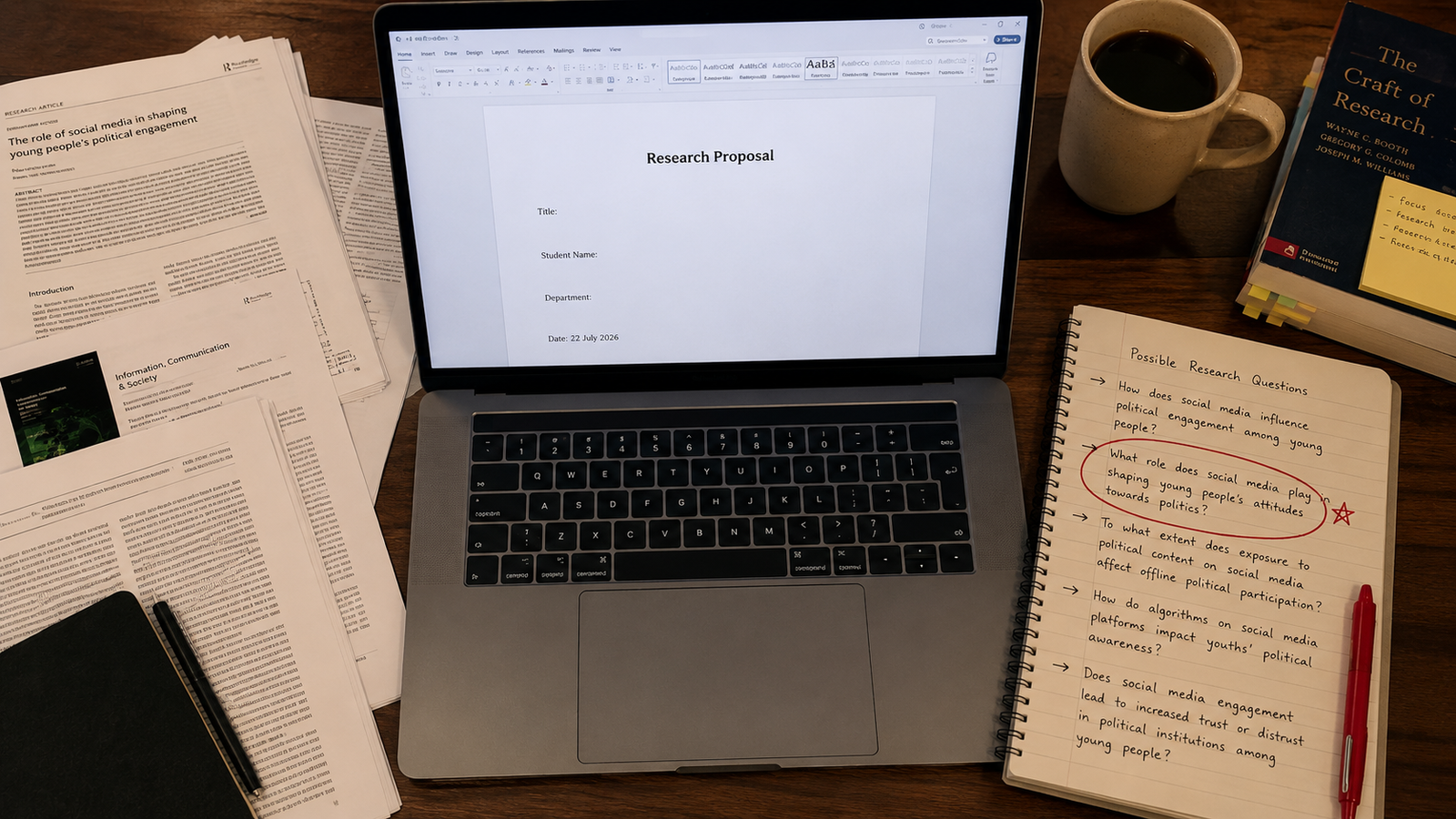
I still remember the exact moment a friend of mine, halfway through a coffee that had gone cold twenty minutes earlier, said: “I think I’m doing my MA in UK.” Not “I’m thinking about it.” Not “maybe.” Just — decided. That was three years ago. She’s now working in London, complaining about the weather like a native, and occasionally sending me photos of overpriced flat whites as evidence of her assimilation.
That conversation stuck with me because it captures something true about postgraduate study in Britain: people don’t drift into an MA in UK the way they might drift into a random online course. It’s usually a deliberate, slightly nerve-wracking, fairly expensive decision — and once people make it, they tend to move fast. Application, visa, flight, done. Which is exactly why so many students end up scrambling for information halfway through the process instead of before it.
So let’s slow down. If you’re weighing up an MA in UK — for real, not just idly Googling at 1am — here’s what actually matters, in the order it tends to matter, minus the fluff.
Why the UK, Specifically? (Because “It’s Famous” Isn’t a Real Answer)
Prestige gets you in the door, but it’s not the reason people stay committed through eighteen months of readings and referencing styles. The practical case for an MA in UK is stronger than most prospectus brochures let on:
- Speed. Most UK master’s programmes run for one year, sometimes less. Compare that to two years in the US or parts of Europe, and the maths starts to look very different — less tuition, less rent, less time away from earning a salary.
- Course density. British universities offer a genuinely bewildering range of specialised master’s routes. Fancy something niche like the psychology of forensic and criminal behaviour, or something broader like business management? Both exist, often at the same institution.
- The Graduate visa. Since 2021, international graduates can stay and work in the UK for two years after finishing (three for PhDs) without needing a job offer first. This single policy has reshaped how people think about return on investment.
None of this means the UK is automatically the “best” choice — Australia, Canada, and Ireland all make credible pitches too. But for people who want a fast, respected, work-friendly route into a new field, an MA in UK tends to punch above its weight.
The Taught vs Research Split (And Why It Trips People Up)
Here’s a mistake I see constantly: students assume all master’s degrees look the same. They don’t.
Taught MAs are structured, module-based, exam-and-essay-driven — closer to an intensive extension of undergraduate study. Research MAs (often labelled MRes or MPhil) are looser, more independent, and essentially a dry run for a PhD. If you’re the sort of person who needs deadlines and structure to function (no judgement — most of us do), a taught MA in UK institutions is the safer bet. If you already have a research question burning a hole in your notebook, look at research routes instead.
Some fields blur the line entirely. Courses like digital health or neuroscience and mental health often combine taught modules with a hefty independent dissertation, so read the module handbook before assuming anything.
What It Actually Costs (Brace Yourself, Slightly)
Money is where most enthusiasm quietly dies, so let’s not dance around it. Tuition for an MA in UK varies wildly by university, city, and subject — a humanities MA in a smaller city can cost a fraction of a business or STEM programme in London.
| Cost Category | Typical Range (Per Year) | Notes |
|---|---|---|
| Tuition fees (international) | £12,000 – £35,000 | Business & medicine-adjacent courses sit at the top end |
| Accommodation (London) | £800 – £1,400/month | Shared housing brings this down considerably |
| Accommodation (outside London) | £450 – £850/month | Varies a lot by city — Manchester ≠ Bristol |
| Student visa (Route) | £524 application fee | Plus Immigration Health Surcharge, paid upfront |
| General living costs | £1,000-ish/month, give or take | Food, transport, the occasional pub night nobody budgeted for |
(That last row is deliberately loose — real life doesn’t fit neatly into spreadsheet cells, and anyone who tells you otherwise is selling something.)
A quick warning most guides skip: the UK government updates minimum maintenance fund requirements for the student visa fairly often. Don’t rely on a figure you read six months ago — check the official UK student visa page shortly before you apply, because banks and embassies will hold you to whatever the number is that week.
Funding Doesn’t Have to Mean Family Savings
A lot of students assume self-funding is the only route into an MA in UK, mostly because scholarships feel mythical — like something other, smarter people get. That’s not really true. Funding sources worth chasing include:
- University-specific scholarships (often merit-based, sometimes country-specific)
- Chevening Scholarships, for those with leadership potential and a strong professional track record
- Commonwealth Scholarships, if you’re from an eligible Commonwealth country
- Departmental bursaries tied to specific subjects — finance and marketing programmes sometimes have industry-funded awards nobody advertises loudly
This is genuinely one of the areas where scholarship and financial aid advisory support pays for itself — someone who already knows which awards exist for your subject and passport can save you months of scattered Googling.
Picking the Right Course (Not Just the Right University)
Here’s an unpopular opinion: obsessing over university rankings before you’ve nailed down the course is backwards. A mediocre course at a prestigious university will teach you less than an excellent, well-resourced course at a university you’ve never heard of.
Start by asking what you actually want to do afterwards. Want to work in HR? Look at human resource management routes and compare module lists, not just league table positions. Interested in criminal justice? Forensic psychology programmes vary enormously in how much fieldwork versus theory they include. Curious about supply chains and logistics? There’s a whole cluster of specialised options, including global logistics and supply chain management.
You can cross-check course quality against independent sources too — the Times Higher Education subject rankings and Prospects.ac.uk are both far more useful than a university’s own marketing page (unsurprisingly).
The Application Timeline, Roughly Speaking
Deadlines for an MA in UK are less rigid than undergraduate UCAS deadlines, which is either liberating or dangerous depending on your personality type.
| Stage | Typical Window | What Happens |
|---|---|---|
| Research & shortlisting | 12–18 months before start | Comparing courses, funding, entry requirements |
| Applications open | September–October | Rolling admissions for most master’s courses |
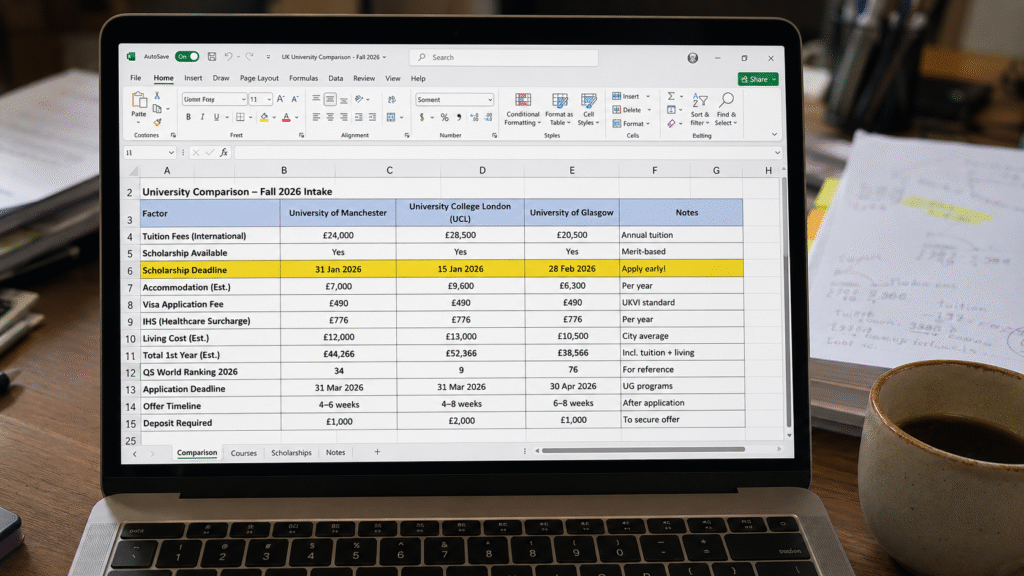
| Priority scholarship deadlines | December–February | Miss these and funding options shrink fast |
| Offers issued | Rolling, often within weeks | Conditional offers common if results are pending |
| Visa application | After CAS issued | Usually 6 months before course start |
| Arrival & pre-departure prep | 2–4 weeks before term | Accommodation, banking, orientation |
Notice there’s no single “deadline day” the way there is for undergraduate applications. That flexibility is exactly why so many students procrastinate and then panic in July.
Slightly blunt tip: if you want scholarship money, treat December like it’s your real deadline — not the course’s official closing date. By the time general applications close, most of the good funding is already gone.
Visas, Paperwork, and the Bit Everyone Dreads
Once you have a confirmed offer, the university issues a CAS (Confirmation of Acceptance for Studies) number, which you’ll need for the Student visa application. It’s tedious, it’s bureaucratic, and it is genuinely worth getting right the first time — visa refusals over small documentation errors are more common than you’d think.
This is where end-to-end admissions support and structured pre-departure orientation earn their keep, frankly. Between financial evidence formatting, English test requirements, and interview preparation for competitive courses, it’s a lot to hold in your head alongside actual coursework anxiety. GCRD HUB, for instance, works through interview and admission preparation, visa documentation checks, and pre-departure orientation as part of guiding students through the process — the kind of unglamorous admin that quietly determines whether your MA in UK plan actually happens on schedule.
For the official rules (which change, so don’t trust anyone’s blog post forever, including this one), the UKCISA international student advice pages and gov.uk Student visa guidance are the two sources worth bookmarking.
Life After the Lecture Hall
An MA in UK isn’t just an academic exercise — for most international students, it’s also the first real test of independent adult life in a new country. Budgeting in a currency that isn’t yours. Figuring out the NHS registration process. Working out which supermarket is actually cheaper (it’s rarely the one closest to your flat, annoyingly).
Part-time work is allowed during term (usually capped at 20 hours a week) and full-time during holidays, which helps offset costs but shouldn’t be relied on as core income — visa conditions are specific, and breaching them isn’t worth the extra shift.
Once the degree wraps up, the Graduate visa route gives two years to work or job-hunt without sponsorship. Fields like computing with artificial intelligence technology, cyber security, and healthcare-adjacent postgraduate routes tend to convert particularly well into skilled worker visas afterwards, given current UK labour shortages — though that landscape shifts, so treat it as a general trend rather than a guarantee.

FAQs People Actually Ask (Not the Polished Ones)
Is an MA in UK worth it financially, compared to staying home? Depends entirely on the field and your home country’s job market. In finance, business, and tech, the salary premium often justifies the cost within a few years. In more niche humanities subjects, the return is more personal than financial — worth being honest with yourself about which category you’re in.
Can I do an MA in UK without an undergraduate degree in the same subject? Often, yes. Many taught master’s programmes — particularly in marketing or human resources — accept students switching fields, sometimes with a conversion module or extra reading before term starts.
How long does an MA in UK actually take? Typically 12 months full-time, occasionally extending to 16 months for programmes with a summer dissertation period. Part-time routes stretch this to two years or more.
Do I need IELTS for every university? Most, yes, though scores and accepted alternatives (like PTE or Duolingo English Test) vary by institution and even by department within the same university.
What’s the biggest mistake applicants make? Underestimating how quickly good scholarship deadlines close, and overestimating how quickly visa paperwork can be assembled under pressure. Start both earlier than feels necessary.
Where This Actually Leaves You
If there’s one thing worth taking from all this, it’s that an MA in UK rewards people who plan slightly earlier than feels natural — scholarships close early, good course spots fill early, visa processing has its own unhurried rhythm regardless of your deadlines. None of it is complicated on its own. It’s just a lot of moving pieces landing at slightly different times.
If you’d rather not track all of it solo, education consultants who work specifically on UK admissions — interview prep, financial aid advisory, university placement, the pre-departure logistics — can take a fair amount of that weight off. GCRD HUB, based at 107 Fleet St, London EC4A 2AB, works through exactly that kind of guidance for students weighing up an MA in UK, and can be reached on +44(0)20 39839001 for anyone who wants a second opinion before committing to an application.
Either way — planned meticulously or figured out on the fly, coffee going cold in the process — an MA in UK tends to reward the people who just start.