Here’s something they don’t tell you straight away: picking a UK university isn’t really about finding the “best” one. It’s about finding your one. I have seen so many of my classmates so stress about the league tables only to find half a term into their first term that the ranking does not reflect what really counts such as whether you will flourish in the large campus at London or whether you will be better suited to the small town atmosphere of a cathedral city.
The list of the United Kingdom universities has more than 160 universities, and each of them has its personality. Others can be traced to the 12th century. Others have been spawned of polytechnics during the 1990s and have that pragmatic industry DNA. And honestly? Both approaches work brilliantly for different people.
So let’s cut through the noise. This guide will help you navigate the actual landscape of UK higher education – not the glossy brochure version, but the real one where choosing the right fit determines whether you spend three years genuinely engaged or just going through the motions.
Why Everyone’s Rushing to UK Campuses
British universities currently host around 730,000 international students – roughly a quarter of all UK higher education students. That’s not hype – it’s the result of centuries building academic reputations that employers worldwide recognize instantly. Oxford, Cambridge, Imperial, LSE… these names carry weight in Tokyo, Toronto, and everywhere between.
But here’s where it gets interesting. The united kingdom university list extends far beyond those household names. Places like Loughborough absolutely dominate sports science. Warwick rivals London schools for business. Durham offers that Oxford tutorial system without the Oxford stress culture. Yet students laser-focus on the Russell Group and miss incredible opportunities elsewhere.
Reality Check: A 2:1 from a “lesser-known” UK university with relevant work placements beats a 2:2 from a famous one every single time in job interviews. I’ve seen this play out repeatedly in graduate recruitment.
Decoding Britain’s University Ecosystem

UK universities fall into unofficial tribes. Understanding these helps you avoid mismatched expectations:
H3: The Ancient Powerhouses
Oxford and Cambridge dominate here, obviously. But St Andrews (founded 1413) and the four ancient Scottish universities carry similar prestige in certain fields. These places invented the modern university system. They’re intense – tutorial-based learning, fierce academic competition, traditions that perplex outsiders. Students here either flourish under pressure or burn out. No middle ground.
H3: Red Brick Institutions
Birmingham, Manchester, Liverpool, Leeds, Sheffield, Bristol – these Victorian-era universities built Britain’s industrial revolution. They blend research excellence with urban grit. Massive student populations (30,000+), diverse subjects, genuine city integration. Perfect if you want serious academics without the bubble-wrapped college life.
H3: Plate Glass Universities
The 1960s expansion created York, Warwick, Lancaster, Essex. Purpose-built campuses, modernist architecture, interdisciplinary approaches. They’re the rebels that became establishment – now ranking alongside much older institutions.
H3: Post-1992 Universities
Former polytechnics that gained university status. Places like Kingston, Westminster, Portsmouth excel at vocational training and industry connections. Smaller research budgets, bigger focus on employability. Often underrated by students who later realize practical skills matter more than lab prestige.
| University Type | Founded | Typical Strengths | Student Experience |
| Ancient | Pre-1600s | Humanities, Law, Medicine | Traditional, tutorial-heavy, collegiate |
| Red Brick | 1800s-1900s | Engineering, Sciences, Business | Urban, research-focused, large cohorts |
| Plate Glass | 1960s | Social Sciences, Interdisciplinary | Campus-based, modern facilities |
| Post-1992 | 1990s+ | Creative Arts, Applied Sciences, Business | Practical, industry links, diverse |
| Specialist | Various | Niche excellence (arts, agriculture, etc) | Intense, close-knit, career-specific |

The Regional Question Nobody Asks (But Absolutely Should)
Where you study shapes your entire experience more than which subject you pick. Controversial? Maybe. True? Absolutely.

London: High Cost, High Opportunity
London universities offer unmatched cultural access and internship opportunities. They also cost £200-300 weekly in rent alone. You’ll spend three years broke, working part-time, possibly stressed about money.
Scotland & The North: Value and Vibrant Student Life
Scottish universities run four-year degrees (except for English students doing three). That’s an extra year of fees… or an extra year to explore and mature. Northern cities – Newcastle, Sheffield, Leeds – deliver proper student experiences. Less expensive, colorful scenes, and a culture centered on students. Friends at Manchester or Leeds often live comfortably on the same budget that gets stretched in London.
Something to Think about: Go to campus neighborhoods at 8pm on a Tuesday. Are students around? Are shops/cafes open? This tells you more about daily life than any official campus tour.
2025 Reality Check: The UK government announced plans to introduce a levy on international student tuition fees and reduce the post-study work visa from 24 to 18 months (effective January 2027). These changes reflect shifting immigration policies, but the UK remains competitive globally.
Subject Strengths That Surprise People
The united kingdom university list contains unexpected pockets of excellence. Rankings tell one story; industry reputation tells another.
Niche Excellence: Beyond the Obvious
Want fashion? Royal College of Art and Central Saint Martins dominate globally. Agriculture? Harper Adams is a leader. Marine biology? Plymouth and Bangor outperform bigger names because of location advantages.
The Big Hitters: Business, Engineering, and Computer Science
For business and finance, London Business School, Warwick, and Bath compete with Oxbridge. For engineering, Imperial and Southampton lead research, but Loughborough and Strathclyde have superior industry placement rates. For computer science, Manchester and Bristol balance theory with practical application well.
Here’s what matters: speak to people working in your target field. They know which universities their companies actually recruit from. It’s rarely what prospectuses claim.
The Russell Group Trap
Twenty-four universities formed this research-focused group. It’s basically Britain’s Ivy League equivalent – except membership depends on research output, not undergraduate teaching quality. Students obsess over Russell Group status. Employers… don’t really care as much as you’d think. They care about your degree classification, relevant experience, and interview performance. A 2:1 from Exeter carries similar weight to one from Edinburgh or Bristol in most industries.
The trap? Attending a Russell group university when a specialist institution would be more beneficial to you. Attending St Andrews, not Plymouth, on the basis of rankings to study marine biology only to discover that Plymouth students spend months at sea in research ships when you are languishing in Scottish libraries.
| University | Location | Notable Strengths | Annual Tuition (Int’l) |
| Oxford | Oxford | Humanities, Law, PPE | £28,950 – £44,240 |
| Cambridge | Cambridge | Sciences, Mathematics, Engineering | £24,507 – £63,990 |
| Imperial College | London | Engineering, Medicine, Business | £36,200 – £48,500 |
| LSE | London | Economics, Politics, Sociology | £25,000 – £35,000 |
| Edinburgh | Edinburgh | Medicine, AI, Creative Arts | £26,500 – £54,200 |
| Manchester | Manchester | Sciences, Engineering, Business | £28,000 – £51,000 |
| Warwick | Coventry | Business, Economics, Politics | £25,770 – £49,830 |
| Bristol | Bristol | Aerospace, Film, Veterinary | £27,200 – £52,600 |
| Bath | Bath | Architecture, Engineering, Management | £23,500 – £28,000 |
| Durham | Durham | Theology, Law, Sciences | £27,900 – £40,250 |
| Loughborough | Loughborough | Sports Science, Engineering, Design | £27,250 – £29,750 |
| St Andrews | St Andrews | International Relations, Classics | £30,160 – £32,910 |
Application Requirements Nobody Explains Properly
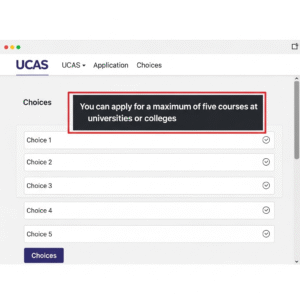
UK applications run through UCAS. You get five choices. That’s it. Choose wisely because you can’t apply to both Oxford and Cambridge in the same cycle (they’re petty like that). Entry requirements look straightforward: AAB at A-level, or equivalent international qualifications. But “equivalent” varies wildly. Some universities want specific subjects at specific grades. Others accept broader profiles.
Personal statements matter more for competitive courses. Your statement for Medicine at Imperial needs to demonstrate actual medical exposure – volunteer work, reading beyond curriculum, understanding of NHS challenges. Your statement for English Literature can afford more creativity and personal voice.
Foreign students are placed under more hurdles: English language tests (IELTS 6.5-7.0 required), credential evaluation, deadlines in visa applications were brought forward. Researching with a year to go before application is not too much of a problem with regard to the United Kingdom university list.
Money Talk: The Financial Realities
Understanding Tuition and Living Costs
The UK universities demand £20,000-£50,000 annually depending on the course and university. Lab-based sciences are more expensive. Add to this the cost of living, which is between £12,000-£15,000 in most UK cities, and double that in London.
Finding Scholarships and Financial Aid
There are scholarships, and the competition is fierce. Chevening, Commonwealth and university-specific awards assist hundreds of students. Thousands of others are full freight. Part-time employment (20 hours per week on a student visa) will help but will not be sufficient to cover tuition. Budget realistically. I have seen students drop out midway through their degrees due to poor estimation of financial pressures. Don’t become that statistic.
Organizations like GCRD Hub specialize in navigating this complexity – helping students find appropriate scholarship opportunities and understand the true cost of different university choices. Their offices at 107-111 Fleet Street in London assist students with everything from application strategy to pre-departure planning.
What Really Happens After You Graduate
The Graduate Route visa permits international students to remain in the UK for two years (three for PhD holders) after graduation to find work. This has changed everything for career planning. Previously, you needed a job offer before graduating. Now you have breathing room to build experience, network, and secure positions that sponsor work visas later. London’s finance sector, Manchester’s tech scene, and Cambridge’s biotech cluster all become accessible.
Employment rates vary significantly across the united kingdom university list. Some universities report 95%+ graduate employment within six months. Others hover around 70%. These statistics hide important context (what types of jobs? related to the degree? salary levels?) but they indicate how well universities connect students to opportunities.
The Overlooked Gems Worth Your Attention
Let me advocate for universities that deserve more recognition:
- Heriot-Watt University – Edinburgh-based, exceptional engineering and petroleum programs, strong Middle East connections.
- Aston University – Birmingham location, incredible placement year integration, underrated for business and sciences.
- Surrey – Hospitality and tourism programs rival any globally. Incredible industry networks.
- Lancaster – Consistently top-ten rankings, beautiful campus, strong across business and environmental sciences. Somehow still flies under the international radar.
- Nottingham – Massive research output, gorgeous campus, excellent value relative to reputation.
These universities offer similar outcomes to more famous neighbors at lower stress levels and often better student satisfaction scores. Worth investigating if you’re building your personal united kingdom university list.
Honest Insight: University rejections sting less if you remember that UK admissions are ruthlessly competitive. Oxbridge rejects 80-90% of applicants. Imperial turns away students with perfect grades. It’s not personal; it’s mathematics.
Making Your Decision (Finally)
Create your shortlist based on:
- Course content – Read actual module descriptions, not marketing fluff. Which aligns with your interests?
- Location preference – Be honest about whether you’re a city person or prefer smaller communities.
- Realistic entry requirements – Apply to reaches, matches, and safeties. Don’t waste choices on five ultra-competitive options.
- Career outcomes – What are the career outcomes of your program? Request universities to provide employment statistics by course.
- Money wise – Are you really financially able to stay here for three years? Factor in hidden costs.
Visit campuses if possible. Virtual tours are useful but not as good as going around, meeting the students who are currently there, and knowing whether a place suits you. Follow your hunch—it really works in terms of where you will fit.
And, in case you forget: there is no best university. The best university is where you and your unique set of interests, learning style, career goals, and personality can be put into the most conducive environment.
Getting Professional Help (When DIY Becomes Overwhelming)
Navigating the united kingdom university list solo works for some students. Others benefit from expert guidance, especially when dealing with complex scholarship applications, credential evaluation, or strategic course selection.
GCRD Hub offers tailored academic placement that goes beyond basic application support. Their scholarship and financial aid guidance helps identify funding opportunities students might miss independently. The end-to-end admissions support covers everything from UCAS strategy to interview preparation, while pre-departure orientation addresses practical concerns about accommodation, banking, and healthcare registration – the unglamorous logistics that derail students who arrive unprepared.
They are positioned in the center of the academic consultation district of Britain, in Fleet Street, which is 107-111. You may contact them on +44 7756 428968 to discuss whether professional support is appropriate in your case.
I will tend to recommend this path if you are applying to courses considered very competitive (Medicine, Dentistry, Veterinary Science), require generous scholarship amounts, or simply feel the application process is overwhelming. The investment usually pays for itself in terms of increased placement results and less stress.
Frequently Asked Questions of UK Universities
What is the number of universities in the UK?
Presently, the number of institutions that have degree-awarding powers in the United Kingdom is about 165. This consists of all the traditional universities, specialist institutions, and university colleges. This is subject to change because institutions become or merge to become institutions.
How is Russell Group different to other universities?
The Russell Group is an organisation of 24 research-intense universities. They get additional funding for research and they have higher rates of publishing academic papers. Yet, this does not necessarily mean an improved undergraduate teaching or employment performance. Numerous non-Russell Group universities are doing well in certain subjects and employability.
Are international or foreign students allowed to work in the UK?
Yes. During term time, a student visa holder can work not more than 20 hours a week, whereas on holidays it is possible to work full-time. This aids in living expenses but should not be used as a source of finances in order to attain tuition payments. Recently, there have been discussions about tightening working rights in the future, so it’s important to examine the existing regulations before applying.
What is the duration of a UK undergraduate degree?
Majority of English, Welsh, and Northern Ireland undergraduate degrees last three years. The Scottish universities usually take four years. Certain courses that include work placements or study abroad go to four years throughout the UK.
Am I required to select my major during application?
Yes. The applications in the UK do not allow you to apply for a general admission but to particular courses. You are committed to that subject area, but switching in the first year is sometimes permissible. This is very unlike the US-style liberal arts approaches.
Which cities in the UK are affordable for students?
Lower living costs are available in the Northern cities such as Newcastle, Sheffield, Leeds, and Liverpool. Good value is found in Wales and Scotland (except Edinburgh). London, Oxford, Cambridge, and Brighton are quite costly.
What is the significance of university rankings?
Rankings offer an approximate guide but should not be the deciding factor. Various tables apply various measures – some focus on research, others on teaching quality or graduate outcomes. Examine subject-specific rankings in your field, as opposed to overall institutional rankings.
Is it possible to visit UK universities before applying?
A large number of universities provide virtual tours and information to international students. Heading there on open days, if possible, is invaluable. Nevertheless, the majority of international students manage to select universities without visiting prior to that.
Your Next Steps
Start building your personalized united kingdom university list today. Research specific courses, not just institutions. Join university-specific online communities where current students share honest experiences. Watch video content from actual students, not admissions offices.
The UK higher education system offers extraordinary opportunities – world-class academics, global recognition, career pathways into virtually any field. However, success depends on being matched with the right institution.
The first step is to be honest with yourself. In which environment do you work best? What is more important: the university or the course content? Are you an individual who can withstand competition or do you work better with encouragement? Would you regret not applying to Oxford, or would you regret the stress if you were accepted?
These questions matter more than rankings.
The perfect UK university for you exists. It might not be the most famous one. It might surprise you. But finding it – really finding it, not just picking a prestigious name – determines whether you spend three years genuinely engaged in transformative education or just collecting a credential.
Choose wisely. The effort you invest now pays dividends for decades.