Here’s something they don’t mention in those glossy university brochures: getting into a UK university isn’t the hard part anymore. It’s everything else—the visa nightmares at 2 AM, the scholarship applications that seem written in ancient Greek, the haunting question of whether you’ve just spent £12,000 on the wrong course.
I’ve watched brilliant students fumble spectacular opportunities simply because they didn’t know which boxes to tick (literally and figuratively). And I’ve seen average applicants waltz into Russell Group universities because they had someone in their corner who knew the game.
That someone? An education consultant. Not a magic wand. Not a shortcut. Just… someone who’s done this 500 times before whilst you’re doing it for the first (and probably only) time.
What Actually Makes Someone an Education Consultant?
Let’s dispel some myths straight away.
Education consultants aren’t some shadowy figures who secretly bribe admissions officers. (That would be illegal, obviously, and also wildly ineffective given how UK universities actually work.) They’re professionals who’ve built relationships with universities over years—sometimes decades. They understand the shifting sands of immigration policy. They know which UK universities are genuinely strong in your field versus which ones just have clever marketing.
The good ones, anyway.
At places like GCRD HUB, located at 107 Fleet St in London, the team has spent years building these connections. They’re not just pushing papers—they’re offering end-to-end admissions support that covers everything from your first anxious email to the moment you’re unpacking in your university accommodation.
Quick Reality Check: The UK welcomed nearly 680,000 international students in recent academic years. That’s not a typo. Competition is fierce, documentation requirements change faster than British weather, and one tiny error in your visa application can derail months of planning. Education consultants exist because this process is genuinely complicated—not because you’re incapable.
The Brutally Honest Guide to What Education Consultants Actually Do
University Selection (Or: Why You Shouldn’t Just Pick Names You Recognise)
Most students approach university selection like they’re choosing a holiday destination. “Oxford sounds prestigious!” or “I saw Manchester on telly once!”
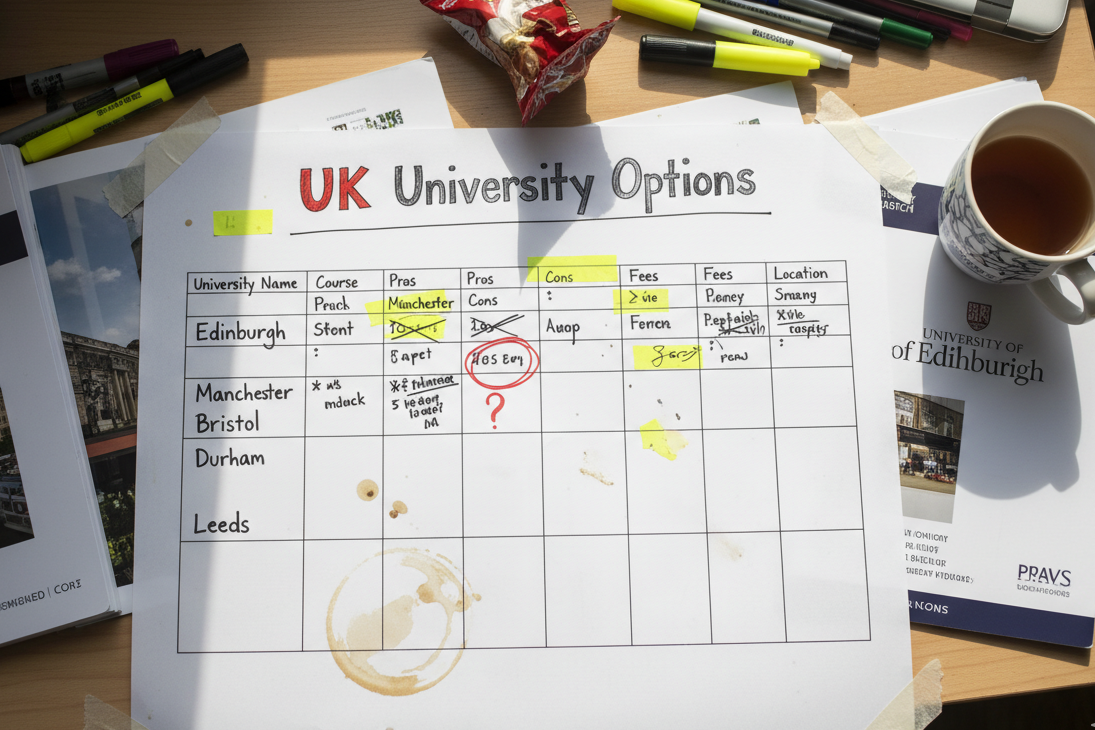
Here’s what education consultants do instead: they sit down with you and ask uncomfortable questions. What’s your actual career goal? (Not what your parents want—what you want.) What’s your budget beyond tuition fees? Can you handle a tiny village campus or do you need the chaos of a major city to function?
They’ll match you with programmes based on:
- Teaching style – Some UK universities are lecture-heavy, others seminar-focused. If you learn better through discussion rather than sitting in a 200-person auditorium, this matters enormously.
- Industry connections and placement opportunities in your field
- Actual graduate employment rates (not the marketing fluff on university websites)
- Cost of living differences – London versus, say, Sunderland can mean an extra £6,000-8,000 per year
GCRD HUB offers university placement services that go beyond “here’s a list of schools.” They’re looking at whether you’d actually thrive there, whether the programme aligns with your visa timeline, whether the city has the support networks you’ll need.
The Application Labyrinth
UK university applications aren’t difficult in the way a maths problem is difficult. They’re difficult in the way assembling IKEA furniture in the dark is difficult—theoretically possible, extremely frustrating, and you’ll probably miss something crucial.
Personal statements. References. Portfolio requirements for some programmes. UCAS deadlines that vary by course. Then there’s the whole separate circus for postgraduate applications which don’t even use UCAS.
| Application Component | What It Actually Requires | Common Mistakes |
|---|---|---|
| Personal Statement | Demonstrating genuine interest in your subject (not listing achievements) | Generic statements, over-emphasising extracurriculars, copying examples online |
| Academic References | Specific examples of your academic capability from recent instructors | Using family friends, getting vague character references instead |
| English Language Tests | Meeting specific IELTS/PTE scores (usually 6.5-7.0 overall for undergrad) | Taking wrong test type, missing validity dates, assuming exemption incorrectly |
| Supporting Documents | Certified translations, proper degree equivalency certificates | Uncertified translations, missing apostilles, wrong document formats |
Study consultants handle the coordination of all this chaos. They’ll review your personal statement seven times (the good ones will, anyway) and also they’ll tell you when your reference is too generic. They’ll make sure your English test is actually the right type for your chosen programme.
More importantly? They know which universities want which tone in applications. Durham’s admissions team looks for different qualities than London Met. Education consultants who’ve placed hundreds of students know these unwritten rules.
Interview Preparation: The Part Everyone Underestimates
Not all UK programmes require interviews. But the competitive ones do—especially for subjects like Medicine, Law, or Nursing.
And here’s the thing: UK university interviews aren’t like job interviews. They’re testing how you think, not what you know. An interviewer might ask you to solve a problem you’ve never seen before, just to watch your reasoning process.
Places like GCRD HUB provide interview and admission preparation that simulates this environment. They’ll throw curveball questions at you, and they’ll point out when you’re rambling or when you’ve gone too defensive. They’ll teach you the difference between confidence and arrogance—a line many international students accidentally cross because interview culture varies so much globally.
Insider Tip: The best education consultants don’t just do mock interviews—they explain why certain answers work better. It’s the difference between memorising responses and actually understanding what admissions tutors are looking for.
The Money Conversation (Because Let’s Be Real)
UK education is expensive. Like, genuinely, eye-wateringly expensive for international students. Tuition alone ranges from £10,000 to £38,000 per year depending on the programme and institution. Then add living costs—the UK government says you need to show £1,483 per month for London, £1,136 for elsewhere.
Multiply that out and you’re looking at serious money.
This is where scholarship and financial aid advisory becomes crucial. Most students don’t realise how many funding opportunities exist beyond the big-name scholarships everyone applies for (and almost nobody gets).
There are:
- University-specific bursaries for students from certain countries
- Subject-specific scholarships (particularly in STEM fields and shortage areas like Nursing)
- Government-sponsored schemes from your home country
- Charity and foundation grants that most students never hear about
Education consultants know which deadlines are approaching, which scholarships you actually have a shot at based on your profile, and how to position your application to maximise funding chances. GCRD HUB’s scholarship and financial aid advisory includes helping you build a realistic budget and identify multiple funding sources rather than putting all your eggs in one scholarship basket.
The Visa Gauntlet (Where Dreams Go to Die Without Proper Guidance)
Let me tell you about visa applications.

The UK Student Visa (which costs £524 as of 2025, plus the Immigration Health Surcharge of £776 per year) has approximately 847 ways to mess it up. Okay, I’m exaggerating—but not by much.
You need:
- A Confirmation of Acceptance for Studies (CAS) from your university
- Proof you can afford tuition AND living costs (which must be in your bank account for 28 consecutive days before applying)
- English language proof (unless you’re from certain countries)
- A valid passport (with at least 6 months validity remaining)
- Tuberculosis test results (if you’re from certain countries)
- Consent forms (if you’re under 18)
Miss one document? Delayed. Submit bank statements dated 29 days before your application? Rejected. Use the wrong type of English test? Start again.
The processing time is typically 3 weeks, but that assumes everything’s perfect. One error can add months to your timeline, potentially causing you to miss your course start date entirely.
“I thought I could handle the visa application myself. I’m a straight-A student, right? How hard could it be? Turns out, very hard when you accidentally submit bank statements showing your balance on day 27 instead of day 28. Lost my spot for September intake, had to defer to January, and spent three months in limbo.”
— Former DIY applicant (who eventually hired GCRD HUB)
This is precisely why education guidance from experienced consultants makes such a difference. They’ve seen every possible error. They know when UKVI rules change (which happens more often than you’d think). They can spot a problem in your documentation before you submit it.
| Visa Requirement | Why Students Get This Wrong | How Consultants Help |
|---|---|---|
| Financial Evidence | Money not in account for full 28 days, using wrong currency conversion, including non-liquid assets | Review bank statements before submission, advise on timing of application, explain exactly what counts as “available funds” |
| CAS Details | Information on visa application doesn’t match CAS exactly | Cross-check every detail, catch discrepancies before submission |
| English Language Proof | Taking wrong test version, test results expired, assuming exemption when not eligible | Verify test requirements specific to your programme and nationality |
| Supporting Documents | Missing translations, uncertified copies, documents not in correct format | Provide checklist for your specific situation, review all documents before submission |
What Happens After You Get Accepted (The Part Most Services Ignore)
Getting your acceptance letter is brilliant. It’s also just the beginning.
Now you need to:
- Find accommodation (which in cities like London or Edinburgh gets snapped up months in advance)
- Sort out money transfer and UK bank accounts
- Understand how the NHS works with your student visa
- Figure out what you can actually bring versus what you should buy there
- Navigate the cultural adjustments that nobody warns you about
This is where pre-departure orientation and support becomes invaluable. The mediocre education consultants consider their job done once you’re accepted. The excellent ones—like the team at GCRD HUB—walk you through this transition period.
They’ll tell you which UK banks are friendliest to international students. They’ll explain why you absolutely should get travel insurance even though it seems like an unnecessary expense and also, they’ll prepare you for the reality that British people will say “sorry” when you bump into them.
The “Nobody Told Me” List (Actual Things Students Wish They’d Known):
- UK power sockets are different—you need an adapter, and buying one at Heathrow Airport costs 3x as much
- British “autumn” starts in August and it rains. A lot. Pack accordingly.
- Your student railcard saves you 1/3 on train tickets—get it immediately upon arrival
- The NHS is free but dentist appointments aren’t fully covered and optician visits definitely aren’t
- Council tax exemption for students isn’t automatic—you have to apply for it
The Different Flavours of Education Consultants
Not all study consultants are created equal. Let’s talk about the landscape.
The Free-But-Not-Really Model
Some agencies claim to offer completely free services. They’re not lying, exactly—but they’re getting paid by universities for successful placements. Which creates an interesting incentive structure.
Will they recommend the best programme for you, or the programme that pays them the highest commission? Sometimes those align. Sometimes they don’t.
The Premium Everything Model
At the other end, you’ve got consultants who charge thousands upfront and promise white-glove service. Some deliver brilliantly. Others are selling you the same basic support you could get elsewhere, just with fancier branding.
The Specialist Model
Then there are consultants who focus on specific fields—say, only MBA programmes or only health sciences courses. They know their niche incredibly well but can’t help if you change your mind about your career path.
The Comprehensive Model (Where GCRD HUB Sits)
Comprehensive services cover the full journey—from initial career counselling through university selection, applications, visa support, and pre-departure preparation. The advantage? One point of contact who understands your entire situation. The disadvantage? These tend to cost more than à la carte services.
GCRD HUB offers this complete package with specialists in different areas. So you’re getting expert guidance whether you’re applying for an undergraduate degree, a Level 6 top-up, or a postgraduate programme.
When You Definitely Need an Education Consultant
Let’s be practical. Not everyone needs to hire an education consultant. If you’re applying to a few non-competitive programmes, you speak perfect English, you understand visa requirements thoroughly, and you enjoy reading dense government documentation, maybe you can DIY this.
But you probably should work with education consultants if:
- Your academic background is complicated – gaps in education, degree from a system UK universities don’t understand well, grades that need explanation
- You’re applying to highly competitive programmes – anything in Medicine, Law, Oxbridge, or programmes with 10+ applicants per space
- You need significant financial aid – navigating scholarship applications whilst juggling university applications is genuinely overwhelming
- Visa issues keep you awake at night – one mistake can cost you thousands and months of time; professional help is worth it
- You’re the first in your family to study abroad – there’s zero shame in needing guidance through unfamiliar territory
- The administrative overhead is preventing you from actually preparing academically – sometimes paying for help is about buying back your time and sanity
Red Flags: When to Run From an Education Consultant
Unfortunately, this industry has its share of charlatans. Here’s what should make you immediately suspicious:
Warning Signs of Dodgy Consultants:
- Guarantees of admission – Nobody can guarantee this. Universities make the final decisions, always.
- Pressuring you to apply to specific universities only – Especially if those happen to be the ones nobody’s heard of
- Requiring full payment upfront before any services – Legitimate consultants work in stages
- Cannot provide evidence of successful placements – Ask for testimonials, success rates, university partnerships
- Unclear about their fee structure – If they’re vague about costs, that’s intentional
- Offering to “write your personal statement for you” – This is unethical and universities can detect purchased essays
The ROI Question: Is It Actually Worth the Money?
Education consultancy services typically cost anywhere from £500 to £5,000+ depending on the package and provider. That’s not pocket change.
So is it worth it?
Consider this: A rejected visa application costs you £524 in visa fees plus the Immigration Health Surcharge (£776 per year of study) that you won’t get back. If you have to reapply, that’s another £524+ pounds. Missing your start date might mean deferring for months, which could cost you job opportunities, time, and potentially housing deposits.
One scholarship that a consultant helps you secure could cover their fees ten times over. Applying to the right programme the first time (instead of realising halfway through that you chose wrong and wanting to transfer) saves both money and emotional energy.
The return on investment isn’t always purely financial—it’s also about reduced stress, better decision-making, and actually enjoying the process rather than dreading it.
The GCRD HUB Approach to Education Consultancy
Let me talk specifics about what makes GCRD HUB’s approach different. (Because at this point you’re probably wondering whether this entire article is just an advertisement. It’s not—but I do think their model addresses a lot of the problems I’ve outlined.)
First, they’re based in London at 107 Fleet St, which means they’re literally down the road from many major UK universities and have direct relationships with admissions teams. Those relationships matter when you need a quick answer about whether your qualifications meet entry requirements or when there’s confusion about your application.
Second, their services genuinely cover the end-to-end journey. From the initial “I think I want to study in the UK but I’m not sure where or what” conversation through to “I’ve arrived in the UK and need help setting up my bank account.” They offer:
- Study in UK consultancy specific to your field and goals
- Education guidance that’s personalised, not cookie-cutter
- University admissions support for undergraduate, postgraduate, and foundation programmes
- Interview and admission preparation tailored to your specific universities
- Scholarship and financial aid advisory including lesser-known funding sources
- University placement services based on fit, not commissions
- Pre-departure orientation covering practical and cultural preparation
Third—and this is important—they’re transparent about what they can and cannot do. They won’t promise you a spot at Oxford. They will promise to present your application in the strongest possible light and help you navigate the process with minimum stress.
Ready to Start Your UK Education Journey?
Whether you’re eyeing a spot at a Russell Group university or looking for the perfect programme match, GCRD HUB’s team has guided hundreds of students through this exact process.
Get In Touch:
📍 107 Fleet St, London EC4A 2AB
📞 +44(0)20 39839001 / 9002 / 9003
🌐 Book Your Free Initial Consultation
What a Typical Timeline Looks Like With Education Consultants
Just so you know what to expect, here’s roughly how the process unfolds when working with education consultants:
12-18 Months Before Intended Start Date:
- Initial consultation – discussing goals, budget, preferences
- English language testing (if needed)
- University shortlisting based on your profile
- Beginning scholarship research
9-12 Months Before:
- Finalising university choices
- Drafting personal statements and securing references
- Submitting applications (UCAS deadlines vary; some are as early as October for medicine)
- Applying for scholarships
6-9 Months Before:
- Interview preparation (if applicable)
- Receiving offers and making decisions
- Securing accommodation
3-6 Months Before:
- CAS document received from university
- Visa application submitted
- Financial arrangements finalised
- Pre-departure preparations
1-3 Months Before:
- Visa (hopefully) approved
- Final preparations and packing
- Travel arrangements
- Arriving in the UK and settling in
Notice something? This is nearly a year-and-a-half process in many cases. People who think “I’ll just handle this in a couple of months” severely underestimate the timeline.
The Cultural Side of Education Consultancy
Here’s something most people don’t realise education consultants help with: cultural translation.
UK academic culture is different. The way you’re expected to engage in seminars, the level of independence expected in your studies, even the way you address your professors—it varies dramatically from other education systems.
In some countries, challenging your professor’s viewpoint is considered disrespectful. In UK universities, it’s often expected. Some international students struggle with this adjustment because nobody prepared them for it.
Good study consultants explain these differences upfront. They’ll tell you that British people use understatement constantly (“That’s quite interesting” might actually mean “That’s brilliant”). They’ll prepare you for the fact that feedback on your work might be less effusive than you’re used to—a UK professor saying “This shows promise” is actually giving you a compliment.
These cultural nuances affect everything from how you write your personal statement to how you’ll experience university life. Understanding them beforehand prevents a lot of unnecessary stress.
Specialist Programmes: When Generic Advice Doesn’t Cut It
Some programmes have such specific requirements that you really need consultants who specialise in that field.
Medicine and Healthcare Programmes – These have additional hurdles like the UCAT (University Clinical Aptitude Test) or BMAT, work experience requirements, and incredibly competitive interview processes. If you’re applying for Clinical Nutrition, Physiotherapy, or Occupational Therapy, you need guidance from people who understand healthcare education specifically.
MBA and Business Programmes – These often require GMAT scores, relevant work experience, and very different application approaches. The personal statement for an MBA looks nothing like one for an undergraduate engineering programme.
Art and Design Portfolios – Programmes in Architecture, Animation, or Digital Design require portfolios that meet very specific criteria. What impresses one university might be completely wrong for another.
Law Programmes – The LLB route versus the GDL (Graduate Diploma in Law) route, understanding the Solicitors Qualifying Examination (SQE), knowing which universities have the strongest connections to City law firms—this requires specialist knowledge.
GCRD HUB maintains specialists across these different areas precisely because a one-size-fits-all approach fails when programmes have vastly different requirements.
The Digital Transformation of Education Consultancy
Something’s shifted in recent years. You don’t necessarily need to meet your education consultant face-to-face anymore (though it’s certainly still an option if you’re in London near GCRD HUB’s Fleet Street offices).
The pandemic accelerated what was already happening—consultancy services going digital. Video consultations, shared document platforms, digital application tracking. This has made quality education consultancy accessible to students anywhere in the world.
But here’s the catch: whilst digital tools have improved access, they’ve also enabled a flood of low-quality services. Anyone with a website can claim to be an education consultant now. This makes vetting consultants even more important.
Look for consultants who:
- Have a physical office (GCRD HUB’s London location is verifiable)
- Offer both digital and in-person options
- Use professional document management systems
- Provide clear, written agreements about services and fees
- Have established relationships with universities that you can verify
Beyond the Obvious: Hidden Benefits of Education Consultants
We’ve covered the main services, but there are secondary benefits that don’t appear in service descriptions:
Network Access – Good consultants have connections with current students and recent graduates who can provide real insights. Want to know what it’s actually like studying Software Engineering at a particular university? They can often connect you with someone who’s doing it right now.
Crisis Management – What happens if your chosen university suddenly changes its course structure? Or if your visa gets delayed and you might miss orientation? Education consultants handle these emergencies regularly and know exactly what to do.
Negotiation Power – Sometimes universities have flexibility on entry requirements or deadlines—particularly for international students. A consultant with an established relationship can sometimes secure considerations that you couldn’t access directly.
Mental Health Support (Indirectly) – Having someone who’s guided hundreds of students through this process and can reassure you that what you’re feeling is completely normal? That’s genuinely valuable. The application process is stressful; having an experienced guide reduces that stress considerably.
Questions Everyone Asks About Education Consultants
Do education consultants actually improve my chances of admission?
They don’t change your qualifications, but they absolutely help you present them more effectively. A well-crafted personal statement, properly prepared interview responses, and strategically chosen university selections can make a significant difference. Think of it like having a professional CV writer versus writing your own—the content is the same, but the presentation matters.
Can I trust education consultants who offer “free” services?
Some are legitimate and earn commission from universities for successful placements. The question is whether their recommendations are genuinely in your best interest or biased towards universities paying higher commissions. Always ask how they’re compensated and whether they work with a broad range of institutions or just select partners.
How early should I engage an education consultant?
Ideally 12-18 months before your intended start date. This gives enough time for English language testing (if needed), thorough university research, scholarship applications, and avoiding rushed visa applications. That said, consultants can help even if you’re on a tighter timeline—it just limits your options somewhat.
What’s the difference between education consultants and university agents?
University agents typically represent specific institutions and are paid by those universities to recruit students. Education consultants should be independent, representing your interests rather than any particular university’s recruitment goals. GCRD HUB operates as an independent consultant, offering objective advice across the full range of UK universities.
Will universities know I used a consultant?
It depends. If a consultant writes your personal statement for you (which is unethical), universities can often detect this. But legitimate consultant services—reviewing your statement, advising on structure, helping you articulate your ideas more clearly—are perfectly acceptable. Universities understand that students get help with applications; they object to dishonest representation.
Can education consultants help with student finance and loans?
Many can provide guidance on student finance options, scholarship applications, and budgeting. However, they’re not financial advisors in the regulated sense. They can explain what’s available and help you apply, but won’t (and legally can’t) provide formal financial advice.
What if I’m not satisfied with my consultant’s service?
Reputable consultants should have clear terms of service including what happens if you’re unsatisfied. Ask about this upfront. Do they offer refunds? Can you terminate the agreement? What recourse do you have if they miss deadlines? Get this in writing before committing.
Do I need a consultant if I’m only applying to one or two universities?
Not necessarily—if your application is straightforward and you’re confident handling visa requirements independently. But remember that consultants often help you discover better-fit programmes you hadn’t considered. Sometimes the value is in the initial university selection conversation rather than just application support.
The Uncomfortable Truths About UK Study That Consultants Should Tell You
Honest education consultants will share things that aren’t particularly good for their business but are important for you to know:
The UK might not be the right choice for everyone. If you want extensive campus facilities, warm weather, or a culture that feels more similar to home, other countries might suit you better. Education consultants worth their fees will have this conversation with you honestly.
The post-study work situation has improved but remains competitive. The Graduate Route visa (allowing 2-3 years of post-study work) is brilliant, but finding employment still requires effort. Don’t assume a UK degree automatically leads to a UK job.
Some universities are better than their rankings suggest; others worse. League tables measure research output and don’t necessarily correlate with teaching quality or student satisfaction. A consultant who blindly recommends based on rankings isn’t doing their job properly.
Living costs in the UK can shock students who budgeted only for the official requirements. Yes, you need to show £1,136-1,483 per month for your visa. But actually living comfortably—socialising, occasional travel, dealing with unexpected expenses—often costs more.
If your education consultant isn’t mentioning these realities, they’re not being entirely honest with you.
Measuring Success: What Good Outcomes Actually Look Like
How do you know if your education consultant has actually helped you?
It’s not just about getting admitted (although that’s obviously important). Good outcomes include:
- You’re at a university that actually fits you – Not just a prestigious name, but somewhere you’re genuinely thriving
- You secured funding – Whether scholarships, bursaries, or financial aid that makes the degree affordable
- Your visa process was relatively painless – No rejections, minimal delays, clear understanding of requirements
- You felt prepared upon arrival – Culturally, academically, practically
- You avoided costly mistakes – Wrong programme choices, missed deadlines, visa errors
GCRD HUB measures their success not just by placement numbers but by student satisfaction surveys after the first term. Are students happy with their university choice? Do they feel they were adequately prepared? Would they recommend the service to others?
That’s a more meaningful metric than “we placed 500 students last year.”
The Future of Education Consultancy
Where’s this industry heading?
Increasingly personalised services using data analytics to match students with programmes. AI-assisted application review (though human expertise remains crucial). Virtual reality university tours. Blockchain-verified credentials to streamline applications.
But fundamentally, the core value proposition remains unchanged: experienced guidance through a complex, high-stakes process that you’re navigating for the first (and probably only) time.
As UK universities become more internationally competitive and visa requirements continue evolving, the need for expert education consultancy isn’t decreasing—it’s intensifying.
Making Your Decision: Questions to Ask Potential Consultants
Before hiring any education consultant, ask them:
- “How many students have you placed at universities I’m interested in?” – Generic experience is less valuable than specific, relevant experience.
- “What’s your success rate with visa applications?” – Anything below 95% should make you ask why.
- “Can you provide references from recent students?” – Actual testimonials, not just marketing copy.
- “What happens if I don’t get into any of my chosen universities?” – Do they help you with clearing? Reapplication? Or is their involvement finished?
- “How do you stay current with changing visa and admission requirements?” – This should be an ongoing process, not something they learned five years ago.
- “What exactly is included in your fee?” – Get this itemised in writing.
- “Who will actually be working on my application?” – Will you work with the person you’re talking to, or will they hand you off to junior staff?
- “What’s your refund policy?” – What happens if they don’t deliver promised services?
The consultant’s answers to these questions will tell you a lot about their professionalism and suitability for your needs.
Final Thoughts: Is Professional Help Worth It?
Look, I can’t make this decision for you.
Some students successfully navigate the entire UK university application process independently. They’re organised, detail-oriented, enjoy research, and have the time to invest in figuring everything out. If that’s you, brilliant—save your money.
But most students benefit enormously from experienced guidance. The application process is complicated enough that even small errors can have expensive consequences. The emotional reassurance of having an expert guide is worth something (even if it’s hard to quantify). And the time you save by not having to research every single detail yourself allows you to focus on actually preparing for university.
Education consultants like those at GCRD HUB aren’t magicians. They can’t transform mediocre grades into Oxford admissions. What they can do is ensure that every advantage you have is properly leveraged, every requirement is met correctly, and every opportunity is explored thoroughly.
Whether that’s worth the cost depends on your specific situation, budget, and comfort level with complexity.
What I will say is this: if you decide to work with education consultants, choose carefully. Ask questions. Verify credentials. Get everything in writing. And remember that no consultant can want your success more than you do—they’re a valuable tool, but you remain the most important factor in your own educational journey.
Still Deciding Whether You Need Professional Support?
GCRD HUB offers free initial consultations where you can discuss your situation, ask questions, and get honest advice about whether their services would benefit you specifically. No pressure, no obligations—just expert insights to help you make an informed decision.
Schedule Your Free Consultation:
📞 Call: +44(0)20 39839001 / 9002 / 9003
📧 Register Your Interest Online
📍 Visit: 107 Fleet St, London EC4A 2AB
Whether you’re just starting to explore UK study options or you’re ready to submit applications, expert guidance is available when you need it.