
Low Cost Universities in UK for International Students (And How to Get In Easily)
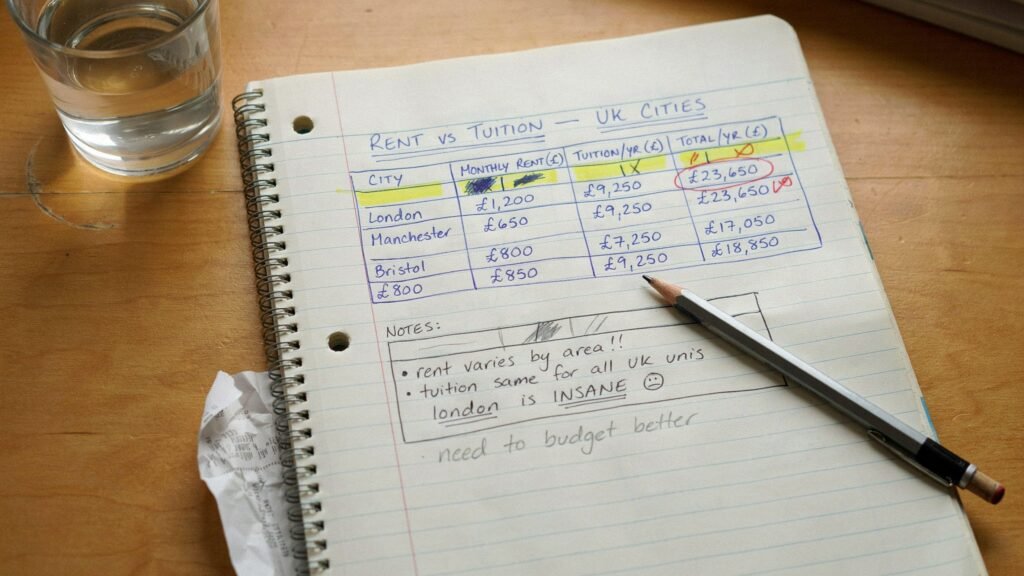
Right, let’s talk money — because that’s really why you’re here Somebody, somewhere, told you a UK degree costs as much as a small house. And look, for some universities, that’s not far off. But here’s the bit nobody puts in the brochure: low cost universities in UK for international students genuinely exist, and they deliver the same globally recognised degree, the same graduate visa route, the same “I studied in London” bragging rights — for a fraction of what you’d pay at the big-name institutions. I’ve sat across the table from students who assumed Russell Group or nothing. Neither is true, and I’d rather you knew that before you remortgage your future on a name. This isn’t a listicle of “top 10 cheap unis” copied from someone else’s spreadsheet. It’s a proper look at what “low cost” actually means in UK higher education, where the savings hide, where they don’t, and how the admissions process actually plays out when you’re applying from outside the UK. What “low cost” even means (because it’s not one number) Here’s the thing that trips people up: UK tuition fees for international students aren’t set centrally. Each university decides its own rate, and the spread is enormous. A Master’s in a niche STEM subject at a research-heavy university might run £24,000 a year. A comparable degree at a smaller, teaching-focused university — often just as accredited, often with smaller class sizes — could sit at £9,000 to £13,000. Low cost universities in UK for international students tend to share a few traits: None of that means lower quality. It means different priorities. A university spending less on international brand campaigns can spend more on smaller seminar groups. Unpopular opinion: the “ranking” obsession costs students more than it earns them. Employers overwhelmingly care whether you can do the job, not whether your uni was #14 or #94 on some league table nobody outside academia reads closely. The actual fee ranges (roughly — always check the current year) I’ll give you ballpark figures, because exact numbers shift yearly and by course. Treat this as a compass, not gospel — always verify on the university’s own admissions page before you commit to anything. University Type Typical Annual Tuition (International) Where Savings Usually Come From Low cost universities (regional, post-92) £8,500 – £13,000 Location, smaller campuses, scholarships Mid-range universities £14,000 – £19,000 Balanced reputation vs cost High-prestige / Russell Group (London-based especially) £20,000 – £38,000+ Brand, research funding, city premium And here’s a rougher, messier table — the kind you’d actually scribble on the back of an envelope while comparing offers, because real comparisons rarely line up neatly: City Avg Monthly Rent Uni fee range Notes Bradford £350-450 £9k-£12k Coventry £450 £10,500 – £14,000 strong for business courses London (outer boroughs) £700+ £11k-£16k Preston £300 9,000-11,500 good value (Yes, that second table is a bit rough round the edges — deliberately, because real budgeting comparisons rarely come pre-formatted for you either. Sort it into your own spreadsheet before you decide.) Beyond tuition: the costs nobody warns you about Tuition is maybe 60% of the real conversation. The rest is living costs, and this is where a lot of students get caught out. Rent varies wildly by city — a room in Manchester or Leeds can cost half what you’d pay in Zone 2 London. Then there’s the Immigration Health Surcharge, mandatory as part of your visa application, plus the visa fee itself, flights, books, and — this one catches people out — a compulsory maintenance fund you must show as proof of funds before your visa is even granted. Check the current figures directly on gov.uk’s student visa page, since these numbers are reviewed periodically. My honest advice? Budget for the city, not just the course. Choosing genuinely low cost universities in UK for international students situated outside London can shave thousands off your annual spend without touching your course quality at all. So which universities actually count as low cost universities in UK for international students? I’m deliberately not naming a “top 10” list here, and that’s on purpose — league tables of “cheapest unis” go stale within a year, and the right choice depends entirely on your subject. What I’d rather do is point you toward how to find them properly: For reference, UCAS remains the most reliable central source for comparing live fee data across UK institutions, and HESA publishes broader sector statistics if you want the bigger picture. Course choice actually matters more than people admit Here’s something I wish more students understood earlier: when you’re scoping out low cost universities in UK for international students, the subject often shapes the cost as much as the university does. Business-related courses, for instance, are widely offered at more affordable rates across dozens of institutions — from a straightforward BA/BSc (Hons) in Business Management to more specialised routes like Business Management with Healthcare or a Level 6 Top-Up Degree in Business Management for students who’ve already completed a diploma abroad. Health and social care pathways tend to sit at similarly reasonable rates too — think Public Health, Nutrition and Dietetics, or BSc (Hons) Mental Health and Wellbeing. Meanwhile, computing and tech courses have exploded in availability at lower-cost institutions — from a general BSc (Hons) Computing System to more specific tracks like Computing with Artificial Intelligence Technology, Cyber Security, or Computer Games Programming. If your interests run more towards the social sciences, subjects like Criminology, Forensic Psychology, or the more specific Psychology of Forensic & Criminal Behaviour are also widely available at genuinely affordable institutions — proof that “low cost” doesn’t have to mean “limited choice.” Scholarships: the part everyone skims past too quickly Don’t skip this section. When people research low cost universities in UK for international students, scholarships are where the real savings often hide — most students never apply because they assume they won’t qualify. Many universities offer: This is precisely where scholarship and financial aid advisory support earns its keep —