
UK London University List: Best Options for Students 2026
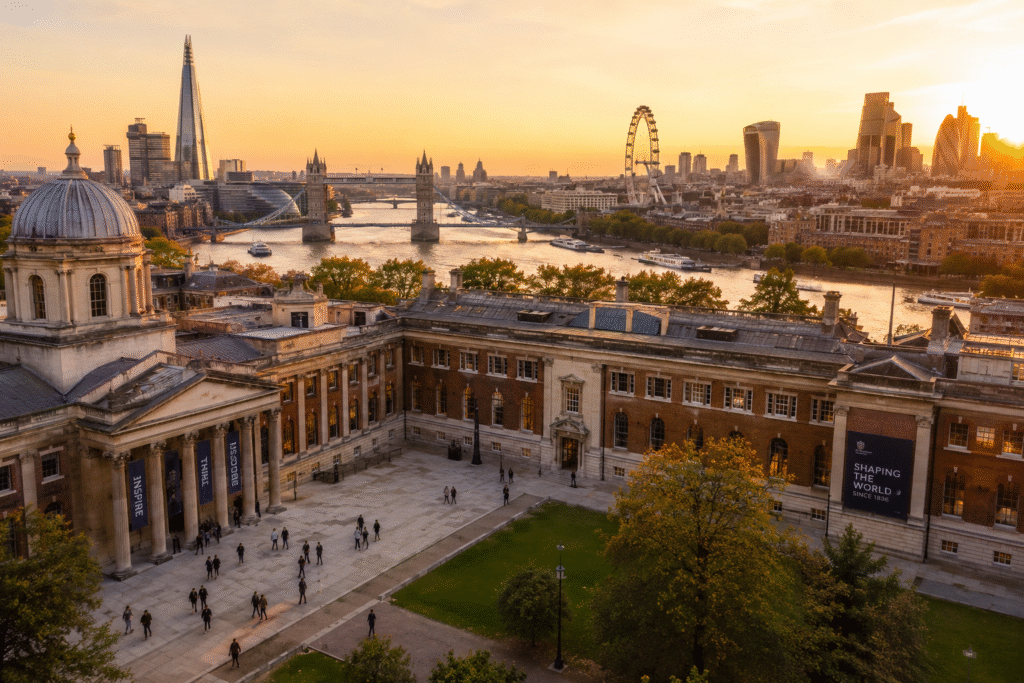
London Isn’t Just a City. For International Students, It’s a Decision. There’s a moment — usually somewhere between a YouTube rabbit hole and your third browser tab open to a university ranking site — when the sheer weight of choosing a London university starts to feel genuinely overwhelming. Over 40 universities in a single city. Dozens of campuses spread across zones one through six. Fees that vary wildly. Prestige that means different things depending on who you ask. And yet, every year, hundreds of thousands of international students pick London above every other city in the world to pursue their degrees. That’s not a coincidence. It’s a city that rewards curiosity, tolerates ambiguity, and opens doors that other cities frankly don’t. Whether you’re drawn by career prospects, the multicultural fabric of the place, or just the fact that your favourite university has a campus a ten-minute walk from a Tube station — London delivers. But here’s the thing nobody tells you upfront: not every London university is right for every student. The UK London university list looks impressive in aggregate, but the real question is which institution fits your goals, your budget, your field of study, and your post-study ambitions. That’s what this guide is actually about. The Landscape: What “London Universities” Actually Means First, let’s clear something up. When people search for a UK London university list, they often expect a tidy, ranked roster. Reality is messier — and more interesting. London’s universities fall into a few distinct categories: Each category serves a different kind of student. A student chasing a research career in biochemistry needs a different institution than someone pursuing a postgraduate diploma in digital marketing or a nursing degree with clinical placements. The UK London university list is not a monolith — it’s a spectrum. The Big Names (And Why Prestige Is Only Part of the Picture) Let’s talk about the universities that dominate every ranking list, because they deserve acknowledgement — even if they’re not the whole story. University College London (UCL) consistently ranks in the global top 10. It’s research-intensive, fiercely competitive, and London’s largest multidisciplinary university. International students make up roughly 40% of its student body. Fees for international undergraduates typically start around £22,000 per year and climb considerably for medicine and engineering. King’s College London (KCL) — with its stunning Strand campus right on the Thames — is particularly strong in law, health sciences, and humanities. Another institution where the student experience is almost inseparable from London itself. London School of Economics (LSE) is, famously, one of the most globally connected universities in existence. If you’re in social sciences, economics, or political science, this is a name that carries genuine currency across every continent. Imperial College London for STEM. Full stop. Science, technology, engineering, mathematics — Imperial’s reputation in these fields is practically self-sustaining. Fees are high, but scholarships for international students do exist and are worth investigating. Now. If you’re reading this and thinking I didn’t get into UCL or Imperial, so London isn’t for me — please stop. That narrative is both outdated and wrong. Beyond the Elite: The UK London University List That Actually Helps Most People Here’s where it gets genuinely useful. The vast majority of international students studying in London attend institutions that don’t consistently appear in the QS top 50 — and they are getting excellent degrees, strong graduate outcomes, and full London experiences. University of Greenwich — based in a UNESCO World Heritage Site (yes, genuinely), Greenwich offers strong programmes in business, engineering, computing, and health. Its international student community is vibrant, and its campus is one of the most photogenic in the country. GCRD Hub works closely with Greenwich as a partner institution. London Metropolitan University — deeply embedded in the multicultural north and east London communities. Genuinely accessible entry requirements, strong professional courses in law, social sciences, and business. For students coming from non-traditional educational backgrounds, this university’s flexibility is worth its weight. University of Roehampton — a quieter, more residential campus in south-west London. Strong in psychology, education, dance, and humanities. The campus park setting feels genuinely surprising given you’re technically inside Greater London. Solent University London — built around industry connections and professional development, particularly in business, media, and creative arts. Ravensbourne University London — specialist, design-led, sitting on the Greenwich Peninsula. If you’re in digital media, fashion communication, or UX design, this place has a distinct creative energy that generic university campuses lack. Birkbeck, University of London — uniquely structured around evening study. Exceptional for international students who are working or who need a more flexible schedule. Academic rigour is genuinely high; it’s a University of London institution. Royal Holloway, University of London — technically in Egham (just outside Greater London), but part of the University of London federation and considered a London university by most standards. Beautiful campus, excellent programmes in sciences, arts, and business. Often overlooked. Shouldn’t be. A Practical Comparison: Fees, Entry, and What You’re Actually Getting (Note: Fees are approximate 2025–26 figures for international undergraduates. Always verify directly with each institution.) University Annual Fees (Intl. UG, approx.) Strong Subjects Entry Flexibility UCL £22,000–£38,000 Research, Medicine, Engineering Highly Competitive King’s College London £21,500–£37,000 Law, Health, Humanities Competitive University of Greenwich £14,000–£16,500 Business, Computing, Engineering Accessible London Metropolitan University £13,500–£16,000 Law, Social Sciences, Business Very Accessible University of Roehampton £14,500–£16,000 Psychology, Education, Humanities Accessible Birkbeck, University of London £13,000–£17,000 Flexible Study, Humanities, Science Accessible (Evening) Royal Holloway, Univ. of London £17,000–£22,000 Sciences, Arts, Business Moderate Ravensbourne University £15,000–£16,500 Design, Digital Media, Fashion Portfolio-Based What Nobody Talks About: The Post-Study Work Visa Factor Here’s something that genuinely shifts the calculus for international students. Since the UK reintroduced the Graduate Route visa (formerly called the Post-Study Work visa), international students who graduate from a UK university can stay in the UK to work — or look for work — for two years after completing an undergraduate or postgraduate degree (three years for PhD graduates). Every university on this list