
Discover the UK’s Ivy League: Full United Kingdom University List for Ambitious Students
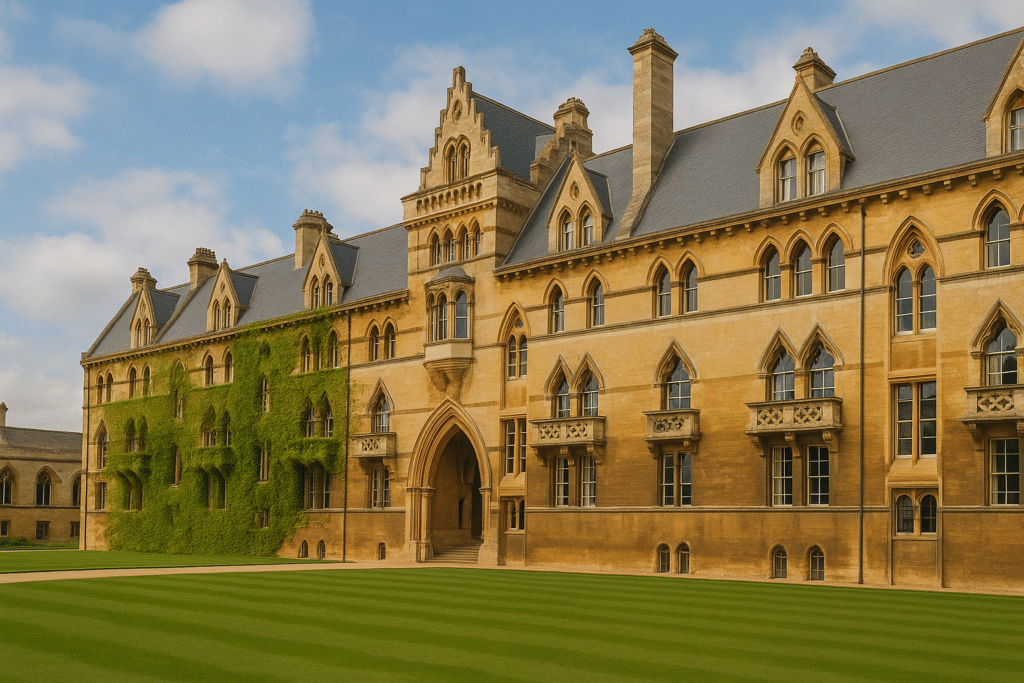
Here’s something nobody tells you about hunting for the perfect UK university: the British don’t actually have an Ivy League. What they have is somehow both simpler and infinitely more complicated. Americans obsess over eight schools draped in ivy and tradition. The British? They’ve got Oxford and Cambridge (obviously), but then there’s this whole constellation of Russell Group universities, red brick institutions, and newer powerhouses that’ll leave you wondering why anyone bothers with league tables at all. Spoiler: everyone bothers with league tables. I’ve spent embarrassing amounts of time researching Ivy League universities UK equivalents, and what struck me most wasn’t the prestige—it was how differently the UK system operates. There’s no single “elite eight.” Instead, imagine a tiered wedding cake where even the bottom layer is pretty damn impressive, just maybe not chocolate. What Actually Counts as Britain’s Ivy League? Let’s tackle the elephant wearing a mortarboard: when people search for Ivy League universities UK, they’re usually asking two different questions without realizing it. The first question: Which UK universities match Harvard’s reputation globally? Answer: Oxford and Cambridge. Full stop. These two have been trading academic punches since 1209 (Oxford) and 1231 (Cambridge). Their alumni lists read like a “Who’s Who” of everyone who ever mattered in British history, plus a shocking number of international leaders, Nobel laureates, and that guy who invented the World Wide Web. The Russell Group (24 research-intensive universities) is the nearest British equivalent of an Ivy League. However, this is where it becomes odd, not all members of the Russell Group receive one and the same amount of respect. Durham and Exeter? Absolutely stellar. But even when you pit them against Imperial College London, in engineering, then you are comparing apples with rocket ships. The Golden Triangle (Yes, It’s Actually Called That). This is because geographically, power in UK academia is concentrated around a triangle of Oxford, Cambridge, and London. It is in this triangle that is the most concentrated cluster of world class universities that you will have found anywhere out of Boston. Oxford is fond of tutorials, those one or two hour-long one-on-one or two-on-one sessions with real professors, as opposed to teaching assistants. You cannot go behind the scenes in a lecture hall of 300 people. You are going to read out that essay. You will argue out your arguments. It is intellectual savagery and metamorphosis. Cambridge is this way but somehow more… scientific. Or maybe it is the ghost of Isaac Newton in the physics department. The university had created more Nobel Prize awardees than most states, and they take weird pride in the fact that they split the atom there. (As they should be, honestly.) The university life in London is a category in itself since it is neither Imperial College (the British MIT), UCL (University College London), LSE (London School of Economics) or King College London, but a mix of all of them vying against each other to be the best on the same over-crowded, over-priced and yet electric city. Reality Check: It does not take flawless grades to be accepted into Oxford or Cambridge. You require a perfect girls and boys grades, personal statements that have caused admissions tutors to tear with their brilliance, interviews that have shown that you can think on your feet, and, occasionally, subject-specific entrance exams. Oh, you may only apply to Oxford or Cambridge but not both. Choose wisely, I guess? The Full Landscape: Beyond the Obvious Names When we talk about Ivy League universities UK style institutions, we’re really discussing several overlapping categories. Let me break down what actually matters: The Ancient Universities (Founded Before 1600) These schools literally predate the scientific method: Oxford (1096) – Technically, nobody knows exactly when it started, which is very on-brand Cambridge (1209) – Founded by Oxford scholars who got kicked out after riots St Andrews (1413) – Scotland’s oldest, where William met Kate, if you care about that sort of thing Glasgow (1451) – Fourth oldest in the English-speaking world Aberdeen (1495) – Two universities merged into one, because Scotland does things differently Edinburgh (1582) – Technically younger but punches way above its weight in reputation The Red Brick Universities Built during the Victorian industrial boom, these universities were literally constructed with red bricks. The name stuck. They focus on practical, research-driven education and don’t have quite the same snobbery as Oxbridge: University of Birmingham University of Bristol University of Leeds University of Liverpool University of Manchester University of Sheffield Manchester, in particular, has become an absolute powerhouse. Split your atom there and nobody bats an eye—they’ve seen it before. The Modern Elites (20th Century Game-Changers) Some universities achieved world-class status despite relative youth: Imperial College London (1907) – Science, engineering, medicine, business. That’s it. No dilution with humanities. Warwick (1965) – Went from farmland to top-10 institution in one generation York (1963) – Beautiful campus, strong across multiple disciplines Your Comprehensive UK University List (The Good, The Great, The Legendary) Rankings fluctuate like stock prices, but here’s a brutally honest breakdown of Ivy League universities UK equivalents and strong alternatives, organized by rough prestige tiers. Remember: tier doesn’t mean quality of teaching or student experience—it means global brand recognition and research output. Prestige Tier Universities Known For Notable Quirk Tier 1 (Global Elite) Oxford, Cambridge Everything, really You’ll wear a gown to dinner. Yes, seriously. Tier 1.5 (London Powerhouses) Imperial, UCL, LSE Imperial: STEM UCL: Multidisciplinary LSE: Economics/Politics Imperial students sometimes forget non-STEM subjects exist Tier 2 (World Class) Edinburgh, King’s College London, Manchester, Bristol Strong research, international reputation Edinburgh owns half the city’s historic buildings Tier 2.5 (Excellent Specialists) Durham, Warwick, St Andrews, Bath Durham: Collegiate system (mini-Oxbridge) Warwick: Business/Economics Bath: Engineering St Andrews makes you wear red gowns for academic family bonding Tier 3 (Strong Russell Group) Glasgow, Birmingham, Leeds, Southampton, Nottingham, Sheffield Research-intensive, subject-specific strengths Nottingham has campuses in China and Malaysia The Second Wave: Still Excellent, Different Strengths University Location Best Known For Lancaster Northwest England Business, Environmental Science York North Yorkshire Psychology, History, English Exeter Southwest England Climate Research, Sports Science Sussex Brighton Development Studies, International Relations Queen Mary University of London East London Law, Medicine, Dentistry Newcastle